
Differences between Strategic and Tactical Business Intelligence

With heaps of data at their disposal, it would be naïve for businesses not to take advantage of it. However, business intelligence (BI) exists in many forms. Let’s take a closer look at strategic vs tactical business intelligence here! Both shape data-driven decision making in their own way. Markedly, modern BI tools enable the rapid collection, processing, and analysis of massive data pools. With such advanced mechanisms, business intelligence and analytics can provide incredible insights. As a result, BI greatly benefits business owners by improving productivity, enhancing customer service, and reducing costs. Strategic vs Tactical Business Intelligence at a Glance Strategic and tactical BI are the two major types (with the others being predictive, diagnostic, and descriptive BI). Although often used interchangeably, there are quite a few differences between the two. Now, let’s break them down individually for better clarity: Strategic Business Intelligence It’s primarily focused on how insights from data will be implemented, driving and informing strategy. It, moreover, supports planning and all forward-looking business activities. So, what sets strategic intelligence apart? Here are three key characteristics: 1. Oriented towards the Future The great thing about the strategic approach is that it can predict future conditions. This allows businesses to plan for the long term and make more informed decisions, removing the guesswork. By uncovering potential possibilities and probable outcomes, strategic business intelligence empowers them to formulate their future course of action. 2. Deals with Identifying Trends and Patterns Strategic intelligence can also help businesses understand current industry trends and make sense of consumer behaviour patterns. As such, it puts businesses more in the driving seat, in a better position to thrive. 3. The Upper Management Deals with Strategic Intelligence Since it involves looking at the bigger picture and deciding the future course of action, strategic intelligence is handled by the top executives – steering the “ship-of-business” by looking forward rather than looking backwards at the wake. Tactical Business Intelligence It’s a type of business intelligence that deals with how the strategies will be implemented and informs about the tasks to be performed. So, what defines tactical intelligence? Here are three key characteristics: 1. Deals with Present Scenarios Tactical intelligence provides real-time analysis of the current competitive landscape and operational performance. This helps businesses prioritize and take timely actions. Furthermore, it also enables them to achieve their objectives, stay on track, and align with the strategy and plans set through strategic intelligence. 2. Evaluates Whether the Company Has Enough Resources This model can help assess whether the company has adequate time, money and manpower to implement the plans. It tracks and informs about the effective use of all its assets. What’s more, it helps businesses make efficient use of their resources! 3. Different Departments can be Responsible for Carrying It Out Since tactical intelligence deals with actual implementation, different departments can be involved depending on company’s needs. To leverage these tactical and strategic insights effectively, businesses need the right tools, however! From BI Approach to Types of Business Intelligence Tools It’s no exaggeration to say that the advent of easily accessible software technology has leveled the playing field. Importantly, these applications can leveraged by small businesses and large enterprises alike. Moreover, many of these BI tools can be customized to meet a business’s unique requirements. With deep experience in Business Intelligence, we at Centelli help businesses thrive in the digital world. From strategy to solutions, we help drive your growth through: For more details or any questions, reach out to us today!
Creating a Culture of Data-Driven Decision Making
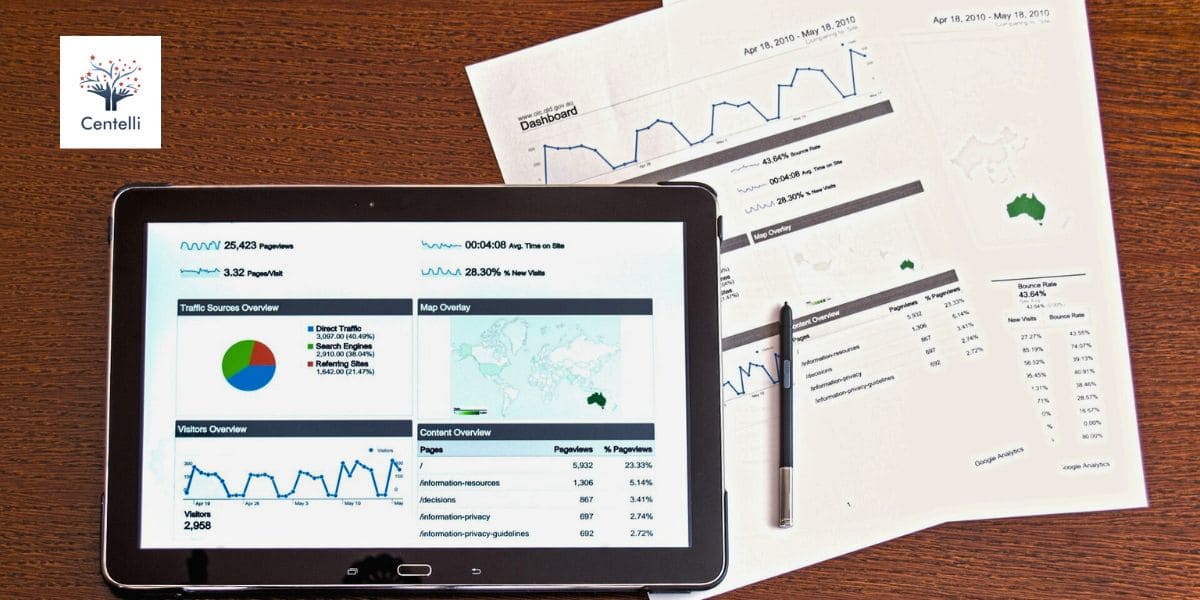
In a fast-paced, data-dominated world, you cannot afford to make business decisions based on gut feelings anymore. This also calls for creating a culture of data-driven decision making to pursue your organizational goals with confidence and greater certainty. No doubt, business leaders today recognize the importance of data. However, it’s not unusual to see that many companies still lack the capabilities to make decisions using data analytics. Big Data and data management technologies are no longer just fancy trends but are being embraced at a faster pace! This also means: Here are the top five ways you can develop a culture of data-driven decision making within your company: 1.Establish Key Metrics for Success First up, it is very important to define your key metrics. Ask yourself, what really needs to happen to make your business a success? Suppose you are a fashion retailer launching a new product line. From your sales department to your offline and/or digital marketing team, everybody should be on the same page about your company’s goals. Once you have identified key metrics, you can convey this message across the board. In cases of underperformance, you can easily pinpoint issues, home in on the root cause, improve what you do and take a better approach moving forward. 2.Democratise Data for Insight-Led Decisions The use of data should not just be limited to the tech guys in your company. Each member of your staff should be given tools and resources to understand data and take relevant action. With advanced software technology, data democratization has become quite easy. By empowering your employees in technology, you are creating citizen data scientists – people who can be of great value to your organization in future. 3.Measure Everything; Foster Data-Backed Decision Making To cultivate a data-driven culture, you need to measure (almost) everything and know their interrelationships. It would be great if the particular aspect can be quantified. If not, make sure you assign a value to it. A probable piece of information is always better than no information at all. Such an initiative will help foster a right data-led mindset among your employees from top to bottom. It will entrench itself deeply into their personal work culture, ultimately benefiting the company as well. 4.Enhance Reports and Dashboards Long boring spreadsheets have given way to interactive, colorful dashboards. This has been an interesting evolution in the world of data. So, make sure your dashboard and reporting mechanisms are appealing, and that they do help users make sense of data and align to your key measures. What’s more, they should operate in real-time so that your staff can make instant decisions. 5. Allow Experimentation to Boost Data-Driven Culture When it comes to building a data-driven organizational culture, it is essential that you encourage your employees to be inquisitive and curious. Also, allow them to experiment. Why? Because trial and error will be pathway that enables them to fully embrace Business Intelligence and Analytics tools. There is no doubt about the fact that slip-ups will occur from time-to-time. However, such let-downs are a powerful part of an inclusive learning process. Hence, they should be supported, valued and encouraged. We at Centelli offer business intelligence (BI) and data management consultancy as one of our services. Our team of data scientists and BI experts can help you to transform your data-driven decision making. Drop us a line for more info or any questions you might have.
Exploring Birst BI Solutions and Their Key Benefits

We’ve heard a lot about the benefits of cloud deployment for business—but how much do we know about the advantages of Birst BI Solutions? Business gurus often talk about the boundless power of technological innovation. But, if not done right, introducing any changes to your digital infrastructure can be be risky and expensive. Still, thanks to advances in technology, the demand for self-service analytics continues to grow. And now with more options to improve the efficiency of a business, — like cloud BI tools such as Birst— companies have a cost-effective answer to tedious data management problems. So, What Makes Birst BI Solutions a Superior Choice? Why choose Birst? One word: performance. As an industry-leading cloud service provider, Birst gives users a compelling reason to abandon on-premise intelligence deployments for quick and seamless data accessibility and insight. In fact, this is one of the biggest reasons why an increasing number of international corporations are leveraging Birst BI to introduce agility and scalability to their business operations. So, let’s take a closer look at how it enables that. 1. Robust Integration Owing to Birst’s Embedded BI There have always been challenges in embedding complex data into your applications, especially if you’re short on time and domain expertise. Notably, Birst’s Embedded BI Analytics minimises the complications of the process. It does so by offering a comprehensive platform to pre-integrate data. This includes superior analytics functionality and quick data monetisation. 2. Multi-Tenant Cloud Architecture If managing and effectively governing large data sets is an ongoing issue at your organisation, Birst can help with these challenges as well. You will find its ulti-tenant cloud architecture very useful when it comes to horizontal scaling. Moreover, it allows you to add new computing nodes as you go along. There’s more! Birst also improves query performance with optimised SQL generation and intelligent caching. For this, it uses cutting-edge database technology like Amazon Redshift, along with the in-memory performance of SAP HANA. You May Also Like: Sudden Departures, New Arrivals: Transitioning from SAP BW to Birst BI 3. More Value from Data Enterprise with Birst BI Tool As a “value-based” approach to BI modernisation, Birst BI solutions promise a robust tracking and monitoring performance. This enables decision-makers to make quick and informed choices. By providing data in context, companies are able to make more insightful changes, but revise budget management to deliver better results. If you’re an organisation unsure of how to progress from your current BI solution, reach out to Centelli for your first free consultation. BI modernisation, KPI management, and data solutions are some of our key specialties and we can help you adapt to the latest tech trends. Or visit our BI service page to explore further.
Top Benefits Of Data Analytics
Looking for a data management firm to help you make clear data insights? Contact: https://www.centelli.com
5 Business Intelligence Solutions For Your Business
5 Reasons How Business Intelligence Solutions Can Give Your Business An Edge! Looking for reliable business intelligence solutions for your organization visit: www.centelli.com
8 Benefits Of Business Intelligence Solutions
Looking for reliable business intelligence solutions for your company visit: www.centelli.com
Data Science – How It Can Help You to Improve Your Business

Following seven points will help you to improve your business by using data science. Looking for a data management firm to help you to make productive business decisions? Contact: https://www.centelli.com
Sudden Departures, New Arrivals: Transitioning from SAP BW to Birst BI
Why should you consider moving from SAP BW to Birst BI? One key advantage of Birst BI is speed—it fast-tracks your business operations. SAP Business Warehouse (BW) is a robust data warehousing solution designed to collect, process, and unify data from multiple sources. However, users often face slower data processing and longer reporting cycles. In contrast, the Infor Birst business intelligence (BI) platform allows users to generate reports, track key performance indicators, and build interactive dashboards in real time—eliminating delays caused by lengthy data processing. In the world of business intelligence, data is the currency that can make you rich or poor. And it matters how effectively and effiecnetly you are able to use your data. Resisting Change Limits Your Business Intelligence The bigger your company, the greater your data—and the more insight you have into the internal workings of your business. As such, a large volume of complex data means investing in reliable analytical tools and storage applications that minimise the risk of losing significant business knowledge accumulated over time. Indeed, this is perhaps the greatest reason behind most business owners’ resistance against new data management tools for their business. Regardless of these perceived dangers, however, innovation and efficiency are the face of modern business. Consequently, the key to success lies in your ability to manage data using innovative solutions. Of course, these solutions need to factor in storage costs, granularity requirements and overall latency. Why Transit from SAP BW to Birst BI As a successful organisation, your data is arguably your most valuable asset. It contains insight into your performance from the past and present, as well as accurate predictions for the future. To that end, modern BI platforms, such as Birst, give you the chance to identify anomalies and shifting patterns in your data whilst enabling the agility that the cloud and internet has to offer. Without modern BI solutions for your global enterprise, you may find yourself clinging to the confines of a limiting SAP BW. This could pose a greater threat to your business in the shape of delay in accessing the right information. Which could also lead to missed opportunities for growth and profitability! Key Benefits: Birst, the Modern BI Platform As a business owner, however, you must be confident in the reliability of your data and analysis. So, you should not hesitate to explore your options to achieve “a single version of the corporate truth” that can accerlate your operations. 7 Key Benefits of Birst BI: No doubt, upgrading your BI tools comes with its own set of challenges and concerns—but not when you have an expert BI solution partner by your side. Switching from SAP BW to Birst BI with Centelli As a business intelligence consultancy and solutions provider, Centelli, is focused on empowering businesses with the aid of modern tools that enable swift and efficient navigation and analysis. With 15 years of experience in implementing SAP BW for global enterprises, coupled with our deep insights into Birst tools, we have the resources and expertise to: Our unique approach to migration has made our solutions a thriving success, and we take pride in our ability to accelerate migration by a factor of 10x! At Centelli, we believe in delivering tried-and-tested BI solutions that make decision-making quick and easy. And we do this by steering the wheel of modernisation to cultivate organisational growth and value for your business. For more info, get in touch with us now.