
Onboarding, Contract Management, and Policy Compliance

Streamlining HR Processes with Digital Workers Human Resources (HR) departments are under increasing pressure to enhance efficiency and ensure compliance while managing a growing workforce. Digital workers, powered by intelligent automation, are transforming HR by streamlining key processes such as onboarding, contract management, and policy compliance. Here’s how: The Challenges in HR Management HR departments often grapple with labour-intensive and repetitive tasks, which can lead to errors, inefficiencies, and delays. Managing HR processes are not only time-consuming but also prone to inconsistencies – in areas that really must be consistent to ensure fairness across a workforce. Key challenges include: – Onboarding: Coordinating between various departments to ensure new hires have access to necessary tools, information, and training. This may include documentation requirements, IT requirements, system access etc. – Contract Management: Keeping track of contract terms, renewals, and compliance with legal requirements. – Policy Compliance: Ensuring that all employees adhere to company policies and regulatory standards and managing policy updates effectively. How Digital Workers Transform HR Processes 1. Onboarding Digital workers significantly streamline the onboarding process by automating various tasks: – Document Collection and Verification: Digital Workers can create, collect, verify, and store essential documents, reducing the manual workload and ensuring accuracy. – System Access Coordination: They can coordinate tasks across departments, ensuring new hires have access to necessary tools, accounts, and resources from day one. For example, Digital Workers can handle the creation (and then deletion) of all new accounts across tools such as Microsoft 365, other email platforms, social media, CRMs etc. – Personalised Training Schedules: Digital workers can create and manage personalised training schedules, ensuring new employees receive all required training without delays…and all completed training is logged centrally (for example if it’s a requirement). These improvements lead to faster onboarding, better new hire experiences, and a more organised approach to welcoming new employees. 2. Contract Management Managing contracts effectively is crucial for compliance and operational efficiency. Digital Workers can automate several aspects of contract management: By automating these tasks, HR departments can reduce errors, save time, and maintain better control over contract management. 3. Policy Compliance Ensuring policy compliance is a continuous challenge, especially as regulations and company policies evolve. Digital Workers help maintain compliance by: This automation leads to improved compliance rates, reduced risk of non-compliance, and a more organised approach to policy management. Case Study: Enhancing HR Efficiency with Digital Workers A global financial services company implemented digital workers in their HR department to streamline onboarding, contract management, and policy compliance. The results were impressive: These improvements not only enhanced HR efficiency but also contributed to better employee experiences and reduced operational risks. Conclusion Adopting Digital Workers in HR is not just a trend but a necessity. By automating repetitive tasks and ensuring better compliance, digital workers help HR departments focus on strategic initiatives, improve efficiency, and enhance overall employee satisfaction. As businesses continue to evolve, leveraging intelligent automation in HR will be key to staying competitive and agile. For more insights on implementing digital workers in your HR processes, take a look at this page! Book a meeting with us today to talk through how we can solve your HR needs!
How Digital Workers Solve Businesses’ Biggest Challenges

Whilst some say that every company faces unique challenges, there are certainly some commonalities that almost all businesses face today. Among the most pressing (and more common) are 1) the recruitment & retention of great talent, 2) meeting higher customer expectations, and 3) reducing operational costs. Fortunately, Digital Workers offer solutions to all three challenges, helping businesses thrive. Here’s how Digital Workers solve businesses’ biggest challenges: 1. Recruitment of New Talent Enhancing Employee Satisfaction By offloading mundane tasks to Digital Workers, current employees can engage in more fulfilling and meaningful work. This not only boosts their job satisfaction but also their productivity. Happy employees are more likely to stay with the company longer, reducing turnover rates and the associated costs of hiring and training new staff. Moreover, employees who are free from monotonous tasks can contribute to innovation and drive the company forward. Reducing the Need for New Recruits Finding and hiring new talent is often a time-consuming and costly process. Digital Workers, equipped with intelligent automation, not only help your retention as outlined above, but they can also take over repetitive and time-consuming tasks, reducing the need for businesses to hire additional staff. They can efficiently handle tasks such as data entry, report generation, and routine customer inquiries, allowing human employees to focus on more strategic and creative aspects of their roles. 2. Higher Customer Expectations Faster and Better Service Today’s customers demand quick and high-quality service. Digital Workers can operate 24/7, ensuring customer queries and issues are addressed promptly, even outside regular business hours. This level of responsiveness is crucial in maintaining customer satisfaction and loyalty. By handling routine inquiries, they free up your team to focus on complex customer needs, providing a more personalized and human touch where it matters most. Enabling Staff to Focus on Customers With Digital Workers managing repetitive tasks, human employees can spend more time building customer relationships. This shift allows staff to understand better and anticipate customer needs, leading to improved customer experiences. Enhanced customer interactions often result in positive reviews and referrals, driving business growth. 3. Cost Reduction Increasing Operational Efficiency Digital Workers are highly efficient and capable of performing tasks faster and more accurately than their human counterparts. This efficiency translates to significant cost savings. For instance, in finance departments, Digital Workers can streamline invoice creation, expense management, and financial reporting processes. This reduces the time and resources required for these tasks, lowering overall operational costs. Minimizing Errors and Compliance Risks Human errors can be costly, especially in industries with stringent compliance requirements. Digital Workers minimize these risks by performing tasks with high precision and consistency. In sectors like construction, for example, Digital Workers can handle VAT and CIS processing with minimal errors, ensuring compliance and avoiding costly fines. This reliability further contributes to cost savings and enhances the company’s reputation. Conclusion Digital Workers are revolutionising how businesses operate, solving the biggest challenges companies face today. By reducing the need for new recruits, enhancing customer service, and cutting operational costs, Digital Workers enable businesses to operate more efficiently and effectively. Embracing intelligent automation drives immediate benefits and positions companies for long-term success in a competitive market. As businesses continue to navigate the complexities of the modern world, We provide a robust solution that supports growth, innovation, and customer satisfaction. It’s time for companies to step into the future and transform their operations for sustainable success. Actively serving the UK, Europe, US, and India, we’ve now expanded our Intelligent Automation, Digital Worker, and RPA offerings to Dubai, UAE too! To learn more about how we can help your business or department, contact us now.
Upgrading Your Legacy Systems: Essential Guide

If Someone’s Told You to Upgrade a Legacy System – READ THIS before Doing Anything Else! In many modern businesses, where speed and efficiency are not just desired but essential, the legacy systems often loom large. These systems, once the backbone of your business, may now feel like anchors, slowing you down in the race towards digital transformation and improved productivity. And when the recommendation for overhauling or completely upgrading your legacy systems, it’s accompanied by visions of exorbitant costs and extended timelines. But what if there’s a solution that saves you time, budget, and the value of what you already have in place? This is where the conversation with Centelli becomes crucial. Centelli champions an alternative to legacy system replacement – with Intelligent Automation (IA), an advanced solution that breathes new life into legacy systems whilst improving overall productivity, often even more than a new system would. Unlike the traditional, often disruptive method of system overhaul, IA integrates seamlessly with your existing infrastructure, enhancing its capabilities without requiring extensive replacements. This approach is not just about preserving what works; it’s about elevating it to meet contemporary demands whilst simultaneously freeing up staff to undertake more value-added activities. Let’s talk a little more about HOW…! The Misconception of Necessary Overhaul The prevailing wisdom suggests that to stay competitive, businesses must discard the old and usher in the new. This narrative, while sometimes true, often overlooks the potential of enhancing existing systems. This article from Hospitality Net underscores the challenges businesses face with legacy systems, particularly in sectors like hospitality where customer satisfaction is paramount. However, it also opens the door to a significant realization: the need for smarter, not necessarily brand-new, solutions. Intelligent Automation: The Game Changer Intelligent Automation stands at the intersection of artificial intelligence and robotic process automation (or RPA). It’s not just automation; it’s automation with a brain. IA can understand, decide, and learn from the data it processes. In the context of legacy systems, this means IA can integrate with your current setup, automate routine tasks, streamline operations, and provide analytics and insights without the monumental costs and downtime associated with system overhauls. Real-World Applications in Construction In sectors like construction, where Centelli has vast expertise, the application of IA proves its transformative potential. Managing subcontractor onboarding, VAT and CIS processing, cost monitoring, invoice creation, and vendor management are all areas fraught with complexities and ripe for errors. IA introduces precision, speed, and reliability into these processes, significantly reducing the margin for error and the time consumed by these tasks. Cost and Time Efficiency One of the most compelling arguments for upgrading your legacy systems with Intelligent Automation is its cost-effectiveness and rapid deployment. Implementing IA solutions is a fraction of the cost of system overhauls, with much shorter timelines. This means businesses can start realizing the benefits of digital transformation sooner, without the financial strain typically associated with such initiatives. Future-Proofing Your Business The most overlooked advantage of Intelligent Automation is its scalability and adaptability. IA solutions can be adjusted to accommodate new processes, regulations, and technologies as your business grows and evolves. This flexibility ensures that your investment today continues to pay dividends well into the future, safeguarding your business against obsolescence. Conclusion Before signing off on a costly and time-consuming system upgrade, consider the alternative Intelligent Automation offers. Centelli’s ability to seamlessly integrate IA with legacy systems presents a compelling case for re-evaluating how we approach digital transformation. By choosing a path that is not only more cost-effective and efficient but also adaptable and future-proof, businesses can navigate the digital landscape with confidence and agility. Speak to us today and discover how your legacy systems can become a launching pad for your business’s next chapter in innovation and growth.
Implementing Intelligent Automation Into Your Workplace

If you’re planning on implimenting Intelligent Automation into your workplace now or in the future, you’re going to want to read this one stop shop of Intelligent Automation FAQs For All Departments.
Revolutionising Every Step of the Manufacturing Process
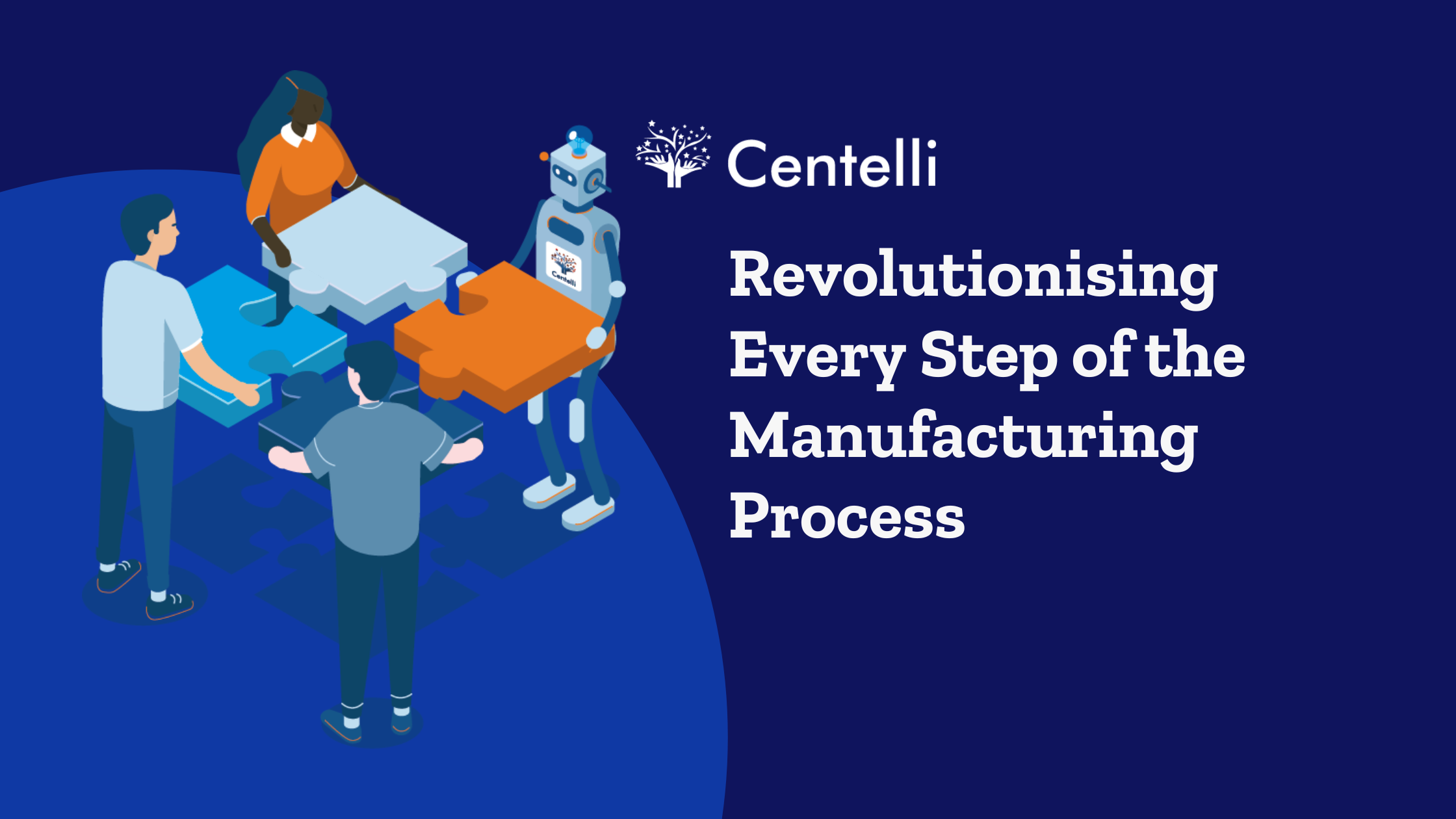
Automation goes far beyond the physical. It orchestrates human and computerized tasks, revolutionising every step of the manufacturing process. We’ve all seen the videos of one-armed robots packing and shipping products for warehouses around the globe. In just a few hours, a whole run of product can be packed and sent out. Often, however, whilst the ‘production line’ has robots visibly in action, the ‘back office’ functions are still run very manually…with you and your team stuck behind a mountain of paperwork filling out the exact order information over and over and over, and… then when you think it’s all over, you now have to take stock of inventory and fill out order forms for the same items, every week, month, day. Seems ridiculous, right? Now imagine going to work; overnight, someone has already done those tasks for you! Now, you’re free to speak with customers or suppliers, or start on the project you’ve meant to get to for weeks but haven’t found the time. Digital Workers can be trained to do all of that and more. You no longer have to worry about being weighed down by that Everest stack of forms and documents. It’s as if you’ve finally got a clone to do your most time-consuming tasks… For example: Receiving Orders: Digital Workers (DWs) don’t exist physically but live on computers. They can efficiently monitor inboxes, streamline inbound order processing, and handle repetitive tasks, liberating your team from the shackles of paperwork or copying and pasting data. Order information is effortlessly managed, allowing you and your team to focus on what truly matters – innovation and progress. Supply Chain: The intricate dance of the supply chain involves ordering parts, checking delivery schedules, and managing time. DWs excel at navigating this complexity, ensuring a smooth flow of operations. Take a look at what we’ve programmed for Libra Industries, where DWs played a pivotal role in optimizing supply chain processes and mitigating delays. Shipping: From managing stock to overseeing shipping logistics and seamlessly integrating with labelling systems, DWs become invaluable assets in the shipping phase. Every aspect of shipping is efficiently managed and leaves no room for delays or errors. Invoicing: Automation with DWs transcends the conventional order-to-delivery process. Dive into how DWs can revolutionize invoicing, simplifying tasks beyond expectation. No longer confined to mundane paperwork, your team can redirect their focus towards strategic initiatives and creative endeavours. Elevate your operations, reduce manual workload, and unlock new possibilities for innovation. Explore the untapped potential of Digital Workers and propel your manufacturing processes into a new era. Contact us for a no-strings introductory call to get you on your way to a more efficient future! Why not find us on LinkedIn
Harnessing the Full Spectrum of Input Documents: A Game-Changer in Automation
We talk a lot about Process Automation and harnessing the full spectrum of input documents, but that doesn’t mean everyone knows what that entails. Let’s clear some things up a bit… A process is initiated when a specific trigger event (end of another process, receiving an email, or a time-based event) occurs. Before the process can start, some input and information are required as a prerequisite. Often, this input is in the form of Word or PDF documents. These documents can be classified in a spectrum that goes from highly structured to unstructured. Recent advancements in Artificial Intelligence (AI) have significantly broadened the capabilities of Digital Workers / Robotic Process Automation (RPA), enabling it to process a broader range of documents than ever before. The Spectrum of Input Documents: Structured Documents: Definition: Documents with a fixed format and predictable data layout, such as forms and spreadsheets. Example: financial reports, system-generated emails Processing: Traditionally handled using rule-based systems like Regular Expressions (Regex), which rely on predictable patterns. Semi-structured Documents: Definition: These contain structured and unstructured elements without a predefined format. Example: Invoices, application forms, or PDFs with both forms and narrative text Processing: Previously challenging, but now more manageable with advanced parsing algorithms and machine learning techniques. Unstructured Documents: Definition: Documents with no predefined data model, often in the form of free text. Example: Business correspondence, legal contracts, or industry-specific documents such as CAD drawings Processing: Requires AI models capable of understanding context, sentiment, and semantic relationships. The traditional Digital Workers/RPA route has been to focus on structured/semi-structured documents. Unstructured documents are taken up only when the volume is high, and writing up a custom AI model is economically feasible. However, with recent improvements in AI with tools such as Microsoft Copilot and other Large Language Models (LLMs), the speed at which custom AI models can be built or questions asked on unstructured documents has significantly improved. Implications for Businesses: Efficiency: Automating a broader range of document types leads to significant time and cost savings. Accuracy: Reduced human error in data processing. Scalability: Ability to handle increased volumes of complex documents. Insight: AI can provide deeper insights from unstructured data, aiding decision-making. Conclusion: Integrating AI with RPA has revolutionised how businesses handle document processing. By embracing these technologies, companies are efficiently harnessing the full spectrum of input documents, from structured to unstructured, paving the way for more intelligent, scalable, and insightful operations. Get in touch for your FREE consultation today Find us on LinkedIn
Reducing Labour Costs In Retail
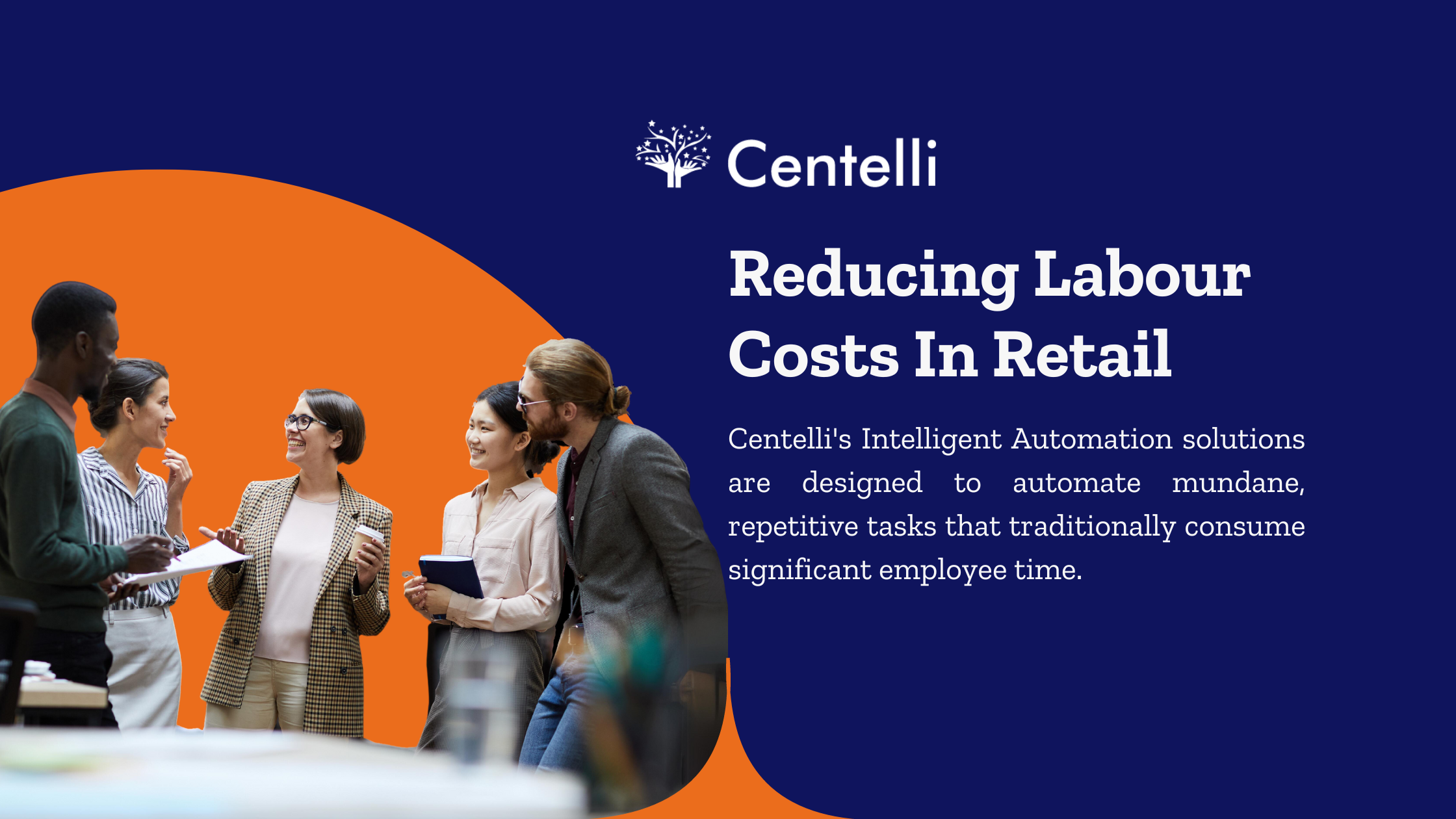
Strategic Investment for Retailers Maximizing ROI The Bottom Line: Reducing Labour Costs Centelli’s Intelligent Automation solutions are designed to automate mundane, repetitive tasks that traditionally consume significant employee time. Our Digital Worker solutions seamlessly take over these routine processes, from data entry to inventory management. As a result, retailers experience a substantial reduction in labour costs, allowing them to reallocate human resources to more strategic, value-added activities that directly impact the customer experience and drive business growth. Reducing Labour Costs In Retail Minimising Errors: A Precision-Driven Approach Manual processes are inherently prone to errors; even a tiny mistake can have far-reaching consequences. Digital Workers introduce a precision-driven approach by automating error-prone tasks, significantly minimising the risk of inaccuracies. Whether it’s order processing, inventory reconciliation, or pricing updates, our automation tools ensure data integrity, reducing costly errors that could impact customer satisfaction and the company’s financial standing. Optimising Resource Allocation: Doing More with Less Efficient resource allocation is a crucial driver of financial success in the retail industry. Centelli’s intelligent automation solutions optimise resource allocation by strategically automating tasks based on business priorities. This Intelligent Automation allows retailers to allocate human resources to areas that require creativity, critical thinking, and a personal touch. At the same time, routine and time-consuming tasks are seamlessly handled by Centelli’s technology. The result is a leaner, more agile operation that maximises the efficiency of both human and automated resources. Tangible Results: Measuring the Centelli Impact Centelli understands the importance of delivering measurable results to its clients. Retailers partnering with Centelli not only experience immediate operational improvements but also witness tangible financial benefits. Implementing Intelligent Automation solutions translates into a quantifiable reduction in operational expenses, providing a clear and direct impact on the company’s bottom line. Centelli’s commitment to delivering accurate, measurable results positions them as a strategic partner for retailers looking to enhance their financial performance. Future-Proofing Finances: Our Ongoing Contribution Beyond the initial implementation, Centelli’s Intelligent Automation solutions offer long-term value by future-proofing the financial health of retail businesses. As the sector evolves, Centelli’s adaptable and scalable automation tools ensure that businesses can readily respond to changing market dynamics. This future-ready approach protects the initial investment and positions retailers for sustained financial success in the dynamic and competitive retail environment. A Strategic Financial Ally In a world where financial resilience is paramount, Centelli’s INTELLIGENT AUTOMATION solutions emerge as a strategic ally for retailers seeking to maximise ROI. By reducing labour costs, minimising errors, and optimising resource allocation, Centelli’s automation tools contribute to a healthier bottom line, setting the stage for sustainable financial success. For retailers looking to make a strategic investment that pays dividends now and, in the future, Centelli’s Intelligent Automation solutions stand out as a transformative force in pursuing financial excellence in the retail sector. Find us on LinkedIn
Understanding the Burnout Epidemic
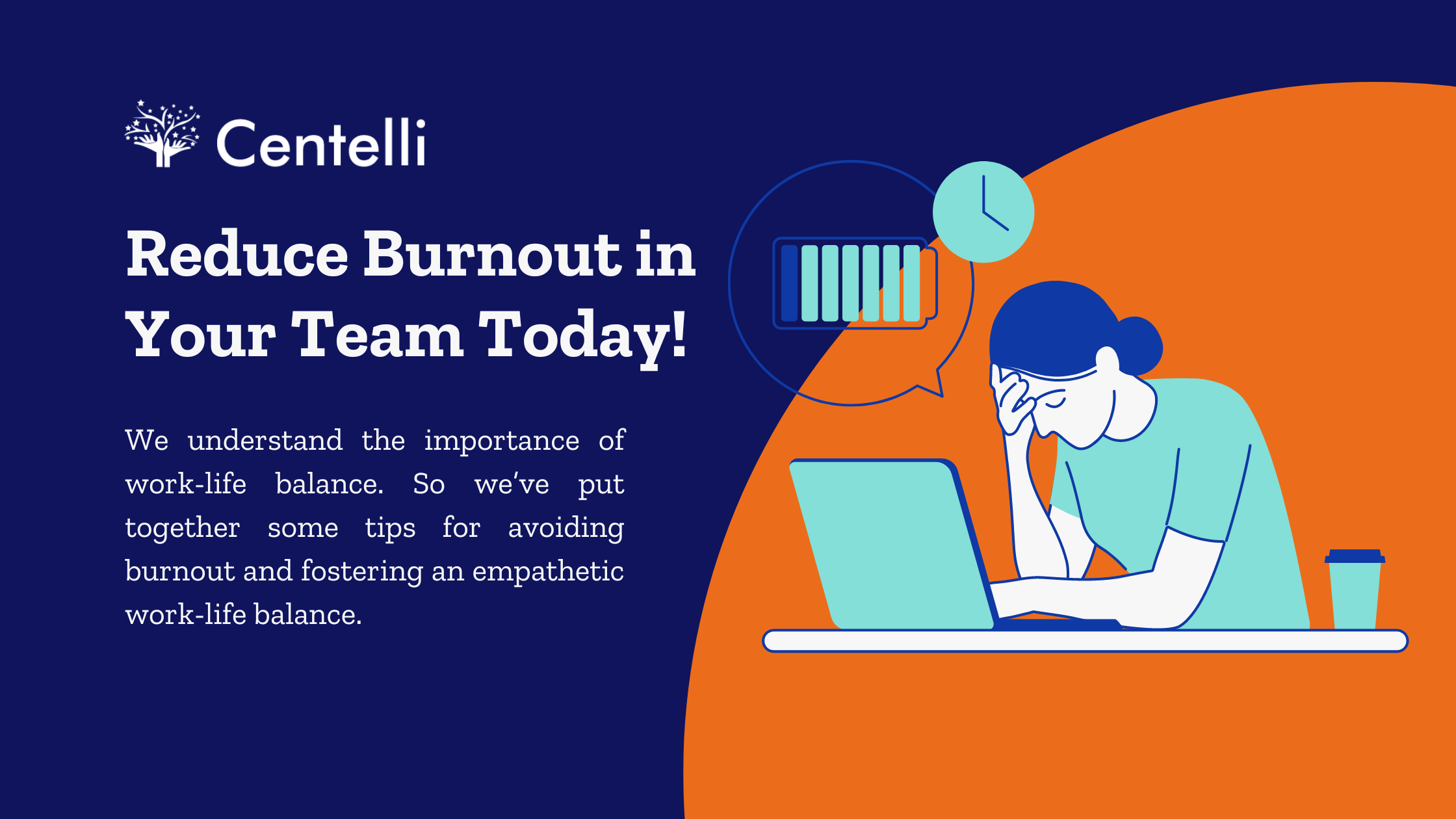
Reduce burnout in your team We understand the importance of work-life balance. So, we’ve put together some tips for avoiding burnout and fostering an empathetic work-life balance. Employee burnout has become a pervasive issue in many industries, impacting both the individual and the organisation. Long working hours, repetitive tasks, and the constant pressure to meet deadlines contribute to heightened stress levels among employees. The World Health Organization even recognises burnout as an occupational phenomenon resulting from chronic workplace stress. We’re here to help you understand and reduce burnout in your team. Enter Intelligent Automation Intelligent Automation is a game-changer for businesses looking to transform their operations. Automating repetitive and mundane tasks allows employees to redirect their focus to more meaningful, strategic, and creative aspects of their roles. This enhances job satisfaction and significantly reduces the risk of burnout. 1. Task Offloading Intelligent Automation allows you to identify and automate routine tasks contributing to burnout. From data entry to report generation, these mundane activities can be efficiently handled by automation, freeing up valuable time for employees to engage in higher-value tasks that require critical thinking and creativity. 2. Enhanced Efficiency By implementing Intelligent Automation, you can streamline workflows and eliminate process bottlenecks. This accelerates task completion and reduces the stress associated with tight deadlines. Delivering high-quality work in a more manageable timeframe contributes to a healthier work environment. 3. Personalized Workflows Automations are designed to adapt to the unique needs of each business. You can customise automation workflows to align with the strengths and preferences of their teams. This personalised approach fosters a sense of ownership and empowerment among employees, diminishing the feelings of being overwhelmed. 4. Work-Life Balance One of the leading causes of burnout is the struggle to maintain a healthy work-life balance. Intelligent Automation can play a pivotal role in achieving equilibrium by automating tasks that traditionally demand extra hours. With reduced workload, employees can enjoy more time outside work, improving mental well-being. 5. Continuous Improvement Centelli’s Intelligent Automation isn’t a one-time solution; it’s an evolving platform that adapts to changing business needs. You can continuously refine and optimise automated processes, ensuring your team(s) benefit from the latest advancements. This commitment to improvement reinforces the organisation’s innovation and adaptability culture. Conclusion When building a resilient and engaged workforce, you must look beyond traditional solutions. Intelligent Automation isn’t just a technological marvel; it’s a strategic tool that can revolutionise how businesses operate and, more importantly, improve the lives of their employees. You can effectively reduce burnout in your team, foster a positive workplace culture, and position your organisations for long-term success in the digital age. Our Digital Worker solutions are here to make people’s workloads lighter and more manageable. Saving you time, money, and headaches. Help your team today! Find us on LinkedIn
Are you missing a trick? The Consequences of Not Embracing Automation
It might not come as a surprise, but the consequences of not embracing automation and AI (Automated Intelligence) could mean that you’re missing a trick as a competitor. As the tech we use evolves, we, too, must adapt and grow to the challenges that may come with that…Especially when it comes to keeping up with the pack! The integration of Digitalisation has long been a pivotal factor in maintaining competitiveness, and today, the use of Automation and AI is similar. Yet rather than just speaking in general terms, we thought we’d outline, in this blog, five simple ways that nearly every business can start to utilise Automation to deliver immediate value. Our Digital Workers, designed to emulate human efficiency, offer a transformative solution to businesses across diverse sectors such as Hospitality, Construction, Healthcare, Automotive, and Supply Chain. Embracing Automation Can Deliver: Improved Clarity of Financial Positioning In the automotive sector, Krishna Automobiles faced challenges with manual data transfer from the Dealer Management System (DMS) to the accounting system. Centelli’s solution automated reconciliations, reducing costs associated with duplicating data and improving day-to-day financial performance. Digital Workers could help you ensure you always know the precise financial position of your business. Fewer Production Delays and Greater Confidence in Delivery Libra Industries, managing a complex supply chain, streamlined supply chain management, reducing costs, minimising risks, and ensuring happier customers with less risk of production delays. Digital Workers can help you manage your supply chain, regularly communicating with suppliers and ensuring you can better manage production schedules and, ultimately, delivery deadlines. Free Staff from Repeating Tasks In healthcare, our client in Atlanta, GA, faced an overwhelming workload post-COVID. Implementing multiple Digital Workers alleviated the burden, allowing staff to focus on quality patient care. Digital Workers can be trained quickly and accurately to undertake any repetitive tasks in any department. [Link to Healthcare Case Study: Covid Coding, WorkQ Extract, and Facsimile Filing] Improved Competitiveness Davidson Hospitality‘s team of accountants spent a significant portion of their time on manual reconciliations, impacting competitiveness. Centelli’s solution automated the process and created a value-adding squad, putting the power back in their hands and resulting in happier staff and a scalable solution. Operational Bottleneck Hampshire Trust Bank faced a bottleneck in manually migrating data, hindering growth. Centelli’s automation solution streamlined the process, reducing the time from 90 minutes per application to a mere 12 minutes with zero errors. The Specialist Mortgages team can now focus on supporting customers and providing added value. Conclusion The consequences of not embracing automation are clear: increased costs, missed sales opportunities, disengaged employees, and reduced competitiveness. The success stories of businesses adopting Digital Workers highlight the transformative power of Intelligent Automation. Embrace the Future with Digital Workers Don’t fall behind. Embrace the future with Digital Workers. Identify tasks that hinder efficiency, engage with our team, and witness the positive impact on your operations. Contact us to explore how Intelligent Automation can propel your business forward. Why not find us on LinkedIn
Elevate Your People Department with HR Automation
People Departments(or HR Departments) stand at the helm of managing a company’s most valuable asset – its workforce. Embracing HR Automation can add tremendous efficiency in streamlining processes and mitigating errors within HR functions – allowing your HR team to focus on what really matters: the people! Let’s delve into the key areas where HR Automation makes a significant impact: HR Automation for On-Boarding and Off-Boarding HR Automation aids the on-boarding process in almost any business by swiftly gathering employee data, configuring system access, and generating essential documentation. When off-boarding staff, it efficiently revokes access rights, manages software permissions, and manages necessary documentation for a seamless transition away from the business – reducing the risk of employees leaving and still having access to your data or critical systems. Simplifying Continuous Professional Development (CPD) Tracking Automation can help simplify CPD tracking by monitoring employee learning progress, certifications, and even professional registrations. This ensures compliance with legislation, training requisites and identifying future skill development opportunities. Streamlining Payroll Management and Data Verification Many companies think their payroll systems are already automated, but it’s incredible how often data is copied and pasted unnecessarily. Intelligent Automation can expedite salary calculations and deductions and ensure timely payments. Moreover, Digital Workers can verify data between various systems, ensuring precision and accurate financial records. Efficient Contract Creation and Management HR Automation can hugely speed up employment contract creation by generating templates, populating employee details, and monitoring contract timelines, ensuring compliance and smooth renewals. Ensuring Policy Compliance Automation can efficiently cross-verify employee actions against company policies. By flagging inconsistencies, they ensure adherence to established guidelines, minimising potential risks or violations. HR Automation in Summary Integrating Intelligent Automation, or Digital Workers, into HR processes offers numerous advantages. It drastically reduces manual time, enhances data accuracy, and empowers HR professionals to focus on strategic initiatives and employee-centric activities. This fosters a more engaged workforce and contributes significantly to overall productivity and organisational success. At Centelli, our Digital Workers provide tailored HR Automation solutions designed to revolutionise People Department operations by streamlining processes and mitigating errors within HR functions. Our expertise in deploying Automation across HR functions ensures smoother processes, better compliance, and enriched employee experiences – and they are already doing this in HR teams worldwide. Harness the potential of HR Automation and transform your People Department today. For more insights on how HR Automation can optimise your HR functions, contact us for a free detailed consultation. Find us on LinkedIn