
Centelli May Be Great, But For My Company?: Digital Workers Fact vs. Fiction

Navigating the Noise A lot of people are getting interested in Smart Automation, and this is causing many different opinions and ideas to pop up. It’s totally normal to feel unsure and to wonder if we, at Centelli, are the right ones to help you out. Maybe you’ve been thinking about working with us but are pausing because of some beliefs you have. Maybe you feel like we can help other companies but not yours. This information is here to help you! Today, we’re going to talk about some usual doubts we hear when we talk to clients and try to clear them up! Let’s get started! Myth: “We already have systems in place, so we don’t need automation.” Reality: We understand that our customers often use specialized applications, but in our experience there are always gaps as they never work together seamlessly. Digital Workers are here to augment, not to replace. They enhance your existing systems, optimizing processes and enabling your team to concentrate on value-adding tasks. We often talk about it as a jigsaw – if you get in touch we can arrange a call to chat you through this. Myth: “It’s not in the budget this year, so it’s not the right time.” Reality: We at Centelli aim to enlighten, not pressure. Our consultations entail a 30-minute conversation about the success stories of businesses akin to yours, which can provide insights for future planning without any immediate commitments. This will help you decide if our services are something you’d like to consider in your future. In all the discussions going on about AI, Automation and how ChatGPT can help – we guarantee that you’ll have an interesting and enlightening discussion, so get in touch to arrange a call. Myth: “Our systems are too niche or outdated for Digital Workers to integrate.” Reality: Digital Workers are versatile! Essentially, if you can navigate it, a Digital Worker can too. We’ve seen, time and again, automation actually becomes the unsung hero for businesses, making those older systems hum like never before by better integrating and managing them. All without the need for a large financial investment. This is because Digital Workers can soak up any task and skill like a sponge, becoming virtuosos at moving data between diverse systems. Here’s the kicker: not only can they work wonders with those older systems, they also make life a tad bit easier for your human team by simplifying tasks and saving your team from dealing with old, complicated software. They make everything user-friendly, making interactions easy and pleasant for everyone! Myth: “Implementing Digital Workers will be too time-consuming.” Reality: Quite the opposite! Digital Workers don’t need complex integrations but rather just a simple screen. The typical onboarding process with Centelli involves a member of your team guiding our experts through the required steps to one of your processes – again, much like training a new member of the team. A recorded session of this training is our jumping-off point, and most processes we automate require very little further input from you. Our mission at Centelli is to be a time-saver for you, starting from day one, not just after the automation is up and running! Myth: “My company is about to change an application. That means we should wait, right?” Reality: This myth might be more half-busted than truly busted. If a change is imminent, as in coming in the next 2-3 months, it might be beneficial to wait. However, if it’s going to take longer, Digital Workers can actually assist in making transitions smoother by freeing up the human workforce’s precious time. Unlike people, Digital Workers can also manage change very easily so when systems alter it is very easy to implement. Myth: “My industry or role can’t really benefit from Digital Workers.” Reality: Want to bet? You’d be surprised what kind of work Digital Workers can take on- it’s not just for finances and spreadsheets. Here are just a few of the tasks they have successfully helped with: Employee and client onboarding Invoice creation Contact center service Claims Submission & Management Shipment scheduling and tracking But there are so many more, and they are by no means all technical! As for your industry, Centelli’s work is in no way limited to technical sectors. We have helped boost the productivity, efficiency and employee and customer satisfaction of companies in industries from hospitality to finance to construction. See our full sector list HERE or our recent Case Studies HERE Myth: “Investing in Digital Workers seems too risky.” Reality: We empathize with your concerns. At Centelli, we focus on the business case, and work with you to ensure this is solid and you feel confident in the workflow. We are experts in this domain and are more than willing to shoulder more of the risk. We bring you our specialized knowledge in Digital Workers, and you manage the aspects of your business where your expertise shines! And the most dangerous myth of all… Myth: “Digital Workers will eliminate jobs!” Reality: Digital Workers are here not to overshadow but to elevate human efforts. Really, they breathe life into a workspace by absorbing mundane tasks, letting humans shine in areas that demand creativity and complex problem-solving. The future we imagine is a harmonious blend of digital and human intellects working side by side! Picture this: a Digital Worker steps in and takes over the boring tasks from your team, making everyone feel relieved and thankful. We’ve seen workers really enjoy the extra time and freedom they get, allowing them to focus on the more interesting parts of their jobs, which are also those parts that usually add real value to the business as well!. Seeing people happier at work after we introduce automation is what keeps us going! Centelli: Harmonizing the Future with Innovation Our ethos at Centelli revolves around eliminating the tasks that in a perfect world would not exist. When you work with us, they’ll at least become a thing of the
Digital Workers: What CIOs and IT Directors Need to Know

Navigating the Digital Revolution: The Role of CIOs and IT Directors With so much discussion around AI, ChatGPT, automation and what the future workplace might look like, many businesses are starting to investigate how they might utilise such technology. But as various departments from Finance to HR, Sales to Operations, start to want to deploy these tools, what does that mean for CIO’s and their teams – and how can they support these initiatives whilst ensuring existing security and integrity are protected? At Centelli, we provide our clients with what we call Digital Workers, virtual teammates and co-workers which help organisations skyrocket their efficiency through intelligent automation and AI. They might sound like sci-fi, but they’re today’s reality. Yet here at Centelli we also understand that incorporating Digital Workers might sound like a big step. There’s often a natural apprehension about their integration. Will they mesh with existing systems? Could they become an IT nightmare? Might they pose security vulnerabilities? You can rest easy knowing that the Centelli teams work carefully to ensure our Digital Workers seamlessly blend with your current operations. In this article, we’ll go through some common concerns we see from IT professionals… and hopefully help to demystify Digital Workers. Fitting Right In: One question we are often asked is if introducing Digital Workers would conflict with the systems and processes an organisation already has in place. Not to worry- Digital Workers are designed to be non-intrusive, mirroring current operations without altering anything your people already do. Thanks to their adaptability, they can sit over your existing applications and use the current hardware, imitating keystrokes and mouse clicks just like a human. In fact, they get system ID’s just like a person would, so it really is like onboarding a new colleague without having to provide a desk! Old Systems, New Tricks: Some CIOs and IT Directors have also worried about attempting to integrate Digital Workers while their organisation still uses older applications. This is no cause for concern. If an application can be used by a human, our Digital Workers can operate it too – ultimately meaning that you can continue to sweat older IT assets. When to Integrate: All that said, it is important to note that the integration timeline may change a bit if your organisation is about to upgrade one or more of your applications imminently. Whether you should go right ahead with onboarding a Digital Worker depends on a few different factors. If your updates are due within a 2-3 month window, it might be best to wait. But for any longer timelines, the potential return on investment from Digital Workers is still significant. Typically, these virtual assistants can deliver tangible ROI within 3-6 months. Moreover, in instances of large-scale changes like ERP transitions, Digital Workers can actually play an invaluable role in smoothing the process and keeping operations simple. In that case, why not work with Centelli to help your business transition? The IT Demands: Beyond systems and processes, any CIO will also want to know what infrastructural management will be needed from their IT department, and luckily Digital Workers are quite light on demands. They operate primarily on Virtual Machines (aka “Virtual Laptops”). The unique IT requirements pretty much end there – their logistical needs are no more complicated than that of a human employee, minus the need for physical devices and login details. (In fact, we’ve deployed a plethora of Digital Workers who now set-up and manage the entire company’s access to systems via on-boarding and off-boarding, which totally frees-up the time of the IT team!). Safe and Secure: Let’s address the elephant in the room – security. It’s natural for anyone in the tech industry to wonder about the safety of these virtual newcomers. The facts are that Digital Workers from Centelli come equipped with stringent security measures that parallel human employees. Their digital nature even gives them an edge; their risk of error is greatly reduced. So, when it comes to handling sensitive data, they’re as safe, and reliable, as a human employee. In Conclusion… As CIOs and IT Directors, it’s part of your role to discern the novelties from the game-changers. Digital Workers, with their adaptability, efficiency, and secure functionality, are proving to be more than a fleeting trend. They represent an evolution in how we understand and approach work, and Centelli believes they can be a huge benefit to any business. If you’re interested in how AI, automation and our Digital Workers can really make a difference – or you have questions about the process – don’t hesitate to get in touch with Centelli! We’re here to provide any information you need and will help determine the best approach for your unique organisation. Let’s reshape the future of technology together!
How Digital Workers Can Lighten the Load for Nurses & Other Professionals

Difficulties in the Healthcare Sector In the multifaceted and fast-paced world of healthcare, nursing and other professionals face a gamut of challenges. Reports such as McKinsey and Company’s “Nursing in 2023: How hospitals are confronting shortages” have spotlighted the pressing issues at hand: overwhelming workloads, inflexibility, and impediments in focusing on the truly meaningful aspects of their work. The report also indicates the disastrous impact these challenges can have on the Healthcare sector. In one survey, nearly a third of nurses admitted they might leave their current patient care roles – which could be catastrophic for the whole of society’s health & well-being. Unfortunately, this trend seems to be gaining momentum. Another recent survey from the National Council of State Boards of Nursing showed a surge in nurses leaving the profession. The COVID-19 pandemic has taken its toll, pushing about 100,000 nurses to leave due to stress and burnout. Even more worrying, another 800,000 nurses are considering leaving by 2027. These numbers reflect the realities in today’s healthcare landscape. Nurses are feeling the strain: 62% reported a heavier workload during the pandemic, half are feeling emotionally drained, and nearly half are battling fatigue or burnout. These tough conditions have driven nurses to make their voices heard, sparking healthcare strikes happening in various countries with demands for better pay, improved working conditions, and more balanced staff ratios. A Digital Workforce to Lessen the Burden At Centelli, we envision a future where Digital Workers serve as robust allies to these frontline healthcare professionals. Of course, we understand that technology can never replace the empathetic, human touch that forms the cornerstone of quality healthcare. However, what technology can do is step in to ease the administrative load that often weighs down our healthcare heroes. This is where Centelli’s Digital Workforce steps in. Our Digital Workers are designed to take on many of the administrative tasks that crowd a nurse’s daily schedule. From handling claims management to updating patient charts, these digital helpers are equipped to shoulder a significant part of the administrative burden. This frees up more time for nurses, allowing them to focus on their most critical role – delivering exceptional patient care. But how does this integration of human compassion and digital efficiency really work? Below are some of the repetitive tasks that our Digital Workers can take on: Streamlining Claims Submission & Management In healthcare systems such as the USA, a considerable part of nursing work often involves administrative tasks like claims submission and management. This process can be labor-intensive, leading to errors and inefficiencies. Our Digital Workers, utilizing Robotic Process Automation (RPA), can automate this process, reducing manual work by 80%. Not only does this significantly enhance accuracy, but it also halves the time required for the process, allowing nurses to reallocate their time to patient-focused tasks. Improving Chart Management Patient chart management is another critical task often handled by healthcare professionals. It’s crucial but can be incredibly time-consuming. Centelli’s Digital Workers can automate this task, pulling data from multiple sources to extract, merge and post medical records into patient charts. This means more accurate, faster updates to patient charts, leading to improved care delivery and freeing up more of nurses’ time. Accelerating Insurance Verification Insurance verification often involves navigating multiple data sources, leading to delays and possible errors. Here, our Digital Workers shine. They can swiftly gather data from various sources for centralized document processing, making claim processing 75% faster with RPA usage. Optimizing Staff & Patient Onboarding The onboarding of new staff and patients is an essential but admin-heavy part of healthcare, and thankfully another area that our Digital Workers can automate. From setting up initial patient records to integrating new staff into the system, Digital Workers handle the procedural side of things, leaving healthcare professionals to attend to their patients’ needs. What impact can a Digital Healthcare Worker really have? With these capabilities in mind, let’s delve deeper into how Centelli’s Digital Workforce aims to redefine the healthcare landscape by shouldering the administrative burdens that typically fall on our nurses. Lightening the Load for Healthcare Professionals At Centelli, we are intimately aware of the overwhelming workloads that healthcare professionals, and nurses specifically, grapple with on a daily basis. These tasks often go beyond direct patient care to include a host of administrative duties like the ones listed above. By deploying Digital Workers to assume some of these responsibilities, we can significantly alleviate this workload, as well as reduce the probability of manual errors. All this culminates in nurses being able to refocus their energy on their fundamental role: patient care. Balancing Flexibility and Efficiency in the Workplace Flexibility has emerged as a major need in the modern healthcare landscape, underscored by a 2022 Gale Healthcare Solutions survey. This survey discovered that 26% of temporary nursing professionals might quit nursing if required to accept a permanent position, with control over their schedule cited as a key reason by 87% of respondents. Centelli’s Digital Workers are stepping up to meet this demand for flexible scheduling by offering round-the-clock support for administrative tasks, liberating nurses from the constraints of traditional administrative hours and providing greater control over their direct patient care schedules. Enhancing Job Satisfaction through More Meaningful Work Many nurses are driven into their profession by the desire to make a difference in people’s lives. However, the weight of administrative tasks can often impede their ability to focus on the direct patient care that they entered the field to carry out. By taking over these repetitive and time-consuming tasks, Centelli’s Digital Workers enable nurses to devote more time to more fulfilling work. This not only enhances job satisfaction among nurses, but it also dramatically improves the quality of care patients receive. By letting our Digital Workers handle the mundane, we enable the human touch to truly shine where it’s needed most. Conclusion In conclusion, Centelli’s Digital Workers aim to assist rather than replace, and enhance rather than disrupt. By lifting the weight of administrative duties, they empower
Unlock the Power of Communications Mining
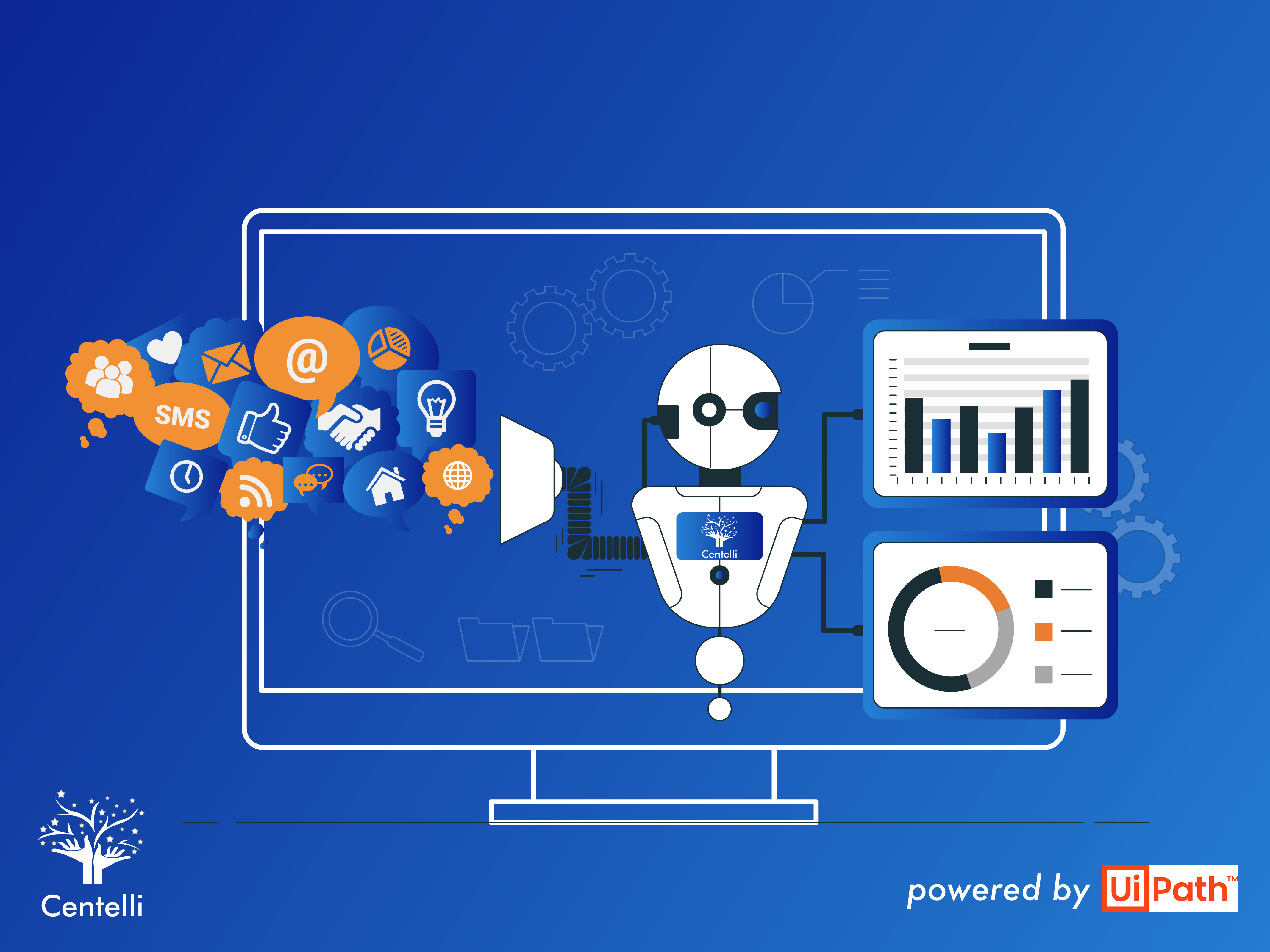
Insights from Centelli’s Latest Webinars: Leverage AI to Understand and Action Every Customer Request Effective communication is the backbone of thriving organizations- when everyone’s insights come together, great things happen. However, pulling meaningful information from the vast volumes of communication data coming in today can feel like an insurmountable task. This is where Communications Mining comes to the rescue. On May 16th and June 1st, Aneesh Gupta of Centelli and Tom Golebiowski of UiPath hosted a webinar exploring this revolutionary technology. If you missed it when it aired, read below to learn more, then get the full story at our webinar recording HERE! The Challenge with Communication Today, organizations receive a barrage of messages from diverse channels like emails, social media, and chat. While this provides unique opportunities for customer engagement, it also presents significant challenges. The overwhelming volume of data can quickly become a logistical nightmare, with manual data analysis and insights extraction proving labor-intensive and inefficient. Traditional methods fall short as shared inboxes become flooded, leading to response delays, overlooked opportunities, and heightened risks. Introducing Communications Mining Enter Communications Mining, a solution for organizing and deciphering the multitude of communications and converting them into actionable tasks. This tool enables organizations to manage and analyze messages and to extract useful insights from these unstructured data sources. Use Cases Communications Mining provides the ability to analyze message content, categorize it, extract crucial information, and predict subsequent required actions. Moreover, it can identify patterns, detect bottlenecks, and gauge customer sentiments. This information is critical for informed decision-making, process improvement, and enhanced customer experiences. For example, Communications Mining can help sort or filter inbound customer enquiries to be passed to the correct team more quickly. Additionally, it can analyze unstructured customer emails, converting them into automated tasks or tickets in other software systems so a fix can be queued and then actioned. Another notable application is analyzing large data sets, for instance to identify frequently asked questions from customers after making a purchase. These insights inform proactive training improvements, preventing similar inquiries from arising in the future. In short, Communications Mining is like having a smart assistant that takes care of your organization’s messages, helps you understand them, and delivers actionable insights to improve your business. It’s a game-changing tool that mitigates communication overload and helps you make the most of your data. With its no-code interface, effective training methods, and advanced AI models, Communications Mining offers a transformative solution for modern communication challenges. Organizations can swiftly implement and scale AI solutions across their communication functions, and the discussed use cases merely scratch the surface of its potential. Don’t miss the opportunity to stay ahead! To learn more about how Communications Mining works and hear real-life success stories, check out the webinar recording provided above, and look forward to more Centelli webinars in the future.
Prevent Healthcare Worker Burnout While Improving Patient Care

The healthcare industry faces a multitude of challenges that hinder its ability to provide quality care, despite noble intentions. Research consistently shows that healthcare providers are overworked, and this can result in a decline in patient care quality, staff burnout, high turnover, and reduced patient satisfaction. The Challenge of Staff Burnout in Healthcare Recently, patient-focused healthcare technology firm Holon Solutions conducted a survey that sheds light on the issue. The results showed that a staggering 77% of healthcare workers experience burnout. One cause was the significant amount of time- 34%- spent on administrative tasks such as patient notes, charting, and data entry. All these issues may be exacerbated by the coming workforce cliff, which Centelli discussed in an earlier article. As a solution, just under three quarters of survey respondents expressed an interest in technology that could reduce the burden of administrative tasks. Benefits of Automation in Healthcare Both healthcare providers and patients suffer in this situation, but, fortunately, automation offers a promising solution. Contrary to the common perceptions of automation as impersonal, it can enhance the “human touch” element of healthcare. Automating Administrative Tasks For instance, by automating administrative tasks like appointment scheduling, patient registration, billing, and data entry, healthcare workers have more time to focus on meaningful aspects of patient care, including communication, empathy, and clinical decision-making. This results in a more personalized and compassionate approach, improving patient outcomes and satisfaction. Additionally, automation reduces the likelihood of errors, ensuring accurate and timely care. Improved Employee and Patient Satisfaction When healthcare workers are empowered to use their skills and knowledge to assist patients, they experience higher job satisfaction and a greater sense of fulfillment. This leads to a virtuous cycle where happier and more engaged providers offer better care, resulting in more satisfied and loyal patients. Addressing Understaffing Challenges Additionally, insufficient staffing is a significant issue contributing to healthcare worker burnout. In the Holon Solutions survey, 70% of respondents identified it as a major factor. Automation can play a vital role in alleviating this issue by reducing workloads and therefore the burden of understaffing. Doing so can lead to reduced staff turnover rates and improved staff morale. Saving Money Finally, automation is a money-saver! According to non-profit organization CAQH, the healthcare industry could save $25 billion annually by fully automating business transactions. Centelli- Your Partner in Automation In conclusion, implementing automation in healthcare has the potential to transform patient care and outcomes for the better. Don’t fear automation! By streamlining administrative tasks and minimizing errors, automation lets healthcare providers devote more time to patients, ultimately improving the quality of life for providers and patients alike. At Centelli, we specialize in automating repetitive, time-consuming tasks. Our Digital Workers help to optimize processes, allowing healthcare providers to focus more on patient care. If you want to improve your healthcare business for employees and patients alike, Centelli delivers customized solutions to meet your unique needs. Contact us today for a free consultation!
How Digital Workers Can Pick Up the Slack as Birth Rates Decline
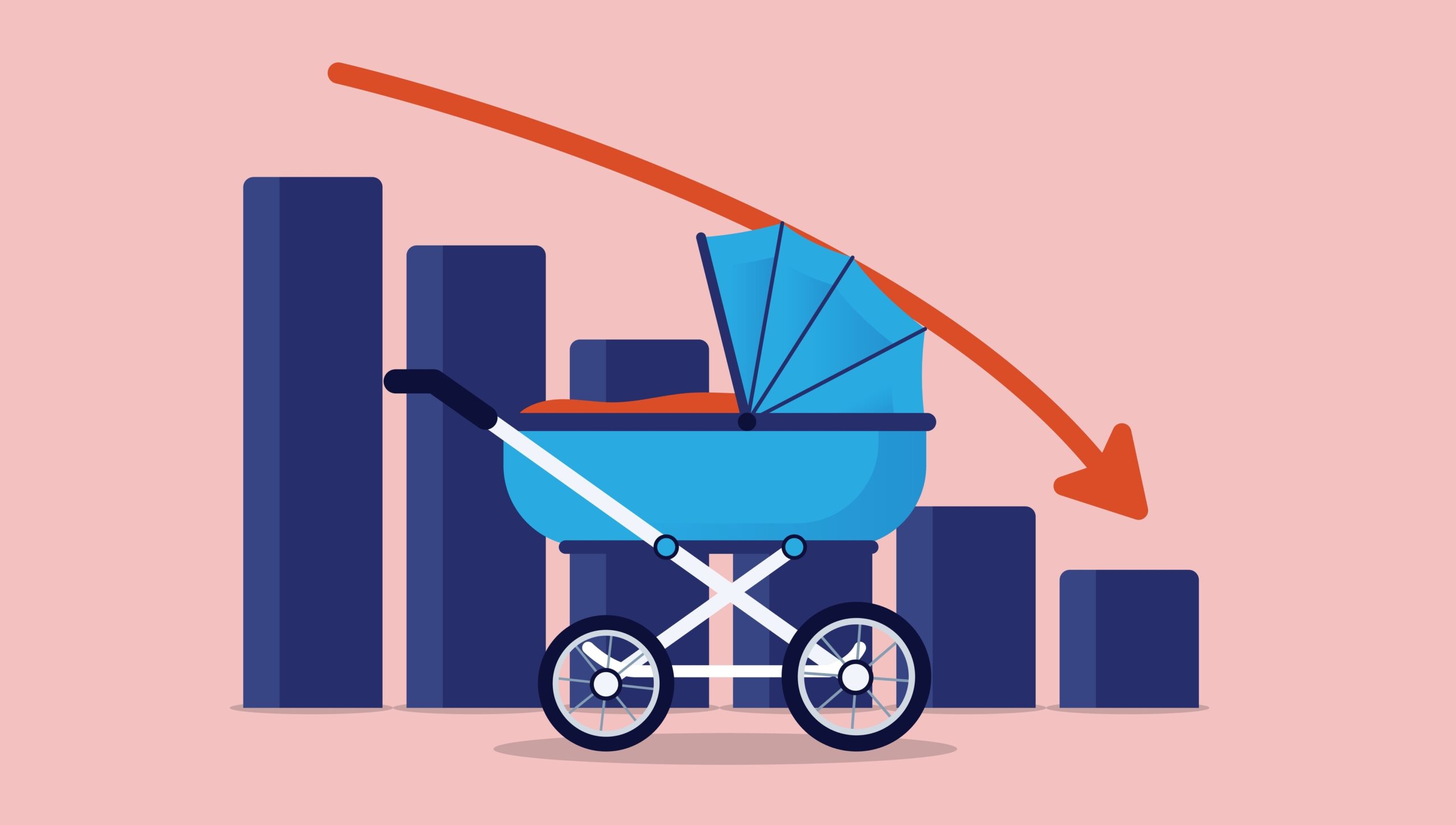
The Challenge of Declining Birth Rates Since 2008, birth rates have been declining, which may cause concerns in several areas, including the business sector. To begin, according to an article in the Atlanta Business Chronicle published in February 2023, higher education leaders are anticipating an enrollment cliff. This will result in a projected decline of 15% in college students by 2025. The effects of this decline will not be limited to universities, of course. It is expected to later result in a workforce cliff and potential labor shortage. Today’s workforce comprises two relatively large generations- baby boomers and millennials- with the smaller Generation X in the middle. Moving forward, two smaller generations will sandwich the millennials, resulting in a significant population gap in the workforce. The Role of Automation in Addressing Workforce Challenges To address this challenge, businesses will need to explore new ways of optimizing their workforce and operations. One potential solution is automation. Repetitive and rule-based tasks that typically require human workers can be automated. This will reduce the workload of human employees and free them up to focus on value-added activities. This approach would allow businesses to reduce the required number of human employees while also addressing the issue of lost workdays and time wasted by employees who are not engaged in their jobs. Introducing Digital Workers Digital Workers, our name for Robotic Process Automation (RPA), are one type of automation that can be deployed across many industries. They can automate a wide range of tasks, including data entry, report generation, and even more complex jobs such as customer support and email management. By handing these over to Digital Workers, businesses reduce the time and manpower needed for their operations, making them more equipped to face a labor shortage when the time comes. Moreover, repetitive tasks cause companies to lose thousands of workdays annually. Up to 20% of employees report wasting time due to disengagement in their jobs, which further exacerbates the issue. However, by implementing Digital Workers, businesses can automate these monotonous tasks. This allows employees to concentrate on more stimulating and rewarding work, ultimately leading to higher job satisfaction and increased overall organizational efficiency. Digital Workers can be deployed across many industries, including healthcare, hospitality, and manufacturing. Centelli’s Digital Workers are suitable for any task that doesn’t necessitate decision-making. They are designed to work non-stop and without breaks, ensuring consistent performance and heightened accuracy compared to human workers. Partner with Centelli for Digital Workforce Transformation In conclusion, the birth rates decline presents a significant challenge for businesses worldwide. However, by harnessing Centelli’s expertise, organizations can transform this challenge into an opportunity. Automating tasks with Digital Workers improves efficiency, reduces errors and costs, and frees up employees for value-added tasks. As RPA technology evolves, it promises to become even more efficient and intelligent, offering a sustainable solution for businesses across diverse sectors. At Centelli, we recognize the urgent need for businesses to adapt to the changing workforce landscape. Our team is committed to helping organizations optimize their operations and overcome workforce challenges. We guide you through the entire process of design, development, deployment, and maintenance of Digital Workers. Don’t let the workforce cliff hinder your organization’s growth and success. Embrace the future with Centelli, and schedule your free consultation today.
Digital Workers Don’t Quiet Quit (and They Help Your Employees Not Want To)

Pictured above: NOT a quiet quitter In an earlier article, Centelli discussed the phenomenon of “quiet quitting.” It’s a common occurrence in many businesses – employees show up to work and complete their tasks, but lack the enthusiasm to go above and beyond. This phenomenon carries negative implications for a business. Disengaged workers can lead to low productivity and high turnover rates. While it’s easy to criticize “quiet quitters,” it’s essential to understand that the underlying issue may be deeper than a lack of motivation. The mere choice of the name “quiet quitting” demonstrates a reluctance from business leaders to examine ways to truly solve the problem. Instead, it attempts to turn the blame to employees. “Quiet quitting” is not really quitting, but a burnout response. As business owners, it is our responsibility to create a work environment that fosters engagement and motivation, and digital workers can be a big support. Digital Workers for Quiet Quitting “Quiet quitting” is often a result of low employee satisfaction. To tackle it, it is essential to identify its underlying causes so that you can create an environment that is more conducive to happy and engaged employees. One way your business can address quiet quitting is by implementing Robotic Process Automation (RPA), otherwise known as Digital Workers. Centelli specializes in automating repetitive and time-consuming tasks that can lead to burnout and disengagement. Digital workers address common causes of quiet quitting in several ways, including: Promoting Work-Life Balance Quiet quitting may be a response to a growing trend of expected overtime. In fact, studies show that many employees work 45-50 hours a week to complete their overfull to-do lists. With workloads like that, it is understandable that some choose to simply step back instead. Vague encouragement from managers and media to “take time to rest” and “leave work at work” can feel hollow. This is especially true when employees are =given more tasks than they can handle in their regular workdays, regardless. Digital Workers give work-life balance back to your employees. Using their digital tools such as artificial intelligence and machine learning, businesses can streamline many processes and automate repetitive tasks. This takes quite a bit of busywork off your employees’ hands, which lowers their stress levels, enables them to complete their work within regular working hours, and allows them to better separate work and personal time. Finally, Digital Workers can operate 24/7, reducing the need for human workers to put in overtime to meet deadlines. Taking on Uninteresting Work Digital Workers are particularly useful for taking on repetitive, monotonous tasks that often become tedious for employees. By giving these to Digital Workers, employees are freed up to focus on work that allows more creativity and collaboration. This freedom improves business retention rate by helping to increase employee engagement, motivation and job satisfaction. Reducing Work Errors Digital Workers follow pre-defined processes, which reduces the likelihood of human error. Additionally, they can detect and flag errors in real-time, alerting human operators to take corrective action. All this leads to higher-quality, more accurate products from the business as a whole. It also helps to lower the risk of burnout and frustration for employees who are constantly fixing errors or dealing with incomplete or incorrect data. In conclusion, while quiet quitting may be a complex issue, businesses can take steps to address it by understanding and working to address its root causes. Centelli can assist by automating your processes through Digital Workers to supplement the human workforce and helping you create a more interesting, efficient, and flexible work environment. This will foster engagement and motivation in your employees, ultimately reducing quiet quitting and boosting the morale of all involved. To address quiet quitting in YOUR workplace, schedule a free consultation with Centelli
RPA & How it Streamlines Data Entry Processes

With the rise of Artificial Intelligence in robotic technology, various businesses are buzzing about the launch of Robotic Process Automation (RPA). The repetitive and time-consuming tasks that required many hours of work for humans are being replaced today by RPA which has a plethora of advantages. They include savings in cost as well as automating the routine work of desktops and boosting overall efficiency. In order to get the most benefit from RPA it is essential to make fresh investments to upgrade existing systems that are not required. RPA seamlessly integrates with existing software and hardware so that you get a complete and extensive efficiency improvement. Today the most advanced data entry services have switched to RPA platforms. This is to provide top customer care and support for their customers. In this article, we will get to know about RPA & how it streamlines data entry processes and how it facilitates manual data entry processes etc. What Exactly is Robotic Process Automation? RPA works as a software robot that is programmed to perform the duties that a human operator would perform. It can be trained to use computers just as humans do. It’s extremely adaptable and easily integrates into the current business processes and models. But the most important thing to remember is that it’s not an alternative to humans. Rather it enhances and contributes to the output quality of human-controlled processes. These tend to be in the areas where humans are required to carry out large quantities of fixed and recurring rules-driven tasks. These don’t require any decisions or the use of discretionary power. Businesses have gained a leading benefit due to RPA nowadays. It includes back-office work and administrative tasks workflow as well as IT support remote infrastructures. Because it’s robotic technology in action output and accuracy levels can be greatly improved by RPA. RPA for Data Entry & How does it Facilitates Manual Processes? Companies that are unable to implement fully automated systems into their data entry processes may use RPA. As already said, RPA can’t replace human abilities, however, the potential for it to ease the process and bring value to different segments of an enterprise is huge. Automated technology like RPA is in close cooperation with human resources. This results in the continuous exchange of information in order to meet business objectives. The scenario of the manual entry of data is a case in point. Businesses that handle data entry on their own or outsource data entry are aware that the basic principles of the procedure are carried by the human component only. Making sure that data entry is accurate and ensuring that the reports produced are of the correct form and format is performed by a human hand. Because data entry is a process that requires human judgment and insight RPA’s role is to ensure that the manual process is enhanced by a certain degree of automation. Tis ultimately leads to higher levels of accuracy, more efficient business outcomes, and better adherence. Know How Can RPA Helps in Providing Data Entry Results Robotic Process Automation has a significant function to play in helping to improve the manual process of data entry. It is also used to meet the demands of today’s digital age. Here are some ways RPA enables reduction of data entry errors. The advantages that result from it can be optimally utilized by the data entry service to give the most efficient results for clients- Facilitating more precise processes as a complement to entering structured data Accelerating the process of data collation when huge quantities of data from multiple sources must be collated in one form. It helps with the process of data entry so that mistakes are avoided, and data integrity, quality, and consistency are up to the highest standard. Many 3rd-party systems cannot be linked other than via digital platforms and IT solutions. RPA aids in the process of connecting other systems. The tedious work in data entry is hastened to make sure that the same staff is assigned to other tasks to enhance the efficiency of the business. RPA blends into various data-related scenarios such as data cleansing, extraction, enrichment, de-duplication, and data mining. When businesses outsource data entry, specialist agencies are actively using RPA for the complete process of data processing. Enhancing the flow of data processing manual from entry to the generation of reports. RPA aids data entry workers to attain a higher degree of accuracy. Especially in areas such as re-keying that can be prone to mistakes. This is due to RPA’s ability to automate specific steps of the process, allowing people to make thoughtful and informed decisions throughout the manual data entry process. RPA does not serve as an effective method to decrease the workforce. In reality, it is an effective method to increase productivity and increase the value of organizations through improved operational efficiencies. The Bottom Line Now that you are aware of the RPA & How it Streamlines Data Entry Processes, it is time to understand about data entry. It has been and remains an extremely important element of any company or industry, particularly in today’s technological age. With a myriad of corporations collecting important and sensitive data online, RPA automates data entry processes. Moreover, it makes sure that the data is backed up and fully reliable. Implementing RPA is genuinely and without a doubt worthwhile. Especially when a well-known Robotic Process Automation solution provider will provide unlimited license-free bots. This will allow you to save costs on bot license renewals. A group of highly skilled technology experts can speed up the design and implementation of solutions.
“Quiet” Conflict and How to Avoid it at your Company

Quiet quitting, quiet firing, rage applying. All are terms you may have heard circulating the web recently, but what do they mean for you and your business? Quiet Quitting “Quiet quitting” is a new term for an old phenomenon that is currently having a moment in the public consciousness. This trend entails employees consciously doing the “bare minimum” at work, and can include refusing to answer emails outside of work hours, work overtime, or take on extra assignments unrelated to core duties. The trend boosted in popularity in 2022 after New York engineer Zaid Khan posted a TikTok video discussing the sentiment behind it. @zaidleppelin On quiet quitting #workreform ♬ original sound – ruby “You’re not outright quitting your job, but you’re quitting the idea of going above and beyond,” says Khan. “You are still performing your duties, but you are no longer subscribing to the ‘hustle culture’ mentality that work has to be our life.” Quiet Firing, for the disengaged boss “Quiet firing” is the managerial counterpart to quiet quitting, when one drives an employee out of their organization without outright firing them. This can be done maliciously or unintentionally/passively, such as through failing to provide adequate support or career development. Rage Applying Perhaps a simpler concept, rage applying is pretty much what it sounds like: an employee demonstrating their dissatisfaction with their work through applying to other jobs, often to show their manager that better options are available to them. Rage appliers may apply to many jobs at once without any careful analysis. What these trends mean Each of these trends are concerning for a workplace as they point to discontent within it. While it can be tempting to blame the trends (and the social media that often spreads them), they do not cause the underlying problem, which is really what must be addressed. If you believe your employees- or you yourself- are engaging in any of these practices, it is time to step back and evaluate what is missing in your company. Common causes of dissatisfaction are overwork, lack of communication, inadequate support/coaching, and burnout and disinterest from uninspiring work. How Digital Workers Can Help In this turbulent work environment, Digital Workers may be the heroes you need. Centelli provides businesses with a Digital Workforce that we train and put to work in the businesses’ existing systems. Digital Workers carry out routine, repetitive tasks just like employees- except they’re faster, more accurate and need no downtime. This leaves human beings free to concentrate on value-added work. If you can train a person to do a repetitive task, you can train a digital worker to it. With time given back to employees and managers, Digital Workers free up space for better communication and more rewarding work. Additionally, with improved efficiency, employees should no longer need to work more than their allotted hours. This boosts productivity and employee satisfaction in turn, making your business, and your employees, healthier and happier. Learn more about how Centelli can help YOUR employees by contacting us to book your demo today
Your Employees Need Work-Life Balance (for Everyone’s Sake)

Work-life balance is achieved when a worker gives equal priority to the demands of their career and those of their personal life. Following the pandemic, it has become an especially high priority for many employees. With work needing completion and only 24 hours in a day, granting this freedom can be difficult for businesses. Thankfully, Centelli’s Digital Workforce has the solution for you. The Current State of Work-Life Balance Even as businesses and employees re-evaluate their priorities, the state of work-life balance remains grim. It is tough to achieve in the modern work environment, where a 40-hour work week can dominate an employee’s daylight hours, and an even higher number of hours logged is becoming increasingly common. A 2021 ADP survey found that employees work an average of nearly nine hours of unpaid overtime each week. This overworking doesn’t equal higher quality. Rather, it signals that employees are struggling to complete their assigned tasks. Emotional burnout is also a major problem, with just over half (52%) of workers feeling burnt out, according to a 2021 survey by Indeed. This burnout hurts employees and the businesses they work for, as it can lead to increased turnover and lowered productivity, as well as lower-quality work by bored and disinterested workers. The Demand for Better Work-Life Balance As workers got to reflect during their time at home, many concluded that overworking was simply not worth it. More and more workers are prioritizing their mental health, personal freedom, and quality time with loved ones. Additionally, a report by Hays found that nearly two-thirds (56%) of employees would accept a lower pay rate for a better work-life balance, while one-third (33%) rank work-life balance as their highest priority when job-searching. This sentiment makes sense, after all, what is money for if not to enhance one’s life? Why Are Employees so Busy? Surprisingly, the work your employees are so bogged down with may not even be what they were hired to do. Rather, study after study demonstrates that employees waste hours out of the day and weeks out of the year doing routine, menial tasks. In one survey of 2,000 U.S. and U.K. workers, more than half reported spending over 50% of their work day on repetitive tasks. This included data entry, filing documents, compiling reports, and managing invoices. In another study, more than 90% of respondents claimed to spend 25% or less of their day on creative work, instead dedicating it to routine tasks such as scheduling and attending meetings. 43% said they don’t typically finish their daily to-do lists. All this is not for lack of hours put in, either: 59% of U.S. employees work overtime. Clearly, this status quo is neither efficient nor good for employee satisfaction. RPA to the Rescue The million-dollar question, then, is how to keep your business at same-or-greater productivity while also giving your employees the work-life balance they need? One solution is adding Digital Workers to your workforce to take on everyday repetitive tasks. Digital Workers is Centelli’s name for Robotic Process Automation (RPA). We use this term because we train them in the same way you would train a person; they utilize keystrokes and mouse clicks like a human would. Digital Workers save time, reduce human error, and increase efficiency, ultimately saving your business money. Additionally, they work at all hours of the day, so the breaks to recoup are saved for the employees who need it. Digital Workers Help your Staff, not Replace Them The thought of hiring Digital Workers may bring up the common fear of having one’s job “taken by a robot.” However, Digital Workers do not exist to replace your staff, nor are they intended to. Centelli has found, in fact, that introducing RPA to a company’s operation actually helps with staff retention, as employee satisfaction increases considerably. Digital Workers help grow your value chain and maintain competitiveness without hiring costs. RPA frees employees from busywork, allowing focus on rewarding, complex tasks. Your employees don’t want to quit, but they do want to do more purposeful work. With Digital Workers, they can! Learn more about how Centelli can help YOUR employees by booking your demo today.