
5 AI Automation Trends to Know in 2026 if You’re a UAE Business

Want to explore five major AI automation trends surging today? With the UAE’s ongoing push to bolster its status as a global business hub, AI and automation are set to play a pivotal role. Adoption has gained steady traction in recent years—and it’s expected to accelerate as the government rolls out ambitious plans. A striking example is how the UAE Ministry of Finance revamped its internal processes using Robotic Process Automation (RPA), enhancing operational efficiency by 85%. Amazing, right? The environment also encourages AI exploration and practical applications across sectors. Notably, the UAE National Strategy for Artificial Intelligence 2031 states: “We will transform the UAE into a world leader in AI by investing in people and industries that are key to our success.” However, the evolution isn’t limited to the public sector alone. It’s actively reshaping businesses across industries as well. Furthermore, as use cases, tools, and solutions continue to advance, many exciting new concepts are emerging. Top Automation AI Trends to Know in 2026 In a market like the UAE — driven by ambition and innovation — staying ahead of the curve is crucial! So, whether you’re a business, an organization, a leader, or part of the workforce, the following AI automation trends are worth noting. And they’re making waves worldwide! Let’s dive in! 1. AI-Enhanced RPA No doubt, the traditional RPA is great for repetitive, rule-based tasks involving structured data. But when you marry RPA with AI tech like Machine Learning (ML), Natural Language Processing (NLP), or Computer Vision — that’s when things get next-level! Key Features: Value Delivered: Reduces manual intervention, increases processing speed and accuracy, optimizes workflows, and frees up teams to pursue high-value tasks. 2. Intelligent Automation Intelligent Automation (IA) merges RPA, AI, Business Process Management (BPM), and other technologies to automate more complex, cross-functional business workflows. Often referred to as Cognitive Automation or Digital Process Automation, it also includes applications like Generative AI. Key Features: Value Delivered: Supercharges digital transformation, uplifts operational precision, boosts organizational agility, and fosters continuous innovation. 3. Digital Workers These are AI-powered software bots designed to operate like virtual team members, capable of managing both routine and complex tasks. Key Features: Value Delivered: Improves productivity, minimizes human errors, accelerates turnaround times, and enables staff to focus on strategic priorities. 4. Hyperautomation In simple words, it’s a comprehensive, accelerated approach to automating as many business and IT processes as possible within an organization. Key Features: Value Delivered: Expedites digital transformation, supports data-driven decision-making, and builds greater operational resilience. 5. Agentic AI An advanced class of AI systems built around autonomous agents capable of perceiving, reasoning, and acting independently to achieve specific objectives. Key Features: Value Delivered: Automates knowledge-based, multi-step processes, elevates problem-solving capabilities, and unlocks new opportunities for intelligent automation. If You’re a UAE Business Looking to Leverage AI / Automation Whether you seek operational efficiency, real-time decisions, an empowered workforce, or streamlined costs, please understand: AI and automation aren’t a cookie-cutter solution. Every organization should approach them based on its own complexity, resources, and goals. Nevertheless, we’re seeing a growing number of use cases across industries. Retail, Real Estate, Tourism & Hospitality, Construction, Manufacturing, Transportation & Logistics, Healthcare, Financial Services, Telecom, Energy & Power, or Government – you name it! The same goes for departments and functions. Customer Service, Finance & Accounts, Back-Office, Inventory & Supply, Project Management, Human Resources, R&D, Product Development, Training & Development — AI/Automation is making its way everywhere. As trusted solutions partners of UiPath (Automation & Agentic) and Soroco (AI), we at Centelli provide custom-built, ROI-driven implementations that deliver real results. Book a no-strings-attached call today to discover how we can help your business. And now a few things to keep in mind: Here’re the key themes driving the present phase of business tech innovation via automation / AI.
AI in the Workplace: Scope, Ethics, and Choosing the Right Tools

AI in the workplace is becoming a key differentiator. From boardrooms to back offices, it is reshaping how organizations operate and how employees engage with their work. As industries transition into AI-infused environments, we’re witnessing both practical applications and ethical dilemmas unfold. This blog explores the twin impact of AI on organizational workflows and employee experience. We also overview the rise of hybrid human-AI intelligence along with tips on what to look for if you’re planning AI initiatives. Workplace AI Is Becoming a Core Productivity Driver AI technologies are actively transforming how work gets done! From automating repetitive tasks to enabling smarter decision-making, they are becoming a core productivity driver in the workplace. Interestingly, unlike earlier technologies that took years to reach mainstream adoption, AI is being integrated rapidly — thanks to user-friendly interfaces, cloud platforms, and APIs. And teams are completing tasks faster, reducing errors, and reallocating time toward strategic work! Over the past two years, the percentage of US employees using AI a few times a year or more has nearly doubled — from 21% to 40%. Frequent use (a few times a week or more) has risen from 11% to 19%, while daily use has doubled in the past 12 months alone, from 4% to 8%, according to Gallup findings published in June 2025. How AI in the Workplace Supports Different Roles Almost every industry today leverages AI in some form or at some level. From frontline operations to strategic planning, it is being embedded across processes. Top Use Cases of Workplace AI Across Roles: Strategic AI for Leadership While AI is transforming how employees work, its impact on leadership is equally profound. Senior leaders and decision-makers are now using AI to drive innovation, respond to change with agility, and make smarter decisions rooted in data. From strategic planning and SWOT analysis to KPI monitoring and scenario mapping, AI enables faster pivots, better forecasting, and more confident long-term direction. For captains, it’s becoming an indispensable tool to steer the organizational ship with clarity and precision. Promoting Ethical AI in the Workplace While AI brings many real benefits, we must also be aware of how to use it ethically and responsibly. Two typical challenges include algorithmic bias and data privacy. As global AI regulations evolve, staying informed and compliant will be critical for both organizations and individuals. Organizations deploying AI should: Clearly, senior leaders play a pivotal role in AI adoption and fostering a culture of responsible and meaningful use. As Julie Bedard, a BCG Managing Director and Partner, underscores, “The CEO must set the narrative that this isn’t just AI for AI’s sake. It’s about redefining work to create meaningful impact.” Employees interacting with AI should: Notably, most everyday AI tools don’t require deep technical expertise. Employees from across industries can quickly adapt with basic digital skills and some training. Hybrid Workforce: Humans and AI in the Workplace The modern workplace is transitioning from human-only work to human-AI collaboration. This shift is visible across sectors, not just in tech-heavy environments. Workplace AI is taking two forms: New use cases are emerging across departments and functions. Roles are being redefined, shifting focus from mundane tasks to complex, strategic work and value creation. Therefore, working with AI is no longer optional but a critical practical skill. “Top performing companies will move from chasing AI use cases to using AI to fulfill business strategy,” foresees Dan Priest, PwC US Chief AI Officer. With changing workplace dynamics, employees at all levels must also cultivate emotional intelligence and collaborative mindset to work effectively alongside intelligent systems. However, even as AI takes center stage, we must also acknowledge that human supervision cannot be fully eliminated, even for advanced AI models. Therefore, organizations exploring AI adoption should invest strategically to maximize ROI. Selecting the Best-Fit AI for Your Workplace The future of work is hybrid, collaborative, and inseparable from AI. But curiosity and trend-chasing aren’t enough! Organizations must make informed choices to truly benefit. One such choice is bringing the right experts and consultants on board to guide your AI journey, so you don’t end up hitting a wall. When evaluating AI partner and tools, consider: Explore AI Solutions with Centelli! Centelli is a long-term UiPath partner, delivering custom AI solutions that drive measurable results and real value. Here’s a glimpse of our AI capabilities: Book a free call with us to discover how we can support your AI journey today. ———————————————————————————————————– Quick FAQs on AI in the Workplace Whether you’re just starting out or scaling AI across teams, these FAQs have you covered. 1. How will AI change the future of the workplace? AI will reshape workplaces by automating routine tasks, enabling smarter decision-making, and introducing hybrid human-AI teams. As roles evolve, organizations will rely more on data-driven processes and adaptive technologies to gain a competitive edge. 2. How can AI be used in a workplace? AI can be implemented across departments to streamline tasks and enhance accuracy. Centelli’s Digital Workers execute routine processes with precision, while GPT-powered tools support document drafting, communication analysis, and insight generation. Thus, AI is a powerful operational ally. 3. How can AI improve workplace efficiency? AI streamlines workflows, reduces manual effort and error, and delivers reliable insights. Tools like scheduling assistants and intelligent dashboards help teams operate faster and more accurately. This frees up bandwidth for strategic priorities. 4. Why is the importance of custom AI? Custom AI solutions are designed to fit specific industries, processes, and workflows. Centelli specializes in building custom AI and automation tools that align with your exact operational and business needs. Download free guides here! 5. How can AI help organizations grow and innovate? AI drives faster decision-making, improves operational efficiency, and uncovers opportunities through predictive insights. Centelli’s agentic automation connects tasks, processes, and teams, helping businesses scale faster without overheads.
AI Impact on Business with Real Examples: Insights from Our KSU AI Symposium 2025 Session

At the recent AI symposium hosted by Kennesaw State University, our expert panel shared key insights on AI’s impact on business. We explored critical topics such as emerging paradigms, risk navigation, hybrid workforces, and more—issues at the top of mind for both solution providers and organizations looking to leverage AI. At Centelli, we value industry–academia collaboration as a platform for sharing knowledge on the latest AI and automation developments. For our session, I focused on AI and its interplay with automation in the rise of the agentic era, and how the maturity curve guides business impact. My esteemed co-panelists—Dr. Ajay Aluri from West Virginia University, John Foster, CIO of Libra Industries, and Jay Indrakumar, a healthcare digital transformation executive—presented real-world case studies from hospitality, supply chain, and healthcare industries, offering an insider’s view of AI at work. This article recaps some insightful and inspiring highlights from our session, giving a broad overview of how AI is reshaping industries and making bold strides in business transformation. AI, Automation, and Agents: The 3 A’s Reimagining Business The revolutionary waves of Robotic Process Automation (RPA) brought unprecedented levels of efficiency and speed to businesses. Now, the rise of Artificial Intelligence (AI) has opened new vistas of transformation and impact, driven by its cognitive capabilities. You can liken RPA software bots to the hands—mimicking human actions on a computer—while AI can be seen as the brains, i.e., it can think, make decisions, and learn. In that sense, AI is a true game-changer, enabling businesses to automate tasks that demand human-like intelligence at scale. Imagine the promise it holds—be it decision-making, business intelligence, cross-functional orchestration, or enterprise-wide resource optimization. The good part is that AI can be tailored to any industry, business, or process. [A pertinent example is CommsIQ, Centelli’s own AI-powered email triage tool for hospitality and travel, which can be customized to meet specific business requirements.] Notably, AI is merging with automation technologies to enable intelligent automations and hyperautomations for complex, end-to-end business processes—going beyond traditional RPA. It is also driving the next generation of advanced bots, known as Intelligent Digital Workers (virtual employees), as well as autonomous entities called “Agents.” However, as we enter the ‘agentic’ and hybrid workforce era, we’ll see highly productive workplaces where agents, robots (RPA/Digital Workers), and people work together in harmony. The operations mantra will be: ‘Agents think, Robots do, and People lead’. And the interplay of AI and automation and its maturity curve send a clear message: Understanding AI Impact on Business with Real Case Studies Following the deep dive into AI, Automation, and Agentic paradigms, the next leg of the session provided a closer look at how AI and automation deliver tangible value beyond theory. Here are key insights from the presented case studies, illustrating AI impact on business: AI and Automation in Hospitality Combining RPA, Machine Learning, and AI, Digital Workers (special software bots) can perform tasks traditionally handled by human employees. The first case study showcases a Digital Worker, named “Penny,” delivering scalable accounting efficiency for a leading hospitality brand managing 200+ hotels, spanning major chains and independent properties. The Digital Worker outcomes: The second case study explains how a Digital Worker called “Bertie” processes guest bookings across multiple platforms, reducing pressure on contact center staff at a renowned hospitality company operating in the UK. The Digital Worker outcomes: These use cases also suggest that AI-driven Digital Workers are generally non-invasive and seamlessly integrate with existing systems. Highly adaptable and capable of supporting conversational interactions, they operate 24/7, making them easy to scale and delivering faster ROI. AI and Automation in Supply Chain The presentation on the manufacturing and supply chain industry highlighted critical areas—beyond general functions—where AI’s predictive and real-time data capabilities can make a significant impact, such as production scheduling, delivery routing and leveling, and machine maintenance optimization. It also emphasizes that the automation potential within Procure-to-Pay and Supply Chain processes depends on the nature of the activity. For instance, tasks like payment and invoice processing or inventory management are highly suitable for automation, whereas procurement standards and policy development exhibit low potential. The following supply chain automation use cases were covered: 1. Shipping Notice Generation Before automation, sending 20–50 advanced shipping notices (ASN) every two hours required at least three staff members, leading to longer lead times, errors, and rework. Post-automation impact: 2. Purchase Order (PO) Creation Automation helped overcome challenges of time-consuming manual POs that often led to delays, errors, and rework. Post-automation impact: 3. Harmonized Tax Schedule (HTS) This use case gives a glimpse of how Agentic AI handles HTS code reporting for imports while also providing code justifications for faster resolution of wrong investigations. The tool stack includes CROSS customs rulings database query, as well as automation for ERP queries and web searches. Significantly, the case study also underscores the importance of providing clear instructions for Agentic AI to work effectively. AI and Automation in Healthcare Manual processes, fragmented systems, and data silos continue to strain both patients and healthcare providers. Specifically, the back office can no longer be overlooked, as revenue cycle management has become a strategic differentiator for healthcare organization success. Ways an AI-first approach and Agentic AI help elevate service delivery and patient experience: Next are some insights from the central “Conversational AI Predictive Model” case study that shows how AI processes patient interactions across multiple channels to generate actionable insights. The scenario: A healthcare facility receives 3X more patient interactions per year across channels such as contact centers, websites, chats, emails, and Google reviews—alongside 2M patient visits annually. AI Model Results: Ready to grow your business? Talk to our experts to discover how our custom AI and automation solutions can help. Book your free, no-obligation call today!
AI Hesitancy in Business: Act Fast or Fall Behind

Growing at almost 36% per year, the global artificial intelligence (AI) market is likely to reach USD 1.8 trillion by 2030. Significantly, AI-powered automation is also gaining traction across sectors. Yet, AI hesitancy among business leaders is not uncommon! Operational complexities, unclear ROI, and regulatory concerns continue to be the major barriers to AI adoption. On top of these challenges, AI models are evolving rapidly across text, vision, and voice — widening the scope of applications. Decision-makers must also navigate diverse approaches, from human-centric AI to fully autonomous frameworks, to unlock its benefits while minimizing risk. In short, figuring out what, why, where, how, and how much of AI deployment can be quite a task. Top 3 Reasons for AI Hesitancy in Business Explained So far, larger enterprises have been quicker to adopt AI than small businesses — for obvious reasons like greater financial resources and access to expertise to roll out AI programs. However, they also have their moments of hesitation and indecisiveness. Let’s explore the key reasons hindering AI adoption, regardless of business size. 1. AI Hesitancy Rooted in Strategic Uncertainty / ROI Concerns Following strategic barriers may prevent businesses from embracing AI: 2. Operational Disruptions When Implementing AI? Disruptions and downtime are a common worry for every business. 3. Alignment with AI Regulations and Compliance Landscape Companies are hesitant when they aren’t clear about responsible AI use. 5 Steps to Overcome AI Hesitancy and Staying Competitive Thoughtful hesitation isn’t necessarily a bad thing—it can protect businesses from FOMO and rushed implementation. Here are some practical steps businesses can take to overcome unfounded AI hesitation and make smarter, more deliberate decisions: 1. AI Literacy: From Top to Bottom Demystify AI for senior leaders first so they fully understand its value and scope for the organization! 2. Build a Robust Data Infrastructure Strong data foundations are essential for reliable and responsible AI. You May Like: Inside Data Management Automation with Digital Workers 3. Start Small, Scale Smart Begin with focused, high-impact deployments to build AI confidence and momentum for broader adoption. 4. Engage Your Workforce Successful adoption requires employees to understand AI and work with it effectively. 5. Consider Custom AI Solutions Generic AI tools may not always deliver the desired results. Tailored AI solutions offer a clear roadmap, helping overcome adoption barriers as well. Reach out to us if you’ve any questions or want detailed info about Centelli’s custom Automation and AI solutions & services. Finally: Fascinating Facts About Business AI Hesitancy & Adoption By 2025, nearly 78% of companies worldwide will have adopted AI, with most using it across an average of three different business functions, according to a report. However, there is a contrasting side — AI hesitancy and slower adoption even now. Surprisingly, in advanced nations as well! Furthermore, it found that AI users are more likely to work in IT, banking, finance, accounting, real estate, or insurance, and in roles that involve data processing. Surely, we can argue that compliance and cybersecurity sectors are deliberately slower to adopt AI due to their unique challenges. However, experts warn that AI hesitancy in businesses can increase their risk of falling behind. Regarding ‘maturity,’ the report clarifies that it means AI is fully integrated into workflows and delivers substantial business outcomes.
Gen AI and Automation: 7 Processes to Automate Before Gen AI Comes In
Gen AI and automation are top priorities for every business leader today. They’re under constant pressure to keep up with the latest technological trends! There is no doubt generative AI or Gen AI is transforming enterprise workflows. But the transition and adoption are not devoid of challenges! So, before bringing in tools like ChatGPT, Gemini, or Copilot, it’s wiser to automate first. It’s not a question of AI vs Automation — it’s about choosing a more pragmatic pathway to AI success. In this blog, we’ll tell you: Gen AI and Automation: Different Yet Complementary Traditional automation and generative AI are distinct concepts, not competing against each other. In fact, they’re synergistic. But before going ahead, let’s brush up on the concepts: Both technologies help you drive better efficiency and resource optimization. Human judgment and supervision add more reliability, nonetheless. Here’s the catch, though! CIOs are gung-ho about Gen AI, but there’s also dissatisfaction with current Gen AI results, Gartner notes. Well, Gen AI maturity, performance, and reliability are still a work in progress. But as said earlier, businesses can’t afford to miss riding the wave either. Hence, it makes even more sense to start by automating tasks you want Gen AI-enabled. Layer Up to Maximize Value: Automate First, AI Next Let’s understand how automation clears the decks, ensures best practices, and creates a solid AI foundation: Next, find out where the scope is! 7 Processes to Automate Before You Bring ChatGPT or Gemini So, you see it’s a win-win: automate simple stuff first and scale up to AI/Gen AI when you’re ready. Here’re the top workflows you should consider automating for Generative AI to truly shine. 1. Customer Service & Support 2. Data Analysis & Reporting 3. Finance & Accounting Download your free copy of our “AI and Automation in Finance Team” Guide here. 4. Human Resource Management Leading businesses across industries trust us to unlock the true power of Gen AI with smart, customized automation solutions. Let’s explore what’s possible for you — book a free online meeting today. Serving clients worldwide. 5. Legal, Compliance, Contract Documentation You May Also Like: Onboarding, Contract Management, and Policy Compliance – Centelli 6. Marketing, Sales, and CRM 7. Supply Chain & Logistics Don’t Fall for Gen AI vs Automation; Leverage the Power Duo Automating repetitive, high-volume, rule-based processes helps businesses eliminate inefficiencies, overcome compliance hurdles, and create a reliable launchpad for Gen AI success. This approach also reduces the time to implement more complex intelligent automations in the future. And do not forget the cost factor. Freemiums might suffice for individuals and small firms, but enterprise-grade paid generative AI tools are the way to go if you’re a medium or large-sized company. Layering AI on automation ensures the AI model can be trained as per your exact operational needs. Importantly, it serves as your AI investment safety net, streamlining costs overall. Drop us a line if you need more info or have any questions.
AI in Financial Risk Management: Robust Control & Smarter Decisions

The finance sector is evolving rapidly with artificial intelligence (AI) is at the forefront of this transformation. Financial institutions and organizations are increasingly relying on AI to manage risks, improve decision-making, and ensure compliance with ever-changing regulations. This article delves into the pivotal role of AI in financial risk management, highlighting key use cases that demonstrate its transformative impact on the industry. Furthermore, it also discusses the potential challenges along the way and emphasizes why balancing innovation with best practices is critical for successful and responsible AI implementations. AI is Transforming Finance Industry Landscape Traditional financial systems often relied on historical data and manual processes to evaluate risks. But the classic ways are inadequate in today’s fast-paced, digital and data-driven world. Here, AI has introduced advanced predictive models and real-time analytics. AI-driven algorithms can now assess credit risks, detect fraudulent activities, and analyse market trends with unprecedented speed and accuracy. We’ve been helping companies to leverage AI and Automation in financial services for over a decade. Not only does it enhance your operational efficiency, but it also creates a more robust framework for risk management. AI is emerging as the first line of defence for risk identification, assessment, prediction, and mitigation in the modern financial ecosystem. However, financial institutions vary widely, including banks, insurers, asset finance companies, investment firms, brokerages, and fintech firms. So, a cookie-cutter approach doesn’t work! AI-powered risk management tools and applications are being tailored to specific needs. Enhancing Risk Assessment with AI One of the key benefits of integrating AI into financial processes is its ability to process vast amounts of data. Machine learning models can identify patterns and anomalies that may be invisible to human analysts. The following examples illustrate the diverse applications of AI in risk assessment and management: AI and Risk Management: Balancing Innovation and Ethics While the benefits are substantial, implementing AI in finance also brings some challenges. For instance, data privacy, algorithmic transparency, and potential biases in machine learning models remain concerns. Furthermore, financial leaders must ensure that AI solutions are not only effective but also ethically sound and legally compliant. As financial institutions continue to embrace AI, the role of technology in managing risks will only expand. The integration of AI-driven tools offers the promise of proactive risk management, where potential issues are identified and mitigated before they escalate. Statista So, whether it’s product development, data handling, customer service, or risk management, financial organizations and institutions must approach AI adoption with diligence, a proper roadmap, and ethical considerations. This ensures they can mitigate potential challenges and responsibly harness AI’s capabilities to their advantage! Through all our Automations, we at Centelli emphasize the importance of a balanced approach—one that integrates innovative technology with robust governance and risk controls. This philosophy drives our Automation and AI solutions that we craft for our clients. The Future of AI in Financial Risk Management AI is reshaping finance, offering powerful tools for risk management that enhance both accuracy and efficiency. With continuous advancements and a focus on ethical implementation, AI stands to revolutionize the financial industry. You May Also Like: The First Steps to Leveraging AI in Finance Operations By following best practices and leveraging expert insights, organizations can navigate the complex financial landscape with greater confidence and resilience! Organizations willing to invest in these technologies today will be better positioned to manage risks and capitalize on new opportunities in the future. Book your meeting with our experts now
High-Performing Finance Teams: Unlocking Efficiency and Impact with Intelligent Automation
High-performing finance teams are the cornerstone of business success. However, even the most effective teams must evolve to continue their dream run. Systems become obsolete, processes grow stale, and inefficiencies creep in—and there’s no escaping the shifts brought by modernization and digitalization. So, you may need to reimagine your operations, enhance processes, improve workflows, and adopt better tools to keep achieving great results. Intelligent Automation (IA) can be a significant force multiplier for finance departments across roles. Think of IA as an ally, enabler, and amplifier—helping your team stay at the top of its game! High-performing finance teams are efficient, accurate, and fast-moving. They excel with strong analytical skills, the ability to use data effectively, and close collaboration. Intelligent automation can significantly enhance these capabilities, providing the tools and resources to become even more effective. Download our free guide “AI and Automation in Finance Teams,” featuring key insights and our real-world case studies. 5 Big Performance Blockers for Finance Teams There are two possible scenarios: If you are striving for a high-performing finance team, it’s important to identify and overcome the challenges and barriers that are stopping you. The most common performance blockers for finance teams include: You commonly see accountants working endless hours on data entry, updating, reconciling, or preparing reports. As boring and uninspiring as it is, errors and oversights are quite likely. These low-value yet time-intensive activities distract your team from more strategic tasks. Growing data volume is already a significant challenge, but navigating multiple data sources (e.g., CRM, ERP, PPM) can truly overwhelm your finance team, especially with archaic data management tools requiring manual processes. This makes tracking, reporting, and ensuring compliance a constant struggle. Slow processing, reworks, heavy workloads, and resource crunches can derail schedules and deadlines. Sudden assignments only add to the pressure. Not just routine tasks like monthly reporting and payroll—critical tasks like sales tax filings and audits can also drag on, increasing compliance risk. The Intelligent Automation revolution is here. This third wave of digitization and generative AI enables businesses to integrate unstructured content with analytical AI’s structured data capabilities. We can see massive productivity gains, particularly in finance operations, a report apprises. Financial information comes in diverse formats, and traditional systems may not be equipped to handle unstructured data like text documents, emails, images, and videos. Inconsistencies prevent an accurate, holistic view—a common issue with data silos and manual processing. Communication gaps among finance team members and with other departments can be a recipe for delays, errors, and poor decisions. Without collaborative workflows and real-time data, your team faces gaps, confusion, and outdated information. Tasks take longer, and overall efficiency declines. Intelligent Automation: Key to High-Performing Finance Teams Finance and accounting teams at every level can thrive with intelligent automation. Automated processes and AI tools help employees work quickly and accurately. Key Highlights: Wondering how it may pan out for different roles? 1. Finance Analysts/Accountants: Do More, Do Better—and Faster How? Freedom from mundane work. More exposure to value-add, strategic tasks enables upskilling and learning. Key Use Cases: Data Entry, Document Processing, Transaction Processing, Reconciliations, Report Generation, etc AI and Automation were the top CFO Priorities in 2024. We provide customized AI solutions crafted using the right tools and technologies to meet your exact operational needs. If you’re looking for Intelligent Automation solutions that deliver real impact and value, speak to us. Schedule your call here. 2. Finance Managers/Supervisors – Uplift Team Efficiency and Performance How? Empowers mid-tier managers to lead teams more effectively. Facilitates process innovations, helping them step into more strategic roles. Key Use Cases: Document Processing, Workflow Automation, Dashboards, Reports & Analytics, Process Mining, etc. 3. CFOs and Controllers – Boost Strategic Decision-Making & Outcomes How? Helps finance leaders position finance team as a strategic asset. And drive financial excellence and digital transformation, and business growth. Key Use Cases: Customized Reports, Data Visualization & BI, Predictive Analytics, Financial Risk Assessment, etc. Real success stories from our clients: Case Study: Our Automated Invoice Reconciliation solution has improved financial visibility for this automotive dealership group, improving decision-making. Case Study: This Atlanta-based healthcare provider leverages our Digital Worker for billing, records, and finance. It enhanced accuracy and efficiency while staying HIPAA compliant! Ready to transform your finance team with Intelligent Automation? Book Your Meeting Now! Key Takeaways Intelligent Automation is becoming a critical success driver for high-performing finance teams.
The First Steps to Leveraging AI in Finance Operations
Want to use AI in finance operations? But are you building the right foundation for it to work? As accuracy, speed, and efficiency have become key differentiators, many businesses are turning to AI tools and AI-driven processes to navigate ever-growing data streams and complexities. AI systems can process large datasets and perform mathematical computations at lightning speed. Applications with exceptional intelligent automation, analytical, and predictive capabilities unlock unprecedented levels of operational efficiency and financial intelligence. The game-changing evolution continues with extended capabilities like optical character recognition (OCR), natural language processing (NLP), conversational AI, and more. So, if you’re managing your financial operations without AI you’re missing out! But here’s the thing: technology is no magic. You need to build the right foundation to leverage its full potential and maximize ROI. AI in Finance Departments vs. Consumer-Facing Processes Financial processes within finance departments and customer-facing financial service processes (e.g. banking, insurance, or retail) are quite different. This means you need AI tailored to specific needs. For instance, a company may want to automate routine accounting, payroll, and tax filing tasks. They may also seek advanced data analytics and predictive AI for project finance management, budgeting, and risk evaluation. AI adoption in finance operations is growing rapidly. According to a Gartner survey, 58% of finance functions were using AI in 2024. Four main use cases that stood out include: • Intelligent process automation for information processing • Anomaly and error detection in large-scale data such as internal claims, expenses, and invoices • Analytics for improved financial forecasts and results analysis • Operational assistance and augmentation, primarily with GenAI In contrast, customer-facing financial processes focus on service delivery and customer experience. Some common applications include interactive chatbots, payment reminders, and tools such as EMI and loan calculators. AI also excels at data anomaly detection, identity verification, and real-time tracking. It can quickly identify data errors and unauthorized access, helping to prevent incorrect payments and unsanctioned transactions. Notably, these capabilities are useful for both types of financial functions. Critical First Steps for Seamless AI Implementation in Finance Clearly, the nature of your business and the financial process itself will determine the type of AI solution to be implemented. However, you must prepare the groundwork for successful deployment. Here are the 10 most important foundational steps you need to take: 1. Choose Financial Tasks to Integrate AI Understanding your precise needs and challenges is crucial for implementing AI in your financial processes. Identify the areas where AI can deliver the most benefit and value. Is it accounting automation, investor reporting, personalized recommendations, or financial forecasting? Consider quanitiative factors like potential investment and ongoing costs, and ROI, along with qualitative aspects such as better accuracy, time savings, and compliance, which indirectly benefit your bottom line and output. You can speak to experts (like us at Centelli) to help you identify the lowest hanging fruit – click here to book a call! 2. Decide the Level of AI Sophistication The right level of sophistication ensures that your AI solutions are both effective and efficient. Basic automation tools will suffice for rule-driven and repetitive tasks like data entry, report creation, or bill processing. AI’s amazing pattern recognition capabilities can create powerful identity theft and fraud prevention applications for you. Operational scale is yet another barometer. For example, intelligent automation with AI and RPA may suffice for small business workflows, but a large enterprise or an e-commerce platform may benefit from advanced predictive analytics and deep learning algorithms. 3. Get Your AI Technology Stack Right AI models for finance operations are designed using a mix of technologies, including programming languages, big data, ML/DL/NLP, visual recognition, generative AI, and more. Different combinations are meant to fulfill different purposes. For example, big data and machine learning can boost accounts receivable and optimize trade credit decisions by analyzing supplier payment patterns. RPA, OCR, and NLP, working together, can automate data entry from handwritten and printed documents while understanding the context of the information extracted from them. 4. Create IT Setup for AI-led Finance Workflows Make sure you have adequate IT capability to host your AI solution(s). Evaluate server capacity, data storage, and network bandwidth and optimize the existing set-up if required. You may need to upgrade in some cases. Also consider what’s more achievable and practical—a cloud platform or an on-premises solution. Weigh both options in terms of cost, security, and scalability. A robust infrastructure is vital for processing large datasets efficiently and ensuring smooth AI-driven finance workflows. 5. Gather Technical Expertise and User Skills Rich expertise in data science, machine learning, and related technologies is a prerequisite for crafting AI applications for businesses. You may also need to train in-house finance teams to use these tools and solutions effectively. However, AI-enabled consumer-facing solutions are typically user-friendly and highly adaptable. For example, interactive chatbots or robo-financial advisors require only basic smartphone skills. This allows human agents to focus on more complex and value-added work, while virtual agents manage routine and repetitive queries. 6. Assess Data Quality for AI Model Efficacy AI models are trained with pre-existing data. Evaluate your existing data sources for accuracy, completeness, and relevance. Make sure all data is cleansed and validated to feed the AI system you will deploy. Do you use multiple platforms to enter, store, and retrieve data? It’s better to create a centralized database for consistency and evaluation. Download our free guide ‘First Steps to Automation & AI in Finance Teams,’ to learn about common use cases & solutions we’ve successfully delivered! With poor data quality, you compromise AI performance and the outcomes for the financial processes it drives. 7. Outline Data Governance Mechanism While financial data is valuable, it is also sensitive. Whether it’s company or customer data, you must create a blueprint for managing data within your systems and ensuring compliance with relevant data privacy regulations (e.g., GDPR, CCPA). This will help prevent accidental data leaks, malicious breaches, and unauthorized access and sharing. Failure to comply can attract serious fines and penalties. In
Using AI Just for Blogs? You’re Overlooking Massive Gains From AI in Business Automation!
If you’re using AI to crank out blog posts and social media content only, you’re missing out on a massive opportunity to leverage AI in business automation. AI has markedly made significant strides in expanding its capabilities, scope, and usability. Many businesses—possibly your competitors as well—are using this powerful technology in combination with automation technologies to: This article discusses how you can harness AI in more valuable ways to truly transform your business. AI, Generative AI, and GPT: A Quick Roundup Notably, all three are quite distinct yet share common ground! AI in Business Processes Beyond Content While AI is widely used for content and creativity, you have several more opportunities to tap into its true potential. Here are some key business areas where it can help you: While publicly accessible generative AI tools like Google-owned Gemini and OpenAI’s ChatGPT are out there, you might benefit more from applications tailored specifically to your business and operational needs. At Centelli, we’ve created an informative guide that explores how a custom-built AI/GPT solution can streamline business processes and unlock greater value and scalability. Get your FREE copy here. So, you can see why intelligent automation is a more effective route to achieving seamless and highly efficient processes and workflows. The Idea of Human-Centric AI and GPT Human-centric AI and GPT enable you to create a modern workplace that thrives on the complementary strengths of both humans and AI. Let’s break down this idea with some examples: Gain More Efficiency with AI in Business Automation Generative AI and GPT are great tools for content creation and other creative tasks. However, if you aim to elevate business processes in both depth and range, AI-led automation is the way to go. This is because intelligent automation provides a more direct and efficient path to enhancing a multitude of processes throughout your business. Here’s a recap of how the two tools differ: Notably, AI automation ensures greater efficiency. Tasks like data administration and email management are two good examples of how it saves time and effort by sorting, filtering, organizing, and processing information. Additionally, its analytical, problem-solving, and decision-support capabilities further optimize and boost overall productivity. Next, see how AI Automation delivers more: There’s a lot of discussion around AI’s impact on businesses and workplaces. Interestingly, experts suggest that AI works best when collaborating with humans! This collaborative approach leverages the strengths of both, complementing each other. Our FREE guide showcases real use cases of Human-Centric AI/GPT Automations in action. Drop us a line if you have any queries or service requests!
WEBINAR: Leverage AI to Understand and Action Every Customer Request
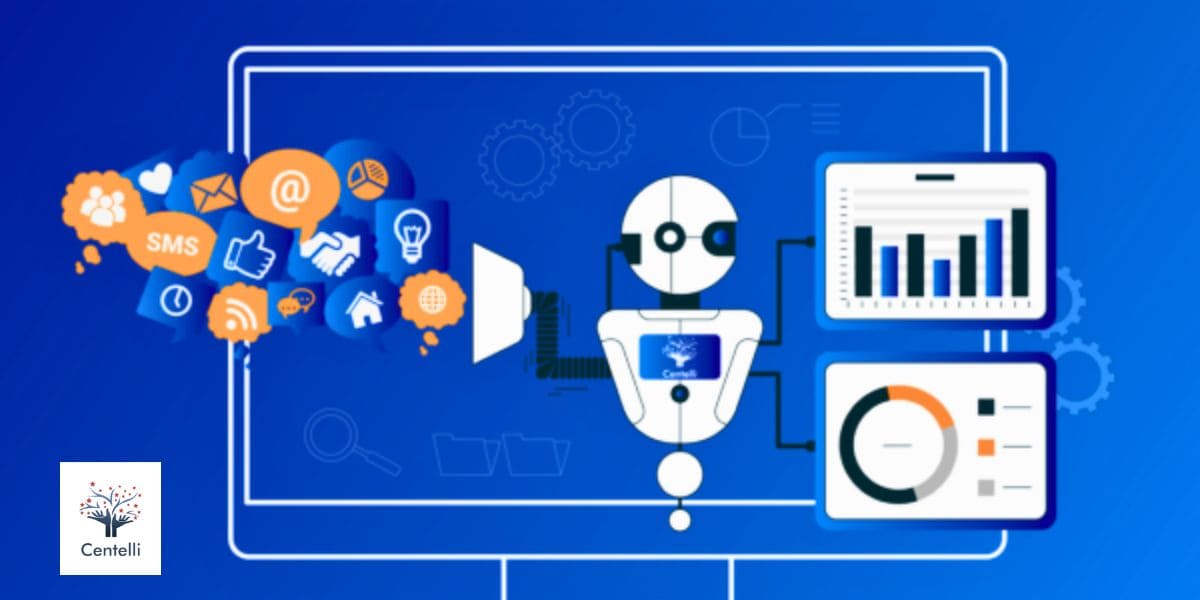
Want to know how you can use ‘AI in Customer Request Management’ more effectively? Especially when it comes to understanding and responding to unstructured communication? Centelli and UiPath hosted a 30-minute webinar on 16th May 3pm (GMT)/10am (EST). The key talking points included: The informative session on leveraging AI in customer request management and for unstructured communications covered: If you missed the webinar, here’s the session recording for you to watch on our YouTube channel. Please check it out and reach out to us if you have any questions or need more information about our automation and AI solutions. UiPath stands at the forefront of automation technology, empowering AI agents, bots, humans, and machine learning models to seamlessly collaborate—transforming industries and unlocking new levels of human capability. As a Certified UiPath Partner, Centelli brings deep expertise and a proven track record of success through custom-crafted automation implementations for businesses across sectors. – Centelli’s Digital Worker solutions enbale businesses streamline their workflows and achive geater accuracy and faster time to completion. – Notably, Digital Workers—also known as software bots—are an advanced form of intelligent automation. They are built to take on repetitive, tedious tasks, eliminating manual handling and reducing the risk of human error. – This not only streamlines workloads but also frees up human employees to use their skills and expertise on more strategic activities. – Moreover, apart from enhanced efficiency and productivity, Digital Worker implementations also help businesses ensure compliance with internal, industry, and regulatory requirements. – This also effectively mitigates business risk, supports growth, and streamlines resource utilization. However, if you already know what you need and are looking for a reliable custom AI solutions provider, you can book a meeting with our experts right away.