
KPI Dashboards – What You Need to Know About Them

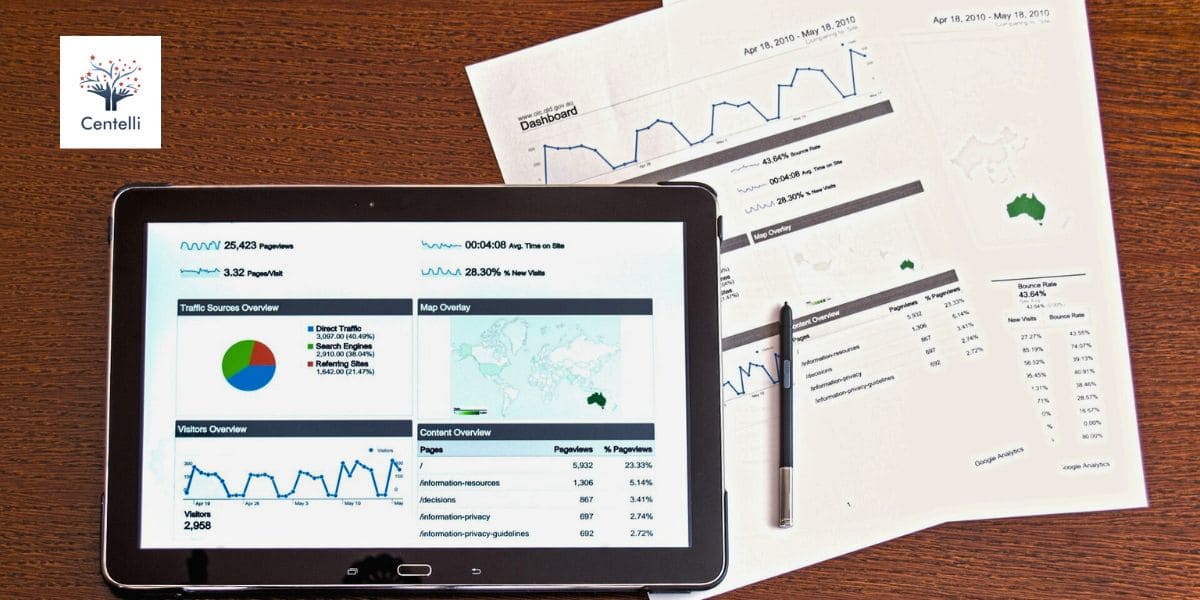
KPIs dashboards, or Key Performance Indicators, are the values that define how a business is achieving its key business performance goals. They help managers assess progress and determine where they are in the process of achieving their objectives . Different business functions determine and measure KPIs dashboards, in different ways that require many different data sets . Once KPIs are identified, it’s time to analyse these key business metrics. In the past this followed a rigid timetable and process. With the advent of real-time reporting features, this can be done when you need it, where you need to see it all in real time quite incredibly. About the KPI Dashboard Creating, organising and analysing KPIs and their associated data can be done effectively through a KPI dashboard. A KPI dashboard is a comprehensive, all-inclusive platform containing all the information you need in one place From tracking progress of individual indicators to sharing key parts with the team, a KPI dashboard can prove to be an insightful tool for businesses. The dashboard can be customised according to the unique needs of an organisation. 3 Types of KPI Dashboards Following are the three main types of KPI dashboards: 1) Strategic Dashboard This type of dashboard does not contain comprehensive information. Its shows data only from a single user’s perspective Its goal is to help managers and executives get insights about opportunities for growth. 2) Analytic Dashboard This dashboard presents trends and compares information across different variables and pulls raw information from your database and shows them on your dashboard 3) Operational Dynamic Dashboard This dashboard monitors information in real-time, when your data changes, these dashboards will update the figures. and can notify the concerned manager who can then take action accordingly. The 4 Elements of a Good KPI Dashboard The main goal of a KPI dashboard is to visually represent how an organisation is making progress in key business metrics. Here are 4 elements of a well-designed KPI dashboard: 1) It Is Simple and Easy to Read The data in the dashboard should be grouped logically. This allows data to be read easily by managers and different members across the team. 2) It should be Easy to Update You might expand or your KPIs might change over time. Make sure that the dashboard uses an intuitive platform that is easy to update. This will make adoption simpler. 3) It Should Provide a Snapshot in Current State and Historical Trends The design of the KPIs dashboard should be such that it provides a quick snapshot of what’s going on and how KPIs have performed in the past. This will lead to efficient goal-setting and monitoring of performance 4) Visual Representation Should Be Seamless The dashboard should not be cluttered. This means that information should be presented in a simple, and yet visually-pleasing manner. Animations and other visual tools can be used to complement data. With a team of of thorough data analysts, Centelli offers enhanced KPI framework consultancy services using cost effective tools. These enable modernisation of your business KPI reporting, to free you up, to refocus on what data can really do for you as a valued asset in your business. With a data-driven philosophy, Centelli also provides business intelligence consulting services to enhance a business’s processes and give you data driven insight to drive competitive advantage and the ability meet real customer needs.
Tips on How to Choose the Right KPI’s for Your Product

A KPI (key performance indicator) is a quantifiable measure that can be used to determine how to choose the right KPIs for your product well company goals are being met.
How Business Analytics Go Hand in Hand with Social Media Marketing
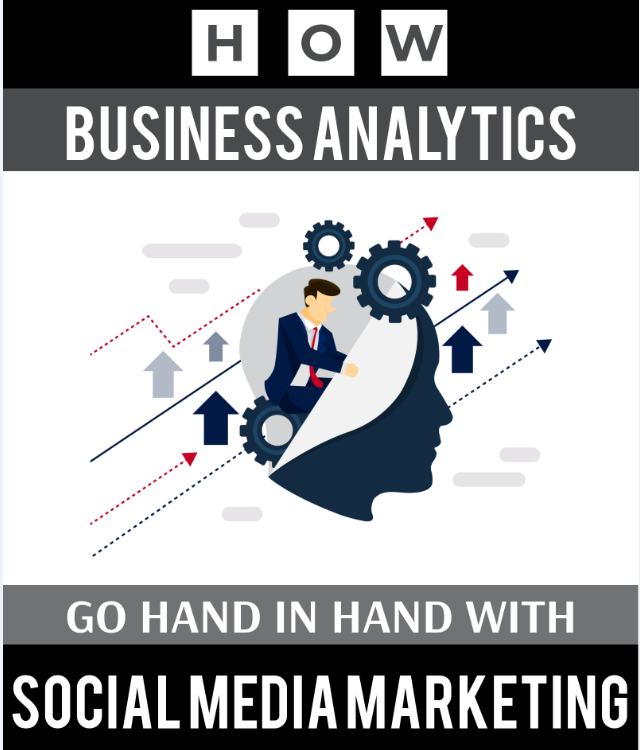
Companies using business analytics tools and intelligence are 5x more likely to make faster decisions.
Ways You Can Modernise your Business Intelligence

We are living in a business environment that is dominated by data. Whether it is marketing, finance, or operations, major decisions are based on insights from data. You must modernise your business intelligence (BI) if you want to sustain and grow. Previously, business intelligence was a luxury that small companies and organizations could not afford. In contrast, the big guns in the corporate sector hired teams of data scientists, who would mine data and provide useful insights to them as one offs to support big decisions. However, with the advancement of BI software, this has changed! Today, businesses of all sizes can make use of BI tools and analytical resources to gain an edge. 4 Key Ways to Modernise Your Business Intelligence In this competitive and fast-evolving landscape, you have a choice to make: struggle or modernize your business intelligence. And you’d surely prefer the latter. So, here are some ways you can do that and leverage maximum advantage out of it: 1. Use Self-Service BI Tools Your employees should not have to ask the IT team to provide relevant BI data. They must be able to access it whenever and wherever they want to. This is where self-service BI comes in. These tools can allow your staff to handle clients’ queries in a timely manner. Data can now be presented straight to your desktop, tablet or mobile phone. 2. Automate Processes for Business Intelligence Tools For your BI tool to function effectively, you need to make sure that the data gathered is of a good quality and accurate. Many enterprises still resort to manual processes. Their teams manually type in data on spreadsheets to be used by highly localised BI tools. However, the problem with this is that it can lead to: This can essentially render such BI tools almost useless! Make sure you are using automated tools for gathering and recording data (if your BI tool does not already have that). 3. Incorporate Other Device If you are looking to modernise BI, you cannot just limit it to Desktop, PCs or Laptops. You can now incorporate these tools into tablets and smartphones. Your customers and your employees have gone mobile. From buying/selling to reading emails, people use mobile phones on the go. Therefore, your BI strategy will greatly benefit from embracing mobile, putting information directly into the hands of those that need it. 4. Make Use of External Data Traditional BI would provide you insights about your profits, customer touch points, online sales, and so on. This is data is traditionally from internal sources. However, a truly modernised BI must be able to gather information from external sources as well. It should be able to help you blend this to drive insight and decision making. For instance, an event planner should have the capability to predict attendance, based on data from weather forecast reports, geographic attendance trends, knowledge of other simultaneous events, and plan accordingly. With a team of data scientists and BI gurus, we at Centelli help organisations modernise business intelligence. Our business intelligence and analytics consultancy can help you incorporate tools and solutions more effectively to transform the way you do business. Book your free consultation today.
Differences between Strategic and Tactical Business Intelligence

With heaps of data at their disposal, it would be naïve for businesses not to take advantage of it. However, business intelligence (BI) exists in many forms. Let’s take a closer look at strategic vs tactical business intelligence here! Both shape data-driven decision making in their own way. Markedly, modern BI tools enable the rapid collection, processing, and analysis of massive data pools. With such advanced mechanisms, business intelligence and analytics can provide incredible insights. As a result, BI greatly benefits business owners by improving productivity, enhancing customer service, and reducing costs. Strategic vs Tactical Business Intelligence at a Glance Strategic and tactical BI are the two major types (with the others being predictive, diagnostic, and descriptive BI). Although often used interchangeably, there are quite a few differences between the two. Now, let’s break them down individually for better clarity: Strategic Business Intelligence It’s primarily focused on how insights from data will be implemented, driving and informing strategy. It, moreover, supports planning and all forward-looking business activities. So, what sets strategic intelligence apart? Here are three key characteristics: 1. Oriented towards the Future The great thing about the strategic approach is that it can predict future conditions. This allows businesses to plan for the long term and make more informed decisions, removing the guesswork. By uncovering potential possibilities and probable outcomes, strategic business intelligence empowers them to formulate their future course of action. 2. Deals with Identifying Trends and Patterns Strategic intelligence can also help businesses understand current industry trends and make sense of consumer behaviour patterns. As such, it puts businesses more in the driving seat, in a better position to thrive. 3. The Upper Management Deals with Strategic Intelligence Since it involves looking at the bigger picture and deciding the future course of action, strategic intelligence is handled by the top executives – steering the “ship-of-business” by looking forward rather than looking backwards at the wake. Tactical Business Intelligence It’s a type of business intelligence that deals with how the strategies will be implemented and informs about the tasks to be performed. So, what defines tactical intelligence? Here are three key characteristics: 1. Deals with Present Scenarios Tactical intelligence provides real-time analysis of the current competitive landscape and operational performance. This helps businesses prioritize and take timely actions. Furthermore, it also enables them to achieve their objectives, stay on track, and align with the strategy and plans set through strategic intelligence. 2. Evaluates Whether the Company Has Enough Resources This model can help assess whether the company has adequate time, money and manpower to implement the plans. It tracks and informs about the effective use of all its assets. What’s more, it helps businesses make efficient use of their resources! 3. Different Departments can be Responsible for Carrying It Out Since tactical intelligence deals with actual implementation, different departments can be involved depending on company’s needs. To leverage these tactical and strategic insights effectively, businesses need the right tools, however! From BI Approach to Types of Business Intelligence Tools It’s no exaggeration to say that the advent of easily accessible software technology has leveled the playing field. Importantly, these applications can leveraged by small businesses and large enterprises alike. Moreover, many of these BI tools can be customized to meet a business’s unique requirements. With deep experience in Business Intelligence, we at Centelli help businesses thrive in the digital world. From strategy to solutions, we help drive your growth through: For more details or any questions, reach out to us today!
Creating a Culture of Data-Driven Decision Making
In a fast-paced, data-dominated world, you cannot afford to make business decisions based on gut feelings anymore. This also calls for creating a culture of data-driven decision making to pursue your organizational goals with confidence and greater certainty. No doubt, business leaders today recognize the importance of data. However, it’s not unusual to see that many companies still lack the capabilities to make decisions using data analytics. Big Data and data management technologies are no longer just fancy trends but are being embraced at a faster pace! This also means: Here are the top five ways you can develop a culture of data-driven decision making within your company: 1.Establish Key Metrics for Success First up, it is very important to define your key metrics. Ask yourself, what really needs to happen to make your business a success? Suppose you are a fashion retailer launching a new product line. From your sales department to your offline and/or digital marketing team, everybody should be on the same page about your company’s goals. Once you have identified key metrics, you can convey this message across the board. In cases of underperformance, you can easily pinpoint issues, home in on the root cause, improve what you do and take a better approach moving forward. 2.Democratise Data for Insight-Led Decisions The use of data should not just be limited to the tech guys in your company. Each member of your staff should be given tools and resources to understand data and take relevant action. With advanced software technology, data democratization has become quite easy. By empowering your employees in technology, you are creating citizen data scientists – people who can be of great value to your organization in future. 3.Measure Everything; Foster Data-Backed Decision Making To cultivate a data-driven culture, you need to measure (almost) everything and know their interrelationships. It would be great if the particular aspect can be quantified. If not, make sure you assign a value to it. A probable piece of information is always better than no information at all. Such an initiative will help foster a right data-led mindset among your employees from top to bottom. It will entrench itself deeply into their personal work culture, ultimately benefiting the company as well. 4.Enhance Reports and Dashboards Long boring spreadsheets have given way to interactive, colorful dashboards. This has been an interesting evolution in the world of data. So, make sure your dashboard and reporting mechanisms are appealing, and that they do help users make sense of data and align to your key measures. What’s more, they should operate in real-time so that your staff can make instant decisions. 5. Allow Experimentation to Boost Data-Driven Culture When it comes to building a data-driven organizational culture, it is essential that you encourage your employees to be inquisitive and curious. Also, allow them to experiment. Why? Because trial and error will be pathway that enables them to fully embrace Business Intelligence and Analytics tools. There is no doubt about the fact that slip-ups will occur from time-to-time. However, such let-downs are a powerful part of an inclusive learning process. Hence, they should be supported, valued and encouraged. We at Centelli offer business intelligence (BI) and data management consultancy as one of our services. Our team of data scientists and BI experts can help you to transform your data-driven decision making. Drop us a line for more info or any questions you might have.
The Brilliance of Simplicity: A Glimpse into the Future of BI

Business Intelligence (BI) is still evolving. Now more than ever! With several incredible changes on the horizon, let’s take an overview of where the future of BI is heading. Never in the history of mankind, did we have the power to change the world the way we can now. Thanks to Business Intelligence technology, the unimaginable—seemingly impossible—seems to be becoming quite possible. The IT industry has grown at an exponential rate. It is becoming increasingly invaluable for businesses to use technology correctly to fully benefit from it. Significantly, business intelligence is one of the key areas where advancements are offering much promise. BI has become a citical tool for companies to make smart, data-driven decisions. However, that’s not it. We can expect some incredible changes down the line. Keep reading… The Future of BI Is Collaborative, AI-Powered BI is coming out of the sidelines and evolving into a major business transformation tool. Here’s where Business Intelligence is moving next: 1. Dynamics Shifting Towards Collaborative BI Today, even with advanced tools and mechanisms, we see independent users not connected to any broader network. This is soon going to change, however. Experts predict a future with more collaborative workspaces, where users and tools are closely interlinked. Furthermore, they are connected through increasingly advanced network environments. Experts describe this collaborative form of BI as ‘shared, immersive analytic experiences’. 2. Future of BI Heading to Insight, Self-Service No doubt, our data gathering mechanisms have improved. From web analytics to CRM tools, there are countless ways for data collection. However, in the future, customers will be more knowledgeable about data. So, they would want to learn more about themselves through this data. Having direct access to their own data will enable customers to discuss and engage with it more. 3. The Rise of ‘Prescriptive Analytics’ We have all seen predictive analysis taking charge these days. Prescriptive analysis is the next step. While predictive analysis gives insights about data, prescriptive analytics will help us take action. Markedly, several major prescriptive analysis tools in use today allow advanced data mining, game theory, decision-analysis, etc. 4. There Will Be More Data Pro-Activity With ever-growing analytics and automation tools, there will be a time when these processes will not have to be initiated by humans. Today, BI includes sophisticated data visualisation tools, including intuitive charts and graphs. However in future, relevant data will come finding you, instead of the other way around. Real-time analysis and personalisation of data, will make this happen. Of course, AI, or Artificial Intelligence, technology will play a huge role in this! Are you bracing up for the shift? At Centelli, we offer expert consulting and exceptional Business Intelligence and analytics solutions. Our Business Intelligence modernization model helps your business align with evolving trends and achieve greater heights. Book a free consultation now or explore our BI & Analytics offerings here.
4 Ways to Leverage Data for Optimal Results

In this digitally enabled world, data has become of incredible value for businesses. If you are a business leader wondering how to leverage data for real value and impact, you are in the right place! No doubt, the companies who have employed forward thinking data management and analytics approaches, have gained a competitive advantage in this data-dominated world. However, the question is: how to capitalise on your data? How to Leverage Data for Optimal Results At Centelli, our team of business intelligence experts suggests four simple ways you can leverage data to your advantage: 1. Use Data to Create a Comprehensive Product Platform, Not Just a Pipeline In the past, one approach that businesses took was to push new products and services to their customers. This was called the pipeline model. Today, however, by taking advantage of data, companies can interact with their customers in a more meaningful way. What’s more, using the same data, they can scale accordingly. This helps them create a comprehensive product platform with the backing of robust data. 2. Leverage Data Analytics for Improving Customer Satisfaction With massive amounts of data that has been accumulated, it can become extremely difficult for companies to analyse that data and utilise it to gain a competitive advantage and increase customer satisfaction. However, using effective data analytics tools, the data obtained from web traffic, surveys, and call centre records can be used to give better insights that can enhance customer experience. Here is one key example of this in action: Global retailer Walmart leverages real-time data to fine-tune its personalized marketing, offers, and product recommendations. Want to make your data work to your advantage? Our business intelligence experts and data scientists can help you unlock its full potential. We specialize in gathering, organizing, interpreting, and integrating data across platforms for deep insights. Contact us today. Notably, AI-powered inventory management not only helps the company avoid issues like overstocking and stockouts but also ensures customer delight and wins more customers. 3. Becoming Reliable and Effective with Data Your customers want relevant and useful content in this digital world. Portraying yourself as a transparent company goes a long way in establishing you as a reliable source. Glassdoor and Indeed, online job search companies, for instance, do this effectively by providing a reviews and ratings section. Job seekers can use this section to learn more about the companies they want to join. 4.Using Data for Better Business Decisions Finally, managing and analysing data better can help improve your decision making. From enhanced supplier management to driving costs down, there are many ways data can prove insightful for you. Markedly, big data and data formats are evolving with new breakthroughs in technology and platforms to manage, store, process, and transfer. These present new challenges, and so you must ensure relevant expertise and create processes to manage it all.
Analytics in Retrospect: 3 Major BI Changes in the Past Decade
Whenever you hear about the latest BI changes in business, 9 out of 10 times, technology has played a major part. We are all witnessing revolutionary progress in smart gadgets and software. Of course, visionary entrepreneurs and business leaders are not only thinking big, but outside the box! However, we must realize that although innovation is a concrete part of this ongoing evolution, some BI changes in the IT industry are here to stay. And the modernisation of business intelligence is one of them. Business Intelligence: Then & Now If you take a moment to look back and consider the role of BI across a multitude of industries, the underlying purpose remains unchanged. Data is still important, as is the need to make smart decisions based on actionable insight. While this is mostly true—with the fundamentals of BI being the same to this day—it’s the emphasis on using that data in different ways that has seen the biggest shift in the past decade. Let’s explore 3 changes in BI that reshaped the landscape of business. 1. Ubiquitous Access to Data 10 years ago, there was a strong emphasis on maintaining one version of the corporate truth—very much like there is today. However, organisations didn’t have the means to share sensitive data easily. As a result, there wasn’t much exchange across departments without the risk of conflicting information. This is now changing, however! The recent advances in the business intelligence world have managed to change that. Today we see a greater focus on timeliness, scalability and user-friendliness, while still serving overall corporate needs. 2. Geospatial Analysis Maps aren’t meant exclusively for travellers or tourists. They’re an invaluable tool designed to help you navigate your goals and objectives. Whatever they may be! In the past decade, BI modernisation has allowed key decision-makers to map out their strategies, troubleshoot causes of failure, and devise a new plan to achieve success. 3. Internet of Things (IoT) According to Gartner, there will be 6 billion connected devices, requesting data support by the end of next year. This is only made possible due to a steady rise of modern BI tools and resources in local and international business. So, what we once perceived as a distant and potentially risky investment has now become a popular buzzword in the IT industry. Today, IoT encompasses a broad range of modern BI tools that are becoming better and better. These tools are singlehandedly transforming the way we store, transmit and utilise data for better performance. Which means whether you’re celebrating your organisation’s 1st anniversary or 10th, embracing change will allow you to evolve as a team and business. So, don’t forgo an opportunity to beat your competition. Think Smart. Think BI. Think Centelli! As a data management consulting firm, Centelli specialises in business intelligence and analytics. We use tools like Birst BI, Power BI, AWS, SAP, Incorta, and more to unlock the insights you need. To learn more about our solutions, get in touch today.
Exploring Birst BI Solutions and Their Key Benefits

We’ve heard a lot about the benefits of cloud deployment for business—but how much do we know about the advantages of Birst BI Solutions? Business gurus often talk about the boundless power of technological innovation. But, if not done right, introducing any changes to your digital infrastructure can be be risky and expensive. Still, thanks to advances in technology, the demand for self-service analytics continues to grow. And now with more options to improve the efficiency of a business, — like cloud BI tools such as Birst— companies have a cost-effective answer to tedious data management problems. So, What Makes Birst BI Solutions a Superior Choice? Why choose Birst? One word: performance. As an industry-leading cloud service provider, Birst gives users a compelling reason to abandon on-premise intelligence deployments for quick and seamless data accessibility and insight. In fact, this is one of the biggest reasons why an increasing number of international corporations are leveraging Birst BI to introduce agility and scalability to their business operations. So, let’s take a closer look at how it enables that. 1. Robust Integration Owing to Birst’s Embedded BI There have always been challenges in embedding complex data into your applications, especially if you’re short on time and domain expertise. Notably, Birst’s Embedded BI Analytics minimises the complications of the process. It does so by offering a comprehensive platform to pre-integrate data. This includes superior analytics functionality and quick data monetisation. 2. Multi-Tenant Cloud Architecture If managing and effectively governing large data sets is an ongoing issue at your organisation, Birst can help with these challenges as well. You will find its ulti-tenant cloud architecture very useful when it comes to horizontal scaling. Moreover, it allows you to add new computing nodes as you go along. There’s more! Birst also improves query performance with optimised SQL generation and intelligent caching. For this, it uses cutting-edge database technology like Amazon Redshift, along with the in-memory performance of SAP HANA. You May Also Like: Sudden Departures, New Arrivals: Transitioning from SAP BW to Birst BI 3. More Value from Data Enterprise with Birst BI Tool As a “value-based” approach to BI modernisation, Birst BI solutions promise a robust tracking and monitoring performance. This enables decision-makers to make quick and informed choices. By providing data in context, companies are able to make more insightful changes, but revise budget management to deliver better results. If you’re an organisation unsure of how to progress from your current BI solution, reach out to Centelli for your first free consultation. BI modernisation, KPI management, and data solutions are some of our key specialties and we can help you adapt to the latest tech trends. Or visit our BI service page to explore further.