
The Story Behind Centelli’s Rebrand and New Logo
We’re excited to unveil Centelli’s rebrand and new logo! The move reflects our evolution — from a business intelligence (BI) services firm to a well-rounded provider of intelligent automation (IA), artificial intelligence (AI), and BI solutions, and a trusted business transformation partner to leading organizations. Why rebrand now? Because the business and technology landscapes have changed—and so have we. This isn’t a cosmetic makeover, however. It’s a deliberate step forward as we begin our next chapter. But our spirit remains unchanged: we deliver results! Evolving through BI, Automation, and AI To understand this shift, it helps to revisit how our journey unfolded. In our early days, as we helped many growing organisations unlock growth with BI and analytics, we saw that insight alone isn’t enough. Real transformation depends on execution. This realization motivated us to expand into process automation. Over the next few years, we focused on building and running Digital Worker solutions across a wide range of functions and industries. While our implementations produced measurable outcomes and impact for our clients, every challenge and learning sharpened us. Then AI emerged as the next ground-breaking frontier in the business tech ecosystem. Our foray into AI was organic, synergistic, and closely linked to automation and BI. Today, tools and systems are increasingly harnessing the power of this blend—where BI provides context; AI brings intelligence; and automation drives execution. At Centelli, we leverage these technologies in ways that best serve our clients’ interests. Staying closely tuned to the trends shaping businesses and workplaces, we’ve broadened our portfolio to include: Centelli’s rebrand and new logo mark a strategic shift that exudes confident energy, embodies our disciplined evolution, and reinforces the value we continue to deliver. Centelli’s Rebrand is Rooted in Purpose and Partnership While our new look is an expression of our new ambitions and confidence, Centelli continues to stand on the same strong foundations: It goes without saying that this rebrand also belongs to you: our clients and partners! Your trust, collaboration, and evolving needs have inspired every change we’ve made. We want our new identity to instantly communicate the quality and innovation you’ve come to expect from us. Alongside our visual refresh, we’re also enhancing our website and digital channels to deliver a more intuitive experience, whether you’re exploring our solutions or reaching out to collaborate. Together, Let’s Build the Next Era in Enterprise Automation & AI Looking ahead, we see a new era of enterprise automation and digital transformation emerging. Simply put, intelligence, automation, insights, and people are no longer silos. The future belongs to organizations that connect them seamlessly! At Centelli, we’re building intelligent systems aligned with this next leap: self-learning, adaptive automation that’s deeply integrated with your business strategy and digital transformation goals. We’re proud of where we started, and even more excited about where we’re headed. Centelli’s rebrand and new logo mirror that vision. Importantly, our focus remains clear: to create real business value through solutions that help businesses streamline complex processes, navigate operational bottlenecks, and scale effectively. And our journey continues, shaped by strategic pivots, purposeful innovation, and the partnerships that move us forward. Let’s build what’s next in enterprise technology, and more importantly, what’s right for your organization. Have questions or want to explore how we can help? We’d love to connect. Drop us an email for general inquiries, or schedule a free call if you’re ready to dive in.
AI in the Workplace: Scope, Ethics, and Choosing the Right Tools

AI in the workplace is becoming a key differentiator. From boardrooms to back offices, it is reshaping how organizations operate and how employees engage with their work. As industries transition into AI-infused environments, we’re witnessing both practical applications and ethical dilemmas unfold. This blog explores the twin impact of AI on organizational workflows and employee experience. We also overview the rise of hybrid human-AI intelligence along with tips on what to look for if you’re planning AI initiatives. Workplace AI Is Becoming a Core Productivity Driver AI technologies are actively transforming how work gets done! From automating repetitive tasks to enabling smarter decision-making, they are becoming a core productivity driver in the workplace. Interestingly, unlike earlier technologies that took years to reach mainstream adoption, AI is being integrated rapidly — thanks to user-friendly interfaces, cloud platforms, and APIs. And teams are completing tasks faster, reducing errors, and reallocating time toward strategic work! Over the past two years, the percentage of US employees using AI a few times a year or more has nearly doubled — from 21% to 40%. Frequent use (a few times a week or more) has risen from 11% to 19%, while daily use has doubled in the past 12 months alone, from 4% to 8%, according to Gallup findings published in June 2025. How AI in the Workplace Supports Different Roles Almost every industry today leverages AI in some form or at some level. From frontline operations to strategic planning, it is being embedded across processes. Top Use Cases of Workplace AI Across Roles: Strategic AI for Leadership While AI is transforming how employees work, its impact on leadership is equally profound. Senior leaders and decision-makers are now using AI to drive innovation, respond to change with agility, and make smarter decisions rooted in data. From strategic planning and SWOT analysis to KPI monitoring and scenario mapping, AI enables faster pivots, better forecasting, and more confident long-term direction. For captains, it’s becoming an indispensable tool to steer the organizational ship with clarity and precision. Promoting Ethical AI in the Workplace While AI brings many real benefits, we must also be aware of how to use it ethically and responsibly. Two typical challenges include algorithmic bias and data privacy. As global AI regulations evolve, staying informed and compliant will be critical for both organizations and individuals. Organizations deploying AI should: Clearly, senior leaders play a pivotal role in AI adoption and fostering a culture of responsible and meaningful use. As Julie Bedard, a BCG Managing Director and Partner, underscores, “The CEO must set the narrative that this isn’t just AI for AI’s sake. It’s about redefining work to create meaningful impact.” Employees interacting with AI should: Notably, most everyday AI tools don’t require deep technical expertise. Employees from across industries can quickly adapt with basic digital skills and some training. Hybrid Workforce: Humans and AI in the Workplace The modern workplace is transitioning from human-only work to human-AI collaboration. This shift is visible across sectors, not just in tech-heavy environments. Workplace AI is taking two forms: New use cases are emerging across departments and functions. Roles are being redefined, shifting focus from mundane tasks to complex, strategic work and value creation. Therefore, working with AI is no longer optional but a critical practical skill. “Top performing companies will move from chasing AI use cases to using AI to fulfill business strategy,” foresees Dan Priest, PwC US Chief AI Officer. With changing workplace dynamics, employees at all levels must also cultivate emotional intelligence and collaborative mindset to work effectively alongside intelligent systems. However, even as AI takes center stage, we must also acknowledge that human supervision cannot be fully eliminated, even for advanced AI models. Therefore, organizations exploring AI adoption should invest strategically to maximize ROI. Selecting the Best-Fit AI for Your Workplace The future of work is hybrid, collaborative, and inseparable from AI. But curiosity and trend-chasing aren’t enough! Organizations must make informed choices to truly benefit. One such choice is bringing the right experts and consultants on board to guide your AI journey, so you don’t end up hitting a wall. When evaluating AI partner and tools, consider: Explore AI Solutions with Centelli! Centelli is a long-term UiPath partner, delivering custom AI solutions that drive measurable results and real value. Here’s a glimpse of our AI capabilities: Book a free call with us to discover how we can support your AI journey today. ———————————————————————————————————– Quick FAQs on AI in the Workplace Whether you’re just starting out or scaling AI across teams, these FAQs have you covered. 1. How will AI change the future of the workplace? AI will reshape workplaces by automating routine tasks, enabling smarter decision-making, and introducing hybrid human-AI teams. As roles evolve, organizations will rely more on data-driven processes and adaptive technologies to gain a competitive edge. 2. How can AI be used in a workplace? AI can be implemented across departments to streamline tasks and enhance accuracy. Centelli’s Digital Workers execute routine processes with precision, while GPT-powered tools support document drafting, communication analysis, and insight generation. Thus, AI is a powerful operational ally. 3. How can AI improve workplace efficiency? AI streamlines workflows, reduces manual effort and error, and delivers reliable insights. Tools like scheduling assistants and intelligent dashboards help teams operate faster and more accurately. This frees up bandwidth for strategic priorities. 4. Why is the importance of custom AI? Custom AI solutions are designed to fit specific industries, processes, and workflows. Centelli specializes in building custom AI and automation tools that align with your exact operational and business needs. Download free guides here! 5. How can AI help organizations grow and innovate? AI drives faster decision-making, improves operational efficiency, and uncovers opportunities through predictive insights. Centelli’s agentic automation connects tasks, processes, and teams, helping businesses scale faster without overheads.
AI Hesitancy in Business: Act Fast or Fall Behind
Growing at almost 36% per year, the global artificial intelligence (AI) market is likely to reach USD 1.8 trillion by 2030. Significantly, AI-powered automation is also gaining traction across sectors. Yet, AI hesitancy among business leaders is not uncommon! Operational complexities, unclear ROI, and regulatory concerns continue to be the major barriers to AI adoption. On top of these challenges, AI models are evolving rapidly across text, vision, and voice — widening the scope of applications. Decision-makers must also navigate diverse approaches, from human-centric AI to fully autonomous frameworks, to unlock its benefits while minimizing risk. In short, figuring out what, why, where, how, and how much of AI deployment can be quite a task. Top 3 Reasons for AI Hesitancy in Business Explained So far, larger enterprises have been quicker to adopt AI than small businesses — for obvious reasons like greater financial resources and access to expertise to roll out AI programs. However, they also have their moments of hesitation and indecisiveness. Let’s explore the key reasons hindering AI adoption, regardless of business size. 1. AI Hesitancy Rooted in Strategic Uncertainty / ROI Concerns Following strategic barriers may prevent businesses from embracing AI: 2. Operational Disruptions When Implementing AI? Disruptions and downtime are a common worry for every business. 3. Alignment with AI Regulations and Compliance Landscape Companies are hesitant when they aren’t clear about responsible AI use. 5 Steps to Overcome AI Hesitancy and Staying Competitive Thoughtful hesitation isn’t necessarily a bad thing—it can protect businesses from FOMO and rushed implementation. Here are some practical steps businesses can take to overcome unfounded AI hesitation and make smarter, more deliberate decisions: 1. AI Literacy: From Top to Bottom Demystify AI for senior leaders first so they fully understand its value and scope for the organization! 2. Build a Robust Data Infrastructure Strong data foundations are essential for reliable and responsible AI. You May Like: Inside Data Management Automation with Digital Workers 3. Start Small, Scale Smart Begin with focused, high-impact deployments to build AI confidence and momentum for broader adoption. 4. Engage Your Workforce Successful adoption requires employees to understand AI and work with it effectively. 5. Consider Custom AI Solutions Generic AI tools may not always deliver the desired results. Tailored AI solutions offer a clear roadmap, helping overcome adoption barriers as well. Reach out to us if you’ve any questions or want detailed info about Centelli’s custom Automation and AI solutions & services. Finally: Fascinating Facts About Business AI Hesitancy & Adoption By 2025, nearly 78% of companies worldwide will have adopted AI, with most using it across an average of three different business functions, according to a report. However, there is a contrasting side — AI hesitancy and slower adoption even now. Surprisingly, in advanced nations as well! Furthermore, it found that AI users are more likely to work in IT, banking, finance, accounting, real estate, or insurance, and in roles that involve data processing. Surely, we can argue that compliance and cybersecurity sectors are deliberately slower to adopt AI due to their unique challenges. However, experts warn that AI hesitancy in businesses can increase their risk of falling behind. Regarding ‘maturity,’ the report clarifies that it means AI is fully integrated into workflows and delivers substantial business outcomes.
Recruitment Process Automation: How to Address Hiring Bias & Build Fairness

When it comes to recruitment process automation, many businesses aren’t sure what—or how much—they should automate. Concerns around regulations and candidate wariness only add to the dilemma for business leaders and HR heads. Yet roles need to be filled fast—before top talent walks away, hiring costs escalate, or work stalls for too long! But handling every task manually, especially with high application volumes, is painfully slow. And let’s face it: in today’s world of speed and precision, hiring shouldn’t take weeks or months. It’s no surprise, then, that more organizations now view automation as a key part of their hiring strategy. In this guide, you’ll discover which recruitment tasks are ideal for automation, how to safeguard against bias, and how to design a hiring process that’s not just efficient—but also fair and future-ready. Where Bias, Fairness, and Recruitment Process Automation Meet A bias-free recruitment system is critical to ensuring organizations don’t miss out on talent, suffer from a lack of diversity, or face legal risks. Strikingly, hiring bias and fair hiring are like opposite ends of the recruitment pipeline—one creates blockages, the other clears the way. An old proverb goes: There’s more than meets the eye! However, hiring systems—whether human-led or machine-driven (e.g., candidate assessment tools and applicant tracking systems (ATS))—might subscribe only to what’s obvious. Interestingly, stereotypes and clouded human perception and judgment can reflect in automated hiring systems through biased algorithms too. Even when an organization avoids intentional bias, unintentional bias can still creep into hiring decisions. It’s a loss when an organization unknowingly misses out on exceptional candidates—just because they don’t tick every conventional box, even if they might be a better fit for the role. So, it is critical to automate your hiring processes thoughtfully using the right tools and system design practices. Because a well-made recruitment automation system helps: A Strong Case for Automated Hiring Despite Skepticism Benefits, bias risk, and loss of control are the top considerations and concerns one may be looking at. Let’s go over these one by one and see what makes a strong case for automating hiring — despite skepticism or reservations. 1. Key Advantages? The inarguable benefits of recruitment automation! 2. Bias Risk? Ensure fairness via design and regular monitoring! 3. Loss of Control? Keep humans in the loop! 3 Layers of Mitigating Hiring Bias in HR Automation Unbiased recruitment is an amalgamation of a company’s HR ecosystem, culture, and practices. They are also the guiding ethics that define the vision and structure for recruitment automation. Understanding needs, goals, and scope is another critical step in deciding on architecture, tools, and workflows. Here are some good practices to follow if you are considering hiring automation. 1. Responsible Recruitment Automation Is Key Given the needs and benefits discussed so far, it’s clear that recruitment processes have much to gain from automation—when models are trained responsibly and regularly audited. Furthermore, you can create transparency in how metrics are collected or interpreted. Additionally, offering candidates the option to opt out or request a human review helps foster goodwill and reinforces fairness. 2. Compliance with AI Regulations in Recruitment Organizations and automation experts need to stay mindful of the evolving legal landscape and local AI regulations to ensure compliance when automating recruitment. Here is a quick look at AI-driven hiring regulations around the world: 3. Mapping Automation Models to Hiring Tasks Recruitment automation is transforming how companies hire. However, not all automation is created equal. When fairness and bias are top concerns, it’s critical to understand which processes can be safely automated. Fortunately, many recruitment tasks can be automated without compromising equity, transparency, or compliance. Others, however, may require deeper consideration—and more innovative frameworks for risk mitigation. 3 Tiers of Recruitment Process Automation: Safe, Safeguarded, Sophisticated Here’s a breakdown of key recruitment tasks, categorized by bias risk level and automation readiness! 1. Ideal and Safe for Bais-free Automation Following tasks are largely operational and do not involve subjective decision-making, making them ideal for automation: 2. Automate with Confidence with Safeguards These hiring tasks can benefit from automation if models are trained on diverse, representative data and supported by ongoing audits. 3. Build Bias-Aware Automation Design Some recruitment task automations require extra thought and checkpoints. Pairing bias-aware design with human oversight is the best way to approach them. For ex: Custom Recruitment Automation for Fair Hiring Do you know the number one cause of bias creeping into HR automation systems? Bias often enters through training data. Historical hiring patterns can encode discrimination (e.g., race, gender), for instance. Your recruitment tech stack might include everything from sourcing to applicant tracking system, and from scheduling to assessment and analytics tools. Imagine how bad data can lead to bad hiring decisions. The quality of your recruitment model’s training data matters! Significantly, custom recruitment automation solutions—such as Centelli’s Digital Workers—could be your safer option, as they’re custom-designed to match exact process needs. Fusing AI, ML, and NLP capabilities, Digital Worker bots are especially apt for operational and objective task automation. Why? Furthermore, the Digital Worker automation bots continue to evolve by leveraging process mining, LLMs, Gen AI, and other innovative technologies. (Download our Free HR Automation Guide!) Here are some tips to build an effective custom automated recruitment system: Looking for answers or want to explore Centelli’s custom HR and recruitment automation solutions? Drop us a line—we’d love to hear from you! Key Takeaways Many tasks are completely safe to automate, while some may require more advanced, innovative automation models. However, there are still some areas where AI maturity and automation is a work in progress. All in all: You May Also Like: Onboarding, Contract Management, and Policy Compliance
How Digital Workers Deliver Smarter, Scalable Data Management Automation

Picture your data processes — always on and free from manual effort. Data pipelines flow fast and seamlessly. Accuracy? Impeccable. Real-time insights? Delivered instantly. That’s the power of data management automation delivered by Digital Workers. So, you say goodbye to inefficiencies and add precision where it matters most! Old-school automation no longer cuts it, breaking down with the slightest application interface change, data variation, or workflow exception. Hence, savvy organizations are moving beyond classic tools in favour of solutions that ensure 24/7 accessible, reliable, and actionable data. Inside Data Management Automation with Digital Workers AI-powered software agents — aka Digital Workers — handle high-volume, rules-heavy, and time-sensitive tasks. They can manage the entire data lifecycle, from collection to reporting, without human intervention! 4 cornerstones of Digital Worker-led data management: Importantly, human oversight doesn’t have to be out of the picture unless you choose so. Significantly, with pre-defined rules and conditions, you can train these advanced bots to ask for validation, raise a query, or flag off unusual patterns and anomalies. So, you need not worry about bias or loss of control when digital workers drive your data management automation system. Now, let’s break down what Digital Workers can actually do behind the scenes! Automating Data Ingestion: No More Manual Effort The first step in any data process is getting the data in — and it’s often the most error-prone. Digital workers change that. It may span: Processing, Cleaning, and Validating Data Automatically Notably, data quality makes or breaks business decisions. Here’s how digital workers keep it clean, reliable, and consistent: Source: Tech Business News Seamless Data Movement, Integration, and Synchronization Also, moving data across systems is a common operational pain. Digital workers fix that. How? Organized, Scalable Data Storage and Management A well-managed data foundation ensures business growth without technical friction. Digital Workers realize it through: Turning Data into Insight, Faster Managing data is one thing — but turning it into actionable insights instantly? That’s exactly what digital workers deliver. Key examples include: Built-In Data Governance, Security, and Compliance With rising compliance demands and cyber threats, governance must be built into your data ops. However, digital workers handle it effortlessly. Things they can do: Your data challenges are unique — your automation should be too. Custom digital workers are designed around your business’s exact data management needs, workflows, and exceptions. Create Synthetic Data for Custom AI Modeling As AI adoption accelerates, businesses need secure, scalable, and diverse data for model development. Digital Workers automate synthetic data generation — producing artificial yet realistic data sets without exposing sensitive information. Key advantages: Join Our FREE AI & Automation Webinars!No jargon, no heavy tech. Discover expert insights, real-world cases, and POCs on how Intelligent Automation elevates business processes and drives value. Save your seat for the next session! Why Digital Workers Belong at the Heart of Modern Data Operations For modern businesses, the goal isn’t just efficiency — it’s building smarter, faster, and safer data operations that keep pace with constant change. However, legacy tools struggle in today’s fast-moving, interconnected environments. Here’s where digital worker-driven automation makes a difference. It empowers organizations to manage growing data demands reliably and at scale. The result? Maximized data assets, sharper business intelligence, and consistently better outcomes.
Email Triage with Digital Workers: Beyond Basic Automation
No, email triage isn’t just for overloaded office and business inboxes. Even lighter email flows can be disruptive. Time crunches, fragmented focus, and packed schedules are often to blame. In today’s near-instant digital communication world, how quickly and proactively you respond directly impacts revenue opportunities, customer experience, trust, and reputation. This is true no matter the size and scale of your business. But here’s the thing: Not all incoming emails carry the same value or importance. And amid the inpour, there’s always a risk of missing something you shouldn’t. For example: No business wants to risk communication gaps, mistakes, or missed opportunities. This is where Digital Workers make a difference. These intelligent automation software bots effortlessly declutter your inbox and smartly prioritize the messages that matter. Why Manual Triage and Basic Automation Aren’t Enough Another email drops in, and a decision needs to be made! Sources: OptinMonster, CloudHQ, OnFocus News How Manual Email Handling Typically Goes You have staff spending endless hours sifting through every single message to decide what to do next. It’s a time and resource-heavy chore. And it’s not just inefficient — it’s risky too. Don’t you think those hours could be better spent on tasks like coordinating operations, supporting other teams, or directly engaging with clients and customers — instead of just being glued to a screen? Then there’s the judgment factor. They might miss a critical message or mishandle one. And repetitive work like this is prone to human error as boredom and fatigue creep in. Here, automation offers a way out! You can leverage tools and rules to carry out pre-defined actions like sorting, filtering, and more. Things you can do include (But do remember — these are the simple things. Keep reading to uncover more advanced capabilities!): Did you notice the underpinning here? Low-level automation is confined by static if-then condition logic. Let’s dig deeper into this. Basic Email Triage Automation Can Go Only So Far Let’s be real. Foundational “if-then” automations might declutter your inbox a bit, but they’re far from a smart solution. Here’re the top four reasons why: In short, these setups might suit a small, low-volume inbox with predictable, routine messages. Email Automation Digital Worker’s Edge For dynamic, complex, and high-volume communication environments, basic automations fall short. That’s where you need a smarter tool like a Digital Worker – your AI-powered email assistant that delivers what a low-level automation won’t. Notably, Digital Worker can mimic human like actions and understanding to decipher the email context and take appropriate action in a seasoned admin-like fashion. Key capabilities these advanced software bots drive upon: Looking for custom Digital Worker-led email automation? Talk to our team! We build tailored solutions for every industry and business function, seamlessly integrating them across departments. Book a free call today. Why a Custom Digital Worker Wins at Email Triage Automation Off-the-shelf email triage tools can only take you so far. A custom-built AI Digital Worker is precisely tailored to your business communication, learning from your unique email data, messaging style, and workflows to automate triage with unparalleled precision and adaptability. Here’s what makes it a smarter choice: Check out CommsIQ, our customizable Email Triage Solution for the hospitality & travel industry. Bottom Line Your inbox can either drain your time or become a business advantage. And it’s not just about efficiency. You as well uplift customer satisfaction, strengthen partner trust, and improve employee experience in the process — all critical to business growth. Drop in a line for more info.
Gen AI and Automation: 7 Processes to Automate Before Gen AI Comes In
Gen AI and automation are top priorities for every business leader today. They’re under constant pressure to keep up with the latest technological trends! There is no doubt generative AI or Gen AI is transforming enterprise workflows. But the transition and adoption are not devoid of challenges! So, before bringing in tools like ChatGPT, Gemini, or Copilot, it’s wiser to automate first. It’s not a question of AI vs Automation — it’s about choosing a more pragmatic pathway to AI success. In this blog, we’ll tell you: Gen AI and Automation: Different Yet Complementary Traditional automation and generative AI are distinct concepts, not competing against each other. In fact, they’re synergistic. But before going ahead, let’s brush up on the concepts: Both technologies help you drive better efficiency and resource optimization. Human judgment and supervision add more reliability, nonetheless. Here’s the catch, though! CIOs are gung-ho about Gen AI, but there’s also dissatisfaction with current Gen AI results, Gartner notes. Well, Gen AI maturity, performance, and reliability are still a work in progress. But as said earlier, businesses can’t afford to miss riding the wave either. Hence, it makes even more sense to start by automating tasks you want Gen AI-enabled. Layer Up to Maximize Value: Automate First, AI Next Let’s understand how automation clears the decks, ensures best practices, and creates a solid AI foundation: Next, find out where the scope is! 7 Processes to Automate Before You Bring ChatGPT or Gemini So, you see it’s a win-win: automate simple stuff first and scale up to AI/Gen AI when you’re ready. Here’re the top workflows you should consider automating for Generative AI to truly shine. 1. Customer Service & Support 2. Data Analysis & Reporting 3. Finance & Accounting Download your free copy of our “AI and Automation in Finance Team” Guide here. 4. Human Resource Management Leading businesses across industries trust us to unlock the true power of Gen AI with smart, customized automation solutions. Let’s explore what’s possible for you — book a free online meeting today. Serving clients worldwide. 5. Legal, Compliance, Contract Documentation You May Also Like: Onboarding, Contract Management, and Policy Compliance – Centelli 6. Marketing, Sales, and CRM 7. Supply Chain & Logistics Don’t Fall for Gen AI vs Automation; Leverage the Power Duo Automating repetitive, high-volume, rule-based processes helps businesses eliminate inefficiencies, overcome compliance hurdles, and create a reliable launchpad for Gen AI success. This approach also reduces the time to implement more complex intelligent automations in the future. And do not forget the cost factor. Freemiums might suffice for individuals and small firms, but enterprise-grade paid generative AI tools are the way to go if you’re a medium or large-sized company. Layering AI on automation ensures the AI model can be trained as per your exact operational needs. Importantly, it serves as your AI investment safety net, streamlining costs overall. Drop us a line if you need more info or have any questions.
AI Made Realistic – Managing Hype, Risks and Practicality
The promise of AI is everywhere – efficiency, insight, automation – but so too are the risks it brings! Managing AI hype and risks is the first step toward turning its big promises into realistic, practical outcomes. Why is this so important? The message is therefore clear: AI is powerful – but also risky. Without careful controls, AI can make unintended decisions, leak data, or fall prey to manipulation. Managing this requires a strategic, proactive approach—one that balances ambition with responsibility. Navigating AI Hype and Risks: Recommendations to Ensure AI Safety Below are Centelli’s five essential tips to ensure AI delivers value and operates safely: Summary By combining AI’s analytical brilliance with automation’s precision, you not only preserve data security, compliance, and transparency….you also super-charge the ROI! But this isn’t just technical – it’s also about experience. Navigating strategies, designing guardrails, defining rules, and generally getting the right solutions for your precise requirements needs experience. That’s where Centelli steps in. Why Centelli? We already deploy AI + Automation solutions, for some of the world’s leading brands such as Burger King and Travelodge. And we’re a trusted partner for businesses across hospitality, finance, telecoms and more, working with all types of teams from finance to HR, customer service to ops. To find out how we can help you and your business, why not book a FREE initial call – at: http://localhost/centelli/book-a-call
How Digital Workers Are Powering Clermont’s Hotel Booking Automation
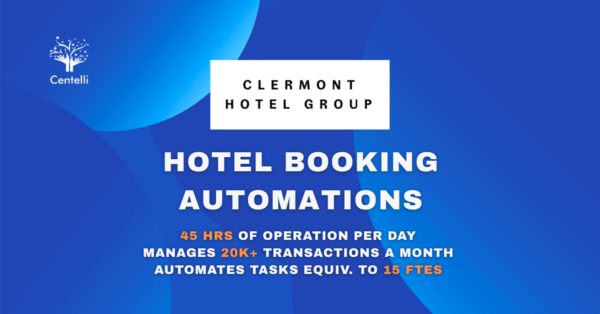
Hotel Booking Automation can be a game-changer for a hospitality business! Bookings and customer experience are core pillars of success in this industry. Guests must keep coming — and leave satisfied. And it all starts with the hotel booking system itself, because a seamless reservation is the first positive impression a guest takes in! However, Clermont Hotel Group was facing dual challenges: fluctuating demand and staffing issues. The pandemic brought unprecedented disruptions too, forcing a rethink. So, they decided to step up and found the perfect solution in automated bookings, powered by a Digital Worker. (It’s a special kind of software built to autonomously tackle repetitive, complex, or high-volume tasks!) Reimagining Clermont’s Hotel Booking System with Digital Workers The hospitality industry is known for its dynamic environment. Hotel companies constantly need to balance personal guest interactions with operational efficiency. Clermont Hotel Group, based in the UK, operates 16 hotels with over 4,000 rooms, more than 100 event spaces, and several bars and restaurants. Now, imagine the scale of operations and the sheer volume of booking inquiries they manage each day. Aiming to streamline their reservation system, the brand reached out to Centelli — and so began their ‘Digital Worker’ journey, which has been remarkably successful. Our team of Intelligent Automation experts designed, developed, and deployed a Digital Worker named Bertie. Key tasks Bertie performs include: The advantages of reduced manual processing, improved accuracy, and heightened staff and customer satisfaction are evident. Keep reading for more insights! 3 Key Benefits of Hotel Booking Automation with Digital Workers Bertie, the Digital Worker, has proven to be an indispensable asset for Clermont, delivering clear and tangible advantages. Here are the top three benefits: 1. Enhanced Data Handling Bertie extracts and verifies all relevant booking information from emails: This minimizes human error and ensures confirmation numbers and payment details are always correct. “Having a Digital Worker as part of the team is fantastic! It takes on the more monotonous tasks, more accurately and efficiently — leaving the rest of the staff to deal with bespoke requests.” Melanie Cole, Head of RSC, Clermont Hotel Group 2. Improved Operational Efficiency The Digital Worker delivers serious efficiency gains in bookings management: This has not only improved efficiency across the guest administration process but also eased our client’s recruitment challenges and helped cut back operational costs. 3. Streamlined Staff Workload and Experience Automation hasn’t just saved time on routine bookings and front desk tasks. With reduced workloads, Clermont’s staff now have more time to engage directly with guests, helping them to: Notably, this also enhances the employee experience and contributes to better staff retention. Setting Up Hospitality Digital Workers and the Cost Factor At Centelli, our Digital Worker solutions are custom-built — and for good reason. Every hotel operation is different, so we tailor these solutions to your exact needs, goals, and operational challenges. In most cases, the Digital Workers integrate seamlessly with your existing systems. While some adjustments may be needed occasionally, we typically work with what you already have. They can also be deployed alongside existing automations to enhance your system’s capabilities and drive even greater efficiency. “We already had some automation within our booking processes, but with so many partners and integrations, there was still a lot of manual data transfer. Centelli worked with us to understand that a Digital Worker could perfectly complement our existing processes.” Chris Ball, Business Development Director, Clermont Hotel Group A New Era of Hotel Booking Automation & Hospitality Innovation The impact Digital Workers have delivered for Clermont Hotel Group is a practical use case of how the right technology can transform your operations. And their value doesn’t stop at bookings! You can also use them for: These are some common examples, but Digital Worker automation is mouldable to many more functions and processes across hospitality. Significantly, with AI integrations advancing, these solutions are set to further reimagine this high-stakes industry. If you’re looking to automate your hotel booking system process or other hospitality operations, feel free to reach out and book a quick, no-obligation meeting today!
How Davidson Hospitality Saved 80% of Finance Team Time with AI, Automation
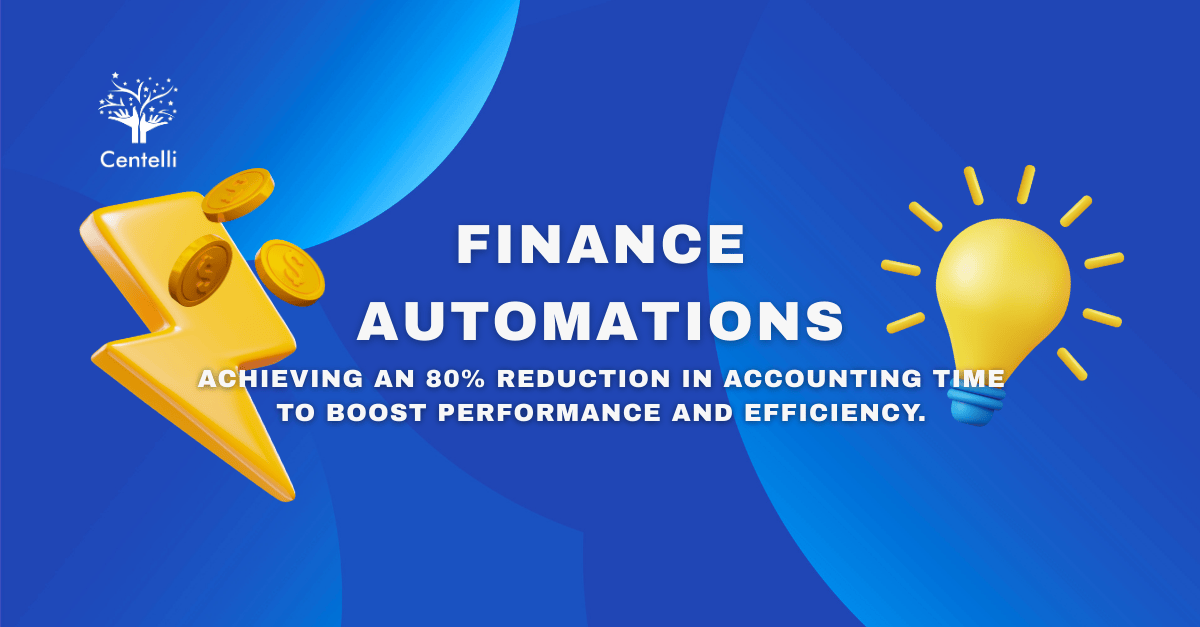
Davidson Hospitality Group has advanced its digital transformation by implementing AI and automation in its finance function. Partnering with Centelli, the group optimized its reconciliation process, ensuring all financial records are accurate and consistent. With simplified, streamlined process, Davidson’s accounting team can focus on strategic tasks, boosting productivity and enabling better insights that drive organizational growth. Importantly, this digital transformation also aligns with the company’s goal of integrating advanced technologies to enhance service offerings and operational efficiency. The Challenge Notably, Davidson Hospitality manages over 200 hotels, resorts, and restaurants. And it faced the challenge of reconciling financial data from multiple sources on a daily basis. The key ineffeincies included: So, these manual reconciliations, performed via older systems accessed through Remote Desktop, drained valuable time. Consequently, it limited the team’s capacity to drive business performance. How Finance Automation Makes a Difference Centelli’s solution introduced a Digital Worker (DW) designed to emulate human actions on a computer system. It manages tasks like logging into various applications, downloading data from banks, and processing it. Here’s a closer look at what the Digital Worker does: 1. Logins and Data Downloads: The Digital Worker bot securely logs into banking applications and downloads transaction data Then it starts the reconciliation process without human intervention. 2. Intelligent Data Matching: The specialized bot uses a central mapping spreadsheet to efficiently match transactions, interpreting naming inconsistencies and adapting to new data over time. 3. Seamless Integration with Active Systems: Despite the challenges posed by older systems, the Digital Worker adapts easily, ensuring continuous, accurate processing across multiple accounts. Real-World Financial Impact and Benefits of AI and Automation Significantly, the benefits of Centelli’s finance automation for Davidson Hospitality are transformative. If the numbers could speak! We all love our Digital colleague. While we are at home each night, they are working away doing what was the most time-consuming part of my day—reconciliations. This transformative shift empowers our staff to focus on high-impact activities that enhance their skills and drive exceptional business performance! — Kyla Lawson, Senior Corporate Accountant Why You Should Care Because this AI solution is not just an automation tool; it’s a strategic asset that enhances operational efficiency! For Davidson, this technology allows accountants to move away from monotonous tasks and focus on insights that drive the business forward. You may also like: AI in Financial Risk Management: Robust Control & Smarter Decisions You can also empower your finance team and achieve seamless reconciliations with Centelli’s innovative approach. Interested? Get in touch today to learn how we can help you!