
Onboarding Automation: Transforming Your New Hire Experience
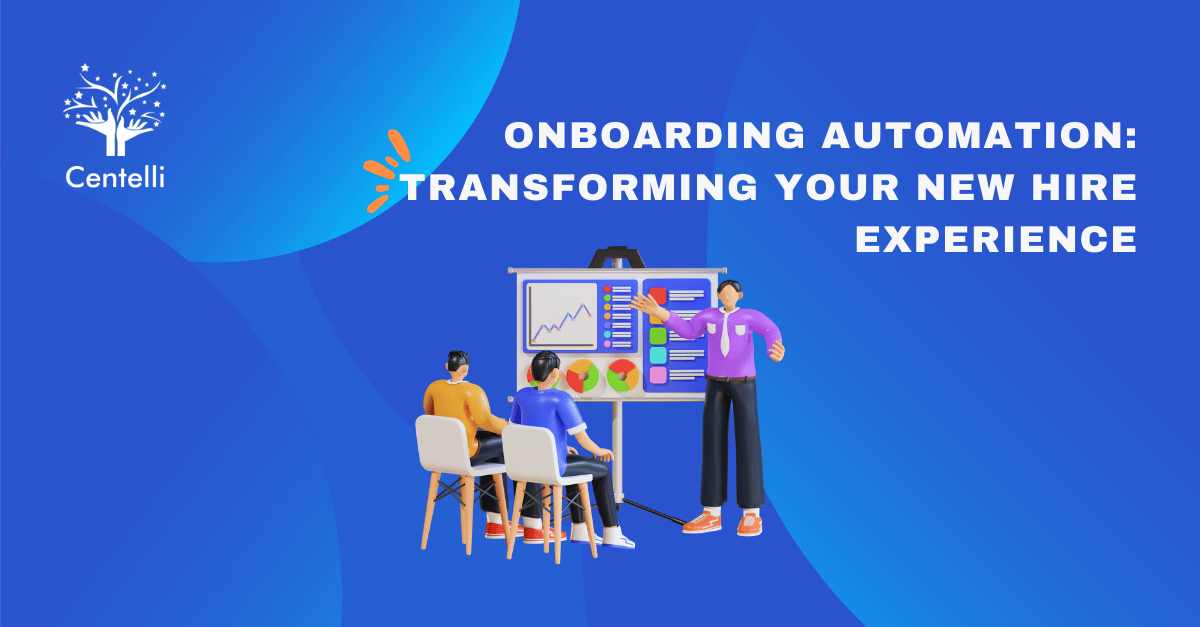
Seamless onboarding enables new joiners to smoothly integrate into the workplace. With ‘Onboarding Automation,’ organizations can streamline the process, helping new employees adapt, settle in, and become productive faster. In this blog, let’s explore some critical onboarding tasks your company can automate to transform its HR workflows. Also learn how ‘Automation Digital Workers‘ execute them, saving you time and effort! Overview of [Non-Automated] Employee Onboarding Businesses and organizations strive to implement the best HR practices, including a proper onboarding process for new hires. Interestingly, in many cases, the internal HR department manages the entire hiring cycle—job posting, interview process, hiring, onboarding, and subsequent administration. However, automated or not, employee onboarding typically spans four key stages: 1. Pre-Onboarding Involves formalizing the employment contract, paperwork, and collecting documentation from the selected new hire. Plus, setting up their workstation and sanctioning necessary equipment. Team and department introductions complete ‘Stage One’ of the onboarding. 2. Day One Onboarding Broadly covers the welcome and orientation, briefing new employees about their role, expectations, and performance metrics. Notably, it includes providing information about available benefits, policies, procedures, and so on. Typically done in-person for onsite staff and virtually for remote workers. Explore real-world use cases and tested strategies in HR automation! Grab our free guide to learn how your company can transform its HR processes. Download now! 3. First Week / First Month Onboarding HR ensures the new joiner has access to essential systems and processes. A mentor or buddy may be assigned, or training on job-specific skills scheduled if needed. Feedback and check-ins are set up to assess progress and/or probation. 4. Ongoing Onboarding for Continuous Growth Throughout the employee’s tenure, the HR team has many more tasks at hand: regular performance reviews, team-building activities, career development programs, employee engagement, recognition and rewards, grievance redressal, regular feedback, etc. Here you will notice that many of these tasks are repetitive, rule-driven, and mundane. For example, data handling, documentation, report generation, and scheduling. But they are also time-consuming and error-prone when handled manually. Even when HRM software is in use, many still require manual input and configuration. Now think how many hours each week your HR staff spends (or burns) on tasks that could be easily automated. Surely, there can be a much better use of your people’s time, effort, and skills! Right? Onboarding Automation: Simplify, Streamline, and Speed Up Onboarding can be complex, regardless of the scale and size of operations. The progression from candidate search and interviews to signing a contract and a new hire’s actual start date is often long and disjointed. This is especially true for entities with multiple departments, units, branches, locations, and a sizeable workforce. Onboarding automation helps tackle such inherent challenges. Here are the core pillars that drive its impact: A whopping 89% of respondents said a good onboarding experience made them feel highly engaged at work, a study says. Significantly, automation also frees up HR staff to focus on more strategic initiatives such as: Consequently, HR professionals can contribute more effectively to a business or organization’s employer brand and long-term success. Automating New Hire Onboarding with Digital Workers Digital Workers, also known as software robots or bots, can automate a range of individual and interconnected tasks, as well as end-to-end processes, freeing up human staff. We have already discussed some ways HR teams can be better utilized, rather than entangling them in mundane tasks. Centelli’s result-oriented and value-driven Intelligent Automation and RPA solutions help businesses and workplaces align with digitalization and technological evolution. Here’s how our custom-built HR Automation and Digital Workers can help with employee onboarding: 1. Pre-Boarding Task Automation 2. Orientation Program Automation Explore real-world use cases and tested strategies in HR automation! Grab our free guide to learn how your company can transform its HR processes. Download now! 3. Goal Setting via Onboarding Automation 4. HR Support with AI Digital Workers 5. Training and Onboarding Automation 6. Post-Onboarding Follow-Up Automation The Human Touch Besides Onboarding Automation As digital workers handle repetitive, rule-based tasks, HR teams can greatly enhance the efficiency and effectiveness of the onboarding process, ensuring a better experience for both new hires and the organization. That said, it’s important to note that Human Resource Management is a people-centred function. While technology reduces manual effort and improves efficiency and quality, automation and AI cannot replace the human touch in HR. Human intervention remains essential for complex workflows, exceptions handling, and ensuring regulatory compliance. In short, automated onboarding processes should complement and augment your HR team, maximizing overall results and impact! Talk to our experts for more info about onboarding automation within our HR Automation Solutions and schedule a free consultation.
Unleash Efficiency and Performance with SAP Process Automation

Can we automate SAP? Why should we implement SAP process automation? Can we do it without disrupting our operations? These are common questions we hear from clients who use (or plan to use) this leading Enterprise Resource Planning (ERP) software. In this article, we will answer all these questions for your benefit if you are considering or already using SAP for your business. Dive in! Why You Should Consider SAP Process Automation SAP systems are impressive but typically involve several manual processes. These range from simple tasks like data entry to more complex, multistep operations such as invoicing and payments, inventory and logistics management, and project tracking, among others. Notably, repetitive manual SAP processes can be time-consuming and often vulnerable to errors and oversights. Picture having to manually manage tedious workflows for a large or growing business! So, here’s a question: Would you settle for less if you had a way to improve things? Markedly, with SAP automation, you can eliminate repetitive tasks, unnecessary process steps, and fragmented, resource-heavy workflows. However, it’s essential to implement an automation solution that seamlessly integrates with your SAP setup. Why SAP and Automation Are a Perfect Pair Here are some notable ways SAP and automation integration help you drive high-performance operations with remarkable efficiency: #1. Free Up Time with Automated SAP Significantly, one of the top benefits of automating your SAP workflows is freeing up valuable time. In legacy environments, staff often spend large portions of their day on routine, repetitive tasks—often boring and rule-driven. As a result, they have less time for strategic tasks that require human intelligence and interaction. Some examples of time-consuming everyday tasks include: But isn’t it more practical to offload these tasks to automation software (bots or digital workers) that can execute them faster and around the clock? By automating processes—including those within SAP—you free up your team to focus on strategic work where their skills and potential truly shine. This could involve innovating new products and solutions, operational planning, contract negotiations, and business networking, to name a few. #2. Ensure Data Accuracy and Reduce Errors in SAP Workflows Every business process is prone to human error and oversight, and SAP is no exception. Common causes for errors and delays include: Data is the backbone of any enterprise, making flawless and consistent data organization essential. However, with ever-growing data streams, multiple platforms, and complex computations, the risk of errors, duplication, and inconsistencies rises significantly. Furthermore, data integrity is crucial for ensuring compliance with your internal standards, industry guidelines, and statutory regulations. Interestingly, SAP automation can be applied across a wide range of functions, including Human Resources, Finance & Accounting, CRM and Sales, Supply Chain and Vendor Administration, and Material and Inventory Management. Looking for an expert automation partner that goes the extra mile to understand your SAP build and processes, creating the most reliable solutions? Centelli provides scalable SAP Process Automations tailored to your business needs—without any hidden costs! Want to try before you buy it? No problem! Visit this page to register for a free trial offer and gain firsthand experience of what an automated SAP workflow can look like and achieve. However, with SAP automation in place, your business can quickly identify and flag potential errors or inconsistencies. This empowers your teams and process managers to: Importantly, data hygiene and accuracy provide your business with a firm footing to make informed decisions, optimize resource allocation, improve budget management, and formulate growth roadmaps. #3. Boost Speed and Productivity with SAP Automation A business should be able to meet market demand to drive sales. Automating SAP processes eliminates manual bottlenecks, creating seamless workflows that reduce cycle times. This accelerates operations and boosts overall productivity. This heightened efficiency not only keeps your suppliers, distributors and customers happy but also keeps your cash registers ringing. Here are some examples of SAP Automation impact: These examples underscore that automation-enabled SAP systems are valuable tools for amplifying operational efficiency. Moreover, they help businesses align with and scale to meet evolving scenarios while remaining competitive. Final Thoughts on SAP Process Automation SAP automation eliminates manual bottlenecks and enables operational teams to focus on high-value tasks. Thus, automated SAP workflows do more than save time; they enhance accuracy and boost productivity, driving greater value and efficiency. However, the key to successful implementation and maximizing ROI is selecting the right SAP automation provider—one equipped with deep expertise and the best tools. We’re here to help you succeed! Click here for your free SAP Automation trial offer!
Using AI Just for Blogs? You’re Overlooking Massive Gains From AI in Business Automation!
If you’re using AI to crank out blog posts and social media content only, you’re missing out on a massive opportunity to leverage AI in business automation. AI has markedly made significant strides in expanding its capabilities, scope, and usability. Many businesses—possibly your competitors as well—are using this powerful technology in combination with automation technologies to: This article discusses how you can harness AI in more valuable ways to truly transform your business. AI, Generative AI, and GPT: A Quick Roundup Notably, all three are quite distinct yet share common ground! AI in Business Processes Beyond Content While AI is widely used for content and creativity, you have several more opportunities to tap into its true potential. Here are some key business areas where it can help you: While publicly accessible generative AI tools like Google-owned Gemini and OpenAI’s ChatGPT are out there, you might benefit more from applications tailored specifically to your business and operational needs. At Centelli, we’ve created an informative guide that explores how a custom-built AI/GPT solution can streamline business processes and unlock greater value and scalability. Get your FREE copy here. So, you can see why intelligent automation is a more effective route to achieving seamless and highly efficient processes and workflows. The Idea of Human-Centric AI and GPT Human-centric AI and GPT enable you to create a modern workplace that thrives on the complementary strengths of both humans and AI. Let’s break down this idea with some examples: Gain More Efficiency with AI in Business Automation Generative AI and GPT are great tools for content creation and other creative tasks. However, if you aim to elevate business processes in both depth and range, AI-led automation is the way to go. This is because intelligent automation provides a more direct and efficient path to enhancing a multitude of processes throughout your business. Here’s a recap of how the two tools differ: Notably, AI automation ensures greater efficiency. Tasks like data administration and email management are two good examples of how it saves time and effort by sorting, filtering, organizing, and processing information. Additionally, its analytical, problem-solving, and decision-support capabilities further optimize and boost overall productivity. Next, see how AI Automation delivers more: There’s a lot of discussion around AI’s impact on businesses and workplaces. Interestingly, experts suggest that AI works best when collaborating with humans! This collaborative approach leverages the strengths of both, complementing each other. Our FREE guide showcases real use cases of Human-Centric AI/GPT Automations in action. Drop us a line if you have any queries or service requests!
5 Compelling Reasons to Build an Automation CoE

As intelligent automation continues to shape Industry 4.0, jumping on board without a clear blueprint can lead to frustrating outcomes. To ensure your automation initiatives deliver “more gain with less pain”, you need a solid foundation. An Automation CoE (Centre of Excellence) is both a pathway and an anchor, keeping your efforts on track. With a unified entity guiding and overseeing every step, you can achieve your automation goals with optimal efficiency and precision. Need some more compelling reasons or motivation to convince yourself why a CoE should be an intrinsic part of your automation development? Keep reading… 5 Reasons You Want Your Centre of Excellence for Automation Assuming you already have a good understanding of what an automation centre is, let’s dive straight into some essential reasons for raising this dedicated unit to lead your overall operations automation. Here are the top five: 1. Achieve Rapid Implementation with a Centralized Automation Hub A high-capability Automation (CoE) thrives on a well-rounded plan, niche expertise, and optimal resource allocation—encompassing people, technology, investments, and more—to bring automation projects to life from ideation to launch. As a centralized hub, a CoE commissions detailed feasibility studies alongside proactive risk assessments and challenge identifications. Furthermore, it also acts as a bridge that minimizes conflicts and gaps, fostering better coordination among all teams and team members. Overall, a CoE consolidates expertise and resources to effectively manage and execute automation projects, ensuring the rapid and successful deployment of valuable solutions. 2. Bring Consistency and Standardization to Processes Significantly, implementing automation often challenges organizations to achieve uniformity across teams and departments. The automation excellence centre addresses this by enforcing consistent practices organization-wide. Mandated to create comprehensive guidelines, standards, and methodologies, the centre works to eliminate fragmentation and ensure that automation initiatives align with broader business goals. A CoE plays a critical role in bringing consistency by instituting and maintaining best practices, templates, and well-defined protocols, thereby promoting a clear and cohesive approach to automation. This standardization ultimately boosts the efficiency, scalability, and maintainability of automation solutions. 3. Stay on Top of Compliance Leveraging Automation CoE In an ever-evolving regulatory landscape, organizations must abide by numerous compliance standards. While automation can streamline compliance processes and reduce errors, aligning these solutions with regulatory requirements is key. An Automation CoE delivers the essential expertise and supervision needed to uphold compliance and mitigate potential breaches. In addition, it also simplifies navigating these challenges by establishing robust governance frameworks and implementing effective controls. The excellence centre also proactively identifies and addresses potential compliance issues, ensuring adherence to industry norms and regulations. Consequently, a business remains compliant, avoids penalties, and fosters goodwill. On-premises or cloud-based, developed in-house or with the support of an expert automation services partner such as Centelli—your Automation Centre of Excellence (CoE) operates as a central hub for strategy, governance, and coordination. It establishes essential controls, oversight, benchmarks, and KPIs to minimize risks and streamline all automation efforts. By helping to prevent siloed developments across functions and departments, the CoE ensures that your organization as a whole benefit from automation implementations and outcomes. 4. Maximizing ROI on Automation Initiatives via CoE Automation is not cheap! So, it’s quite natural to worry about its return on investment (ROI), which makes building an Automation CoE even more important. As mentioned before, the excellence centre provides a strategic vision and framework for managing automation campaigns efficiently. It identifies impactful projects, offers constant guidance and support, and monitors outcomes through key performance indicators (KPIs). By organizing and prioritizing initiatives, the CoE can help unlock the full value of automation investments. A well-conceived unit, therefore, helps businesses maximize and accelerate ROI while ensuring their automation efforts deliver quality results. 5. Facilitate Automation Talent Development and Skill Augmentation A skilled workforce and innovation are the cornerstones of an organization’s sustainable automation success and pursuit of the next level. Here, an ‘Automation Center’ nurtures an empowering ecosystem for talent development and continuous training. It’s an enviornemnt where tested methods and experiments equip developers, testers, and managers with the skills to implement, scale, and enhance automation solutions effectively. Furthermore, a CoE promotes a spirit of innovation that encourages experimentation with new technologies while boosting employee productivity and job satisfaction. Ultimately, a well-developed automation talent pool supports continuous improvement, helping build and drive the long-term value of implementations. Did you notice that all these reasons are essentially rewards or benefits? No matter how you view it, every reason for establishing an Automation CoE eventually translates into a positive outcome! Automation CoE Enablement Service: The Centelli Advantage As you can see, an Automation CoE can effectively boost your business’s long-term automation value and impact. However, you also need to make a substantial investment, be it money, time, or resources. So, when you are working with limited in-house capabilities, a tight budget, or juggling too many priorities, you can always seek external assistance. You can leverage our end-to-end Automation Enablement Services, for instance! We offer: Hence, whether you’re setting up an automation centre for the first time or need support for an existing facility, our team will collaborate seamlessly with you to achieve your goals more efficiently. Visit our Automation CoE Enablement Service page for more information on how we can help you create a best-in-class CoE to lead your business’s automation journey.
What is Centre of Excellence in Automation? Why Your Business Needs It
Businesses are embracing automation as speed and precision become critical to staying competitive. But many miss setting up a Center of Excellence (CoE) altogether. So, let’s explore two basic questions: What is Centre of Excellence in Automation? And why does your business need one? You’ll also find some key terms and concepts to familiarize yourself with if you aren’t already! Whether you’re planning to introduce process automation or are already using it without a CoE, consider this your go-to guide for grasping the basics. What is Centre of Excellence in Automation? While there’s often early enthusiasm for automation projects, the CoE is frequently overlooked. The oversight usually stems from a lack of awareness about its necessity and benefits. In simple terms, an Automation Centre of Excellence is a dedicated hub, team, or group that leads and standardizes automation development across a business or organization. As a strategic unit, it brings together skilled specialists, well-planned procedures, and advanced technologies to seamlessly conceive, launch, and manage automations. It also ensures that deployments stay aligned with predefined goals. The Automation Excellence Centre, therefore, serves as: Know Key CoE Automation Terminology and Concepts Understanding some vocabulary associated with automation and CoE will equip you to engage more effectively in discussions and strategies. Here is a brief overview of common terms, jargon, and concepts, compiled into three broad categories to get you started: Foundational Automation Concepts CoE-led Automation Process & Workflow Process Automation Tools and Technology Why Build a CoE for Business Process Automation Establishing a CoE while transitioning to automated business operations can be the biggest differentiator because it facilitates: Overlooking the strategic value of a CoE can lead to missed opportunities and underwhelming outcomes. Whether you’re starting fresh or refining existing automated processes, Centelli can help you build a value-driven Excellence Centre —your key to unlocking optimal results & faster ROI. Check out our Automation Centre of Excellence Solutions page to learn more. Value in Centre of Excellence in Automation Strategy CoEs provide a foundational blueprint for scaling automation initiatives smoothly. Here are the eight building blocks that offer repeatable value for maximized ROI: Build Your CoE with Us for Sustained Automation Excellence A CoE serves as the guiding force behind your automation initiatives, ensuring they are executed with precision, expertise, and a strategic vision. So, remember, incorporating a Center of Excellence into your automation strategy isn’t just about streamlining processes; it’s about building a robust foundation for sustained business innovation, efficiency, and growth. Are you unsure where to begin? Talk to Centelli’s experts to discover how we can help you build your Automation Centre of Excellence, from idea to implementation. Book your free consultation now. ALSO READ: 5 Compelling Reasons to Build an Automation CoE
How Automation and AI Reduce Business Risks

Digital Workers are designed to perform repetitive tasks over and over again in exactly the same way, which in turn reduces the likelihood of mistakes.
Overcoming Automation Implementation Challenges: A Guide
Automation is a game-changer for businesses, offering enhanced efficiency, reduced costs, and improved accuracy. However, the path to successful automation is not without its challenges. This blog explores the key obstacles and provides practical strategies for overcoming automation implementation challenges, focusing on infrastructure requirements, ownership within the business, and identifying the best processes. Infrastructure Requirements for Automation Implementing automation requires a solid infrastructure to support the technology. Here are a few essential requirements: Robust IT Infrastructure Security and Compliance Reliable Network Connectivity Ownership Within the Business Assigning clear ownership of automation initiatives is critical for successful implementation. Here’s how to ensure effective ownership: Cross-Functional Teams Leadership Support Training and Education Finding the Best Processes to Start With Identifying the right processes to automate is crucial for achieving quick wins and demonstrating the value of automation. Here’s how to select the best processes: High Volume, Repetitive Tasks Rule-Based Processes Time-Consuming Tasks High Impact on Business Goals Overcoming Common Challenges Resistance to Change Technical Challenges Cost Concerns Conclusion Implementing automation presents several challenges, but these can be effectively managed with the right approach. Businesses can successfully navigate the automation journey by ensuring a robust infrastructure, establishing clear ownership, and carefully selecting the best processes to start with. Embrace these strategies to overcome obstacles and unlock the full potential of automation, driving efficiency, cost savings, and growth in your organisation.
Five ways to measure ROI in Intelligent Automation: A Guide

The Return on Investment of Intelligent Automation: A Comprehensive Guide Organisations increasingly turn to intelligent automation (IA) to streamline operations, enhance productivity, and drive growth. But what exactly is the return on investment (ROI) of implementing intelligent automation, and how can it be effectively measured? This blog delves into the multifaceted benefits of IA and provides a detailed overview of how to quantify its ROI. Understanding Intelligent Automation Intelligent automation integrates artificial intelligence (AI) with robotic process automation (RPA) to automate complex business processes. Unlike traditional automation, which follows pre-programmed rules, IA can adapt and learn from data, making it capable of handling more sophisticated tasks. Benefits of Intelligent Automation 1) Cost Savings 2) Improved Productivity 3) Enhanced Accuracy and Compliance 4) Scalability and Flexibility 5) Customer Satisfaction Measuring the ROI of Intelligent Automation Organisations should consider quantitative and qualitative metrics to measure intelligent automation’s ROI effectively. Here are some essential methods: 1) Cost-Benefit Analysis 2) Productivity Metrics 3) Quality and Compliance Metrics 4) Employee and Customer Satisfaction 5) Scalability and Flexibility Conclusion Intelligent automation offers a compelling ROI by driving cost savings, improving productivity, enhancing accuracy and compliance, and boosting customer satisfaction. By carefully measuring and analysing these benefits through various metrics, organisations can make informed decisions about their automation investments and realise significant long-term gains. As IA continues to evolve, its potential to transform business operations and deliver substantial ROI will grow, making it a crucial element of modern business strategy.
Automation In Real Estate: How Digital Workers and AI Boost Efficiency & Profits
In our own work with AI, we have seen real estate companies gain over 10% or more in net operating income So states McKinsey, highlighting the transformative potential of automation in real estate sector. As the industry embraces generative AI (gen AI) and intelligent automation, Centelli is at the forefront, offering innovative solutions that streamline agent management and enhance operational efficiency. Here’s how Digital Workers and AI boost efficiency and profitability for realtors: Automation Digital Workers for Real Estate Agent Management Managing agent onboarding and offboarding is a significant challenge in the real estate sector. Centelli’s Digital Workers address this issue by providing precise and efficient solutions: Fail-Safe Checks for Real Estate Agent Directories Reliability is a cornerstone of Centelli’s automation solutions. Our Digital Workers conduct monthly audits, cross-referencing state directories with your internal records to ensure accuracy. If discrepancies arise, they alert a human supervisor for intervention, guaranteeing compliance and preventing errors. Leverage Gen AI for Property Listings McKinsey’s insights into generative AI underscore its transformative potential for the real estate sector. Companies can leverage gen AI to draw from vast databases, providing rapid responses and enhancing task efficiency. AI-powered chatbots, for instance, can access property listings and offer quick information, improving customer service and boosting productivity. For more detailed insights, visit McKinsey’s article on generative AI in real estate. Improve Real Estate NOI with Automation & AI Centelli’s work with AI has shown that real estate companies can achieve significant gains in net operating income (NOI). Businesses can increase revenue and operational efficiency by automating administrative tasks and leveraging AI to uncover new commercial opportunities. Download our FREE GUIDE focused on automation in the real estate sector. Enahnce Real Estate Customer Service with AI AI also enhances the customer experience and boosts tenant retention by creating more efficient operating models. For instance, gen AI tools can analyze lease documents, summarizing key information and helping property owners manage their properties more effectively. McKinsey outlines seven actions real estate leaders can take to fully benefit from gen AI, emphasizing the importance of addressing implementation and scaling challenges. The Centelli Advantage Centelli’s Digital Workers exemplify the potential of intelligent automation in the real estate sector. By handling the complexities of agent management and integrating with essential systems, they free up valuable time and resources. This allows real estate professionals to focus on core business activities, driving productivity and growth. We offer customized, sector-specific Intelligent Automation, Digital Worker, and RPA solutions for businesses of all types, actively serving the UK, Europe, US, India, and Dubai, UAE. Book Your Free Consultation here! In conclusion, the future of real estate is bright with the integration of gen AI and automation. Centelli’s tailored solutions provide the efficiency, accuracy, and reliability needed to thrive in this evolving landscape. Embrace the power of Digital Workers and unlock new levels of operational excellence in your real estate business. Want to learn more about Digital Workers or have questions about our Intelligent Automation solutions? Drop us a line here!
Onboarding, Contract Management, and Policy Compliance

Streamlining HR Processes with Digital Workers Human Resources (HR) departments are under increasing pressure to enhance efficiency and ensure compliance while managing a growing workforce. Digital workers, powered by intelligent automation, are transforming HR by streamlining key processes such as onboarding, contract management, and policy compliance. Here’s how: The Challenges in HR Management HR departments often grapple with labour-intensive and repetitive tasks, which can lead to errors, inefficiencies, and delays. Managing HR processes are not only time-consuming but also prone to inconsistencies – in areas that really must be consistent to ensure fairness across a workforce. Key challenges include: – Onboarding: Coordinating between various departments to ensure new hires have access to necessary tools, information, and training. This may include documentation requirements, IT requirements, system access etc. – Contract Management: Keeping track of contract terms, renewals, and compliance with legal requirements. – Policy Compliance: Ensuring that all employees adhere to company policies and regulatory standards and managing policy updates effectively. How Digital Workers Transform HR Processes 1. Onboarding Digital workers significantly streamline the onboarding process by automating various tasks: – Document Collection and Verification: Digital Workers can create, collect, verify, and store essential documents, reducing the manual workload and ensuring accuracy. – System Access Coordination: They can coordinate tasks across departments, ensuring new hires have access to necessary tools, accounts, and resources from day one. For example, Digital Workers can handle the creation (and then deletion) of all new accounts across tools such as Microsoft 365, other email platforms, social media, CRMs etc. – Personalised Training Schedules: Digital workers can create and manage personalised training schedules, ensuring new employees receive all required training without delays…and all completed training is logged centrally (for example if it’s a requirement). These improvements lead to faster onboarding, better new hire experiences, and a more organised approach to welcoming new employees. 2. Contract Management Managing contracts effectively is crucial for compliance and operational efficiency. Digital Workers can automate several aspects of contract management: By automating these tasks, HR departments can reduce errors, save time, and maintain better control over contract management. 3. Policy Compliance Ensuring policy compliance is a continuous challenge, especially as regulations and company policies evolve. Digital Workers help maintain compliance by: This automation leads to improved compliance rates, reduced risk of non-compliance, and a more organised approach to policy management. Case Study: Enhancing HR Efficiency with Digital Workers A global financial services company implemented digital workers in their HR department to streamline onboarding, contract management, and policy compliance. The results were impressive: These improvements not only enhanced HR efficiency but also contributed to better employee experiences and reduced operational risks. Conclusion Adopting Digital Workers in HR is not just a trend but a necessity. By automating repetitive tasks and ensuring better compliance, digital workers help HR departments focus on strategic initiatives, improve efficiency, and enhance overall employee satisfaction. As businesses continue to evolve, leveraging intelligent automation in HR will be key to staying competitive and agile. For more insights on implementing digital workers in your HR processes, take a look at this page! Book a meeting with us today to talk through how we can solve your HR needs!