
Effective Accounts Receivable Management: 15 Signs You’re on Track

Overviewing B2B Accounts Receivable Management Accounts receivable (AR)—also known as outstanding invoices or trade receivables—is critical to your business’s cash inflow, liquidity, and operating efficiency. The AR management process itself, however, is not that simple and comprises many sub-processes spread over several phases, mostly intertwined. Thus, each step contributes to the AR cycle, helping your collections come in faster and more seamlessly. Yet, like every other business function, your AR department can’t be flawless and efficient all the time. Sporadic issues? That’s perfectly normal! In this article, we’ll spotlight some favourable signals that your accounts receivable operation is on track and contributing positively to your business finances. Positive Indicators of Sound Accounts Receivable Management The positive impact of AR management reflects in a healthy cash inflow and overall business efficiency. So, while challenges are inevitable, you gain significant benefits by identifying and capitalizing on the strengths of your AR process. Also take a stock of weaknesses and address them lest they add to your bad debts and disrupt cash flow. The following 15 positive signs indicate that you’re managing accounts receivables truly effectively, driving your business toward financial stability. 1. Definitive Credit Policy: Beacon to AR Operations You have a clear and well-documented credit policy in place. The credit policy includes essential details and metrics regarding eligibility criteria, credit terms, standard practices, approval mechanisms, exceptions, review & renewal, and other relevant parameters. This mitigates credit risk and ensures consistency in credit decisions. However, a lack of clarity leads to inconsistent credit decisions, increased risk of bad debts, and customer dissatisfaction. 2. High Invoice Accuracy Rate: Key to Healthy Collections Errorless billing and seamless invoice processing. Yes, it is important to put every essential piece of info on the invoice document, and make sure it is dispatched to customers via agreed channels on time. This allows customers to understand what they are being charged for and the payment schedule. Inaccurate or unclear invoices can cause misunderstandings, disputes, and delayed payments, however. High invoice accuracy is key to healthy collections, meticulous recordkeeping, and transparent customer relationships—absolutely. Simple service invoice template. Source: Microsoft.com 3. Reduced Days Sales Outstanding (DSO) i.e. Getting Paid Faster Your DSO numbers are within an acceptable range. A lower DSO indicates that your customers are paying their invoices promptly, improving cash flow and liquidity. Conversely, a high DSO can indicate inefficiencies in the collections process, leading to cash flow challenges and increased risk of bad debts. Generally, businesses aim for a DSO or average collection period of 30 days or less for sales on credit. Notably, a 45-day period is acceptable for most. Furthermore, DSO levels vary across industries. For instance, in industries such as oil & gas, architectural and engineering services, and management consulting, the AR cycle can stretch beyond 60 days. Cyclic or seasonal industries may experience fluctuations in DSO throughout the year, however. Here is a survey that analyses Q2 2023 DSO, DPO, and DIO performance of 1,000 of the largest public companies in the United States. 4. Multiple Payment Options—Settling Invoices Faster! Providing multiple payment options—credit card, bank transfer, or online payment systems—to your customers for invoice settlement? Convenience matters! Offering multiple payment modes makes it easier for customers to settle their invoices faster, improving cash flow, therefore. Limited payment options, on the contrary, can lead to delays in payment processing and increased DSO as a result. 5. Fixed Billing Cycle and Proactive Tracking of Outstanding Invoices You have a fixed billing cycle—monthly or bi-monthly? Inconsistent invoices are difficult to track and follow up on, whereas a fixed cycle allows for effective tracking and timely reminders. Any lapses would mean missed opportunities to collect payments and an increased risk of aging debt. However, don’t barrage your customers with too frequent reminders! 6. Timely Sales Ledger Reconciliations: Finding and Fixing AR Inaccuracies Your accounting team diligently matches and updates accounts. Timely reconciliation of AR accounts brings accuracy to financial records and helps spot discrepancies or errors. Delays and oversights can, however, lead to financial misstatements and difficulties in receivables tracking. Regular account matching and timely closing are handy for audits and legal proof, furthermore. 7. High Operating Efficiency: Accounts Recceivable Supervisors Nailing it! Alright, so you have low AR operating costs and optimized resource utilization! Systematic and efficient accounts receivable management help streamline resources and workflows, reducing fixed and variable operating costs. This is very important because process inefficiencies—from invoicing to processing to compliance—can escalate costs at every step, thus reducing ROI and overall impact. 8. High Compliance: Elevating Accounts Receivables Process with Best Practices Your AR transactions and records meet prevailing regulatory and industry standards. Adhering to federal, state, and industry-specific requirements minimizes the risk of fines, penalties, and legal issues. Non-compliance can result in reputational damage, financial losses, and legal liabilities on the other hand. 9. Positive Cash Flow—AR Administration Heading in Right Direction Your cash inflows are in the green! The state of cash flow, working capital, and expense account depends heavily on how well your company manages its accounts payables and receivables. Favourable cash inflow indicates that payments are being received in a timely manner, allowing businesses to meet their financial obligations. It’s a sign that your accounts receivable management is impactful. On the flip side, negative cash flow can result in financial pressure, missed investment and growth opportunities, and difficulty in meeting expenses. 10. Reduced Aged Receivables: You’re Handling Customer Balances Skillfully Well, AR aging percentages vary from industry to industry—10 to 15% is generally acceptable. Minimizing aged receivables reduces the risk of non-payment and write-offs. A high volume of aged receivables can strain cash flow and increase the risk of bad debts. Most companies run aging reports monthly, quarterly, or yearly to overview theirAR performance. 11. Collection Effectiveness Index (CEI): Outstanding Receivables to Cash Your CEI is on the higher side! A high CEI in AR accounting indicates that the collections process is effective in converting outstanding receivables into cash. But a low CEI suggests
Outsourcing Accounting Services for Small Businesses: Key FAQs Explained

Outsourcing accounting services for small business has become common nowadays. It presents a practical and cost-effective solution to streamline your accounting function, remove its bottlenecks, and improve productivity. Yet, some small business owners remain hesitant to adopt this strategy. They are usually unsure how accounting outsourcing will fit into their overall operations or unaware of how it can improve their bottom line. So, let’s delve into some frequently asked questions about accounting outsourcing to address some of the key concerns you might have if you are a small business owner! Should I Outsource My Accounting for Cost-Effectiveness Only? No, you don’t have to do it just because you’re in a financial tight spot or for cost-effectiveness alone. Outsourcing can be much more rewarding beyond this one most highlighted advantage. You can choose to outsource your accounting department to streamline your overall business operation by shedding off less important tasks in favor of high-value core tasks. And this will allow you to focus on your ‘money processes’ that bring in the revenues and profits. Unconstrained by everyday involvement and management of accounting tasks, your team can go full throttle chasing your business goals. Surely, you’ll appreciate it so much if you’re able to do so. Not to mention, recruitment and retention are becoming ever more challenging. You might have observed and experienced the worldwide shifts happening in work cultures, employer and employee expectations post Covid-19 global pandemic and ‘great resignation’ phenomenon in the United States. As such, companies are finding it harder to source qualified, long-term accounting and bookkeeping staff amid labor shortages and wage spirals. Furthermore, digitalization and automation are rapidly transforming work environments. And your business must align with the evolving technological landscape to stay competitive! However, it can be daunting to keep up with the latest accounting software, technology infrastructure, and trends on your own if you’re a small company. How Outsourcing Accounting is Beneficial for Small Business? Small team, limited resources, long hours, fluctuating workloads and many more challenges! You know the drill if you’re a small business owner. Kudos for managing it all so incredibly. However, rising operating costs and a evolving accounting & compliance landscape can throw you off balance even when you’re trying your best. Notably, time management, stress, and burnout are some key issues many small business owners grapple with. Of course, when you are a lone wolf or have a small team, it can be difficult for you to manage your time and focus effectively. So, you should re-think keeping it all in-house and consider outsourcing! Also, outsourcing enables you to leverage the best technologies without making any hefty investments. This is especially useful when your small business is braced for a scale up or expansion. Therefore, when you have a trusted and expert outsourced service partner to take care of your accounting, you are covered for at least this area of your business operations. I’m Looking to Outsource Accounting! What Services Do Accountants Provide to Small Businesses? Accounting services can range from basic bookkeeping to complex financial processes. Some accounting outsourcing firms provide end-to-end services while others offer selective expertise. Besides, some accounting service outsourcing providers handle only industry-specific accounting tasks. Therefore, you need to look out for this and any specific needs of your business when choosing an accounting services partner. Following are the eight commonly outsourced accounting services for small businesses: How Much Does It Cost to Outsource Small Business Accounting Services? The cost of outsourcing accounting services for small business can depend on many factors. These include the size and complexity of operation, the range and level of services availed, customization for unique needs, expertise and service quality of the service provider, bundled services, discounts offered, etc. Outsourcing typically results in significant cost savings compared to hiring a full-time accountant. Nevertheless, when evaluating outsourcing options, it’s crucial to consider the overall value proposition rather than solely focusing on upfront costs. Usually, cost-effective access to skills and expertise, time savings, and risk mitigation benefits outweigh the initial investment, making outsourcing a worthwhile decision for many small businesses. Outsourcing accounting can halve your costs spent on an in-house operation, depending on the range and type of services used. This can result in significant savings for your business. Save up to 35-60% when you outsource accounting services from Centelli. ‘Your peace of mind’ is among the key benefits we pack in. Book a free Consultation today! How to Decide on Outsourcing Accounting Services for Small Business? Outsourcing your accounting process to an external service provider is the right decision for your business depends on several factors, including: Using Centelli’s Accounting Outsourcing Services can be your most pivotal move to uplift your small business efficiencies in sure-fire ways. Reach out to us for a free consultation. In Summary Many small business accountants work online or remotely on an hourly basis to handle tasks such as transaction recording, compiling the chart of accounts, maintaining the general ledger, month-end closing, preparing trial balances and financial statements, and even conducting financial analysis. Outsourcing accounting services for a small business can be great move. There are no fixed overhead expenses for in-house resources, and there is no need for daily supervision as your external accountant expertly handles everything. So, you can save on both time and money and invest them in growing your business!
How Outsourced Bookkeeping and Accounting Saves Your Business Money

Outsourced bookkeeping and accounting can be highly productive and cost-effective operation when done right! The key lies in identifying which tasks can be assigned to an outsourced bookkeeping and accounting services firm. Whether to outsource end-to-end or selectively as well needs careful deliberation. Both strategies can effectively help business expense management and cost control. So, whichever path you take, ensure it aligns with and serves your business needs, budget, goals, and purpose. Outsourced Bookkeeping and Accounting: Cost Reduction vs Cost Savings Picture your accountants and bookkeepers busy creating lists of expenses for buying new equipment and machinery for a new manufacturing unit. Or your accounting team preparing quarterly revenue reports when your service business has achieved double-digit growth. Impressive, isn’t it? Of course, it’s not a good idea to randomly fire your good employees or ignore investing in the best accounting software, which can improve accuracy and speed. However, you should not hesitate to eliminate unnecessary expenses from your accounting department. They could be: Simply put, you are cutting off wasteful and unproductive expenditure, which outsourcing can also help you accomplish with minimum effort. Further, cost saving as well is an important decision for any business. It means using resources optimally and effectively. Let’s take an example. You can skip capital expenditures on building or expanding an internal accounting department when you hire outsourced services. The money saved can be used on other strategic initiatives, such as research and development, improving customer service, or paying back your bank loan. Every business wants to keep its expenses in check—outsourcing can help you save significant amounts. Types of Costs You Save with Outsourced Bookkeeping and Accounting Now, let’s dive into the types of costs you can eliminate or reduce when you outsource your accounting-related tasks. As of May 2022, bookkeeping, accounting, and auditing clerks earned a median annual wage of $45,860, according to information from the US Bureau of Labor Statistics. As per the UK’s National Careers Service, an experienced bookkeeper’s salary in the country is about £35,000. Notably, you can get the work done at a much lower cost using expert outsourced accounting services. The same workload processed at a much lower cost while maintaining the quality! But labour costs are just one part. Also, consider the capital expenditure saved on infrastructure and the operating expenses saved on employee salaries, training, office rentals, equipment, supplies, and other errands associated with maintaining an internal accounting department. So, you can see why outsourcing provides an excellent gateway to cost reduction and cost savings. Additionally, outsourcing with offshore services located in a country with lower labor costs can save you even more! You can save up to 35-65% on costs and reclaim your focus and time for core business activities when you hire Centelli’s F&A services. We are one of the fastest-growing outsourced bookkeeping and accounting firms in Atlanta, USA, with another branch and global delivery centers in Panchkula, India, and our headquarters in London, UK. Schedule your free consultation today! Outsource for Cost-efficient, Scalable Accounting and Bookkeeping Ops Suppose your company is breaking into new markets rolling out new branches. You will expand your supplier network and obviously the customer base. Which means your accounting operations will also scale up and become more complex. As such, you will have to hire more accountants and bookkeepers. You may also need to create more office space and buy new computers and devices. Upgrade your accounting software subscription to accommodate more team members as well? So, you might end up spending a significant amount of upfront costs even before you’ve started. Well, you can save all that money to fund your marketing and sales activities or product innovation and improvement – outsourcing provides a cost-effective alternative to an in-house operation. However, a sole focus on cost-cutting can be detrimental to the productivity, quality, and outcomes of your in-house or outsourced processes. Unless your business is in a state of extreme difficulty caused by unfortunate events such as loss of revenue, failure of a product or project, or economic decline, consider carefully which costs are productive and which are not. But when you’re struggling, you have no choice but to cut costs. Additionally, you might also need to reduce expenses during the lean or off-season. Laying off your staff or temporary hires or stalling infrastructure spendings becomes inevitable in that case, too. However, the “hire and fire” strategy may not always be the best approach. It can disturb your accounting department processes and budgets. It can also harm your brand image in the long run. Re-hiring can be challenging, furthermore! Likewise, the costs of infrastructure expansion may rise in the future, adding to the overall cost burden. Fully Outsource or Build a Hybrid Accounting Team Accounting and bookkeeping services outsourcing allows for a flexible and adjustable process that can meet your changing business needs. It’s more cost-effective and flexible to outsource a department rather than manage it in-house, as restructuring is difficult and infrequent in the latter case. However, you must look for the best outsourced accounting and/or bookkeeping services available for optimal results! However, you must look for the best outsourced accounting services and/or bookkeeping services out there for optimal results! Remember, you can always build a hybrid accounting or bookkeeping operation blending in-house and outsourced accounting teams if you want. You retain complete control over processes you don’t want to hand over while benefiting from external specialist expertise. That’s another significant advantage outsourcing provides! Closing Note No matter which industry you operate in, all businesses want to control their unwarranted expenses. And it has nothing to do with frugality and stringency. Every dollar saved or spent strategically can contribute to your business growth! One potent method of streamlining your operations is to outsource non-core processes like accounting and bookkeeping. This approach provides a noticeable cost benefit and delivers numerous intangible advantages. So, if you’re thinking about signing up with an outsourced accounting and bookkeeping service, select a skillful service provider with a solid reputation. Connect with Centelli here!
Why You Need a Scalable Accounting Process [with Examples]
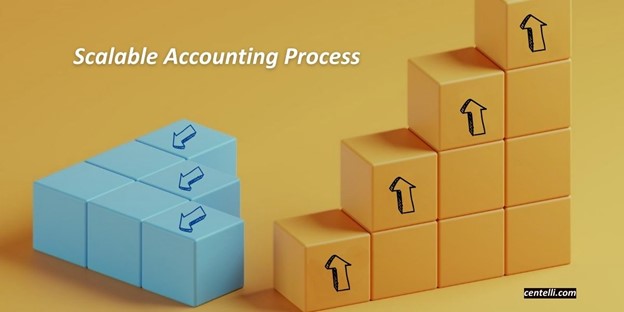
Business is a dynamic field full of opportunities, challenges, and uncertainties. With a scalable infrastructure, technology, or operation, it’s easier to navigate the change. So, you can also build a scalable accounting process for the same reason! Before we delve into the reasons for scaling your accounting operations, let’s define the concept first. Well, “scalability” is not a function or a feature by itself. It represents a fundamental characteristic that empowers an organization, system, or process to effectively manage heightened workloads, increased demand, or expansion. Scaling Your Accounting Process Doesn’t Imply a Scale Up Always A business’s full cycle accounting needs can evolve due to both external and internal factors. External triggers could be changing market conditions or evolving regulations. Whereas your shifting business goals and priorities signify the internal triggers. Therefore, you should be able to adapt your accounting tasks and workflows to accommodate unexpected events or planned strategic initiatives. Markedly, scaling doesn’t always mean upsizing or increasing your capacity. You may also need or choose to hold back sometimes. Let’s look at some scenarios for clarity! There are times when a company needs to expand its accounting team. The reasons could be: Following reasons could compel a business to downsize its accounting department: How the Scaling of an Accounting Process Might Look Like Let’s look at three examples of when and why a business needs to readjust or realign its accounting operation. Case 1: Restaurant Business Scaling its Accounting Process A small restaurant chain with 10 locations plans to add five new locations in the next 12 months. It will be hiring new staff, expanding its menu, adding more suppliers, and investing in accounting software and technology upgrades. However, it may need to scale down its accounting process if it is closing locations or experiencing a decrease in sales. Case 2: Fashion Retail Business Scaling its Accounting Operation A fashion retailer operates 50 offline stores and an e-commerce shop nationwide. It may need to scale up its accounting function if it is launching a new product line, expanding into new markets, or raising funds for expansion. On the contrary, the fashion chain may be forced to scale down its accounting activity if it is discontinuing a product line, seasonal demand loss, or closing stores. Case 3: Accounting or CPA Firm Scaling its Client Accounting An accounting/CPA firm (size regardless) may need to scale up its client accounting process if it is taking on new clients or expanding its service offerings. The firm might also require additional resources to handle the high workload of the busy tax season and specific projects. However, the firm may need to cut back on its accounting operations if it is losing clients or experiencing a decrease in demand for its services due to economic downturn or other reasons. Challenges of Scaling In-house Accounting A scalable accounting process is designed to be flexible enough to meet the changing business needs. This way, it’s easier to sustain or enhance its performance, efficiency, and capacity as required. However, building an in-house scalable accounting workflows can be challenging due to the following reasons: Scaling up your in-house accounting often requires significant capital investment and additional resources. Conversely, scaling down can lead to underutilized staff and wasted efforts. Thankfully, accounting outsourcing provides a flexible and cost-efficient solution in both scenarios. Outsource Your Way to Scalable Accounting Hiring a third-party accounting service brings in so many advantages: Need a flexible accounting process that adapts to your changing business needs? You can easily achieve a scalable accounting process by outsourcing with Centelli, saving you the hassle and high costs of in-house operation. Get your free consultation today! The Bottom Line All organizational systems and should be able to adapt to the changing business needs. A scalable accounting function ensures efficiency and supports strategic decision-making, all while managing costs and risks effectively. So, whether you have an in-house function or choose to outsource your accounting, you may need to scale it at some point.
9 Most Outsourced Finance and Accounting Services [Explainer + Tips]

A business needs to operate in the most thoughtful ways to survive and grow. Therefore, many businesses now leverage outsourced finance and accounting services to free up their in-house resources for core activities. The best part is that this also helps them save significantly on operatinal expenses! So, if you are also considering taking this path and need a quick rundown of some popular finance and accounting outsourcing (FAO) services that businesses typically sign up for, read on… 9 Most Outsourced Finance and Accounting Services Your Business Can Also Leverage When priorities are clear and you’re focused on your core business activities, you can work towards stability, success and growth. And you can make room for this by outsourcing non-core activities with external service providers. Please find below the most widely used FAO services that businesses commonly outsource to streamline their operations: #1 Data Entry and Bookkeeping Proper bookkeeping is provides a strong foundation for effective financial management. It involves recording, organizing and updating the data of all your business’s financial transactions, such as sales, purchases, and expenses. Source: finance.yahoo.com But these multi-step data entry and data storage tasks are time-consuming and laborious. Especially when the bookkeeper is amateur, or business has a lot of transactions. A bookkeeping specialist company can ensure your books are accurate and well-organized at all times. #2 Financial Accounting Solutions A proficient accounting services can help you maintain accurate and systmatic financial records. It can be many different records, such as ledgers, cash payments and receipts, accounts payable, accounts receivable, and payroll. Error-free books of accounts are essential for creating financial statements such as the balance sheet, income statement, and cash flows. These statements capture a snapshot of your company’s financial flows. They also provide detailed reports and analysis, showing how well your business is performing financially and enabling you to plan accordingly. #3 Accounts Receivable Outsourcing Accounts receivable (AR) is the process of managing incoming payments from customers. This can include tasks such as collecting payments and following up with customers, preparing and sending account statements, reconciling invoices, and processing credit memos to name a few. AR processing can be challenging when you’ve a lot of customers or you need to track large volumes of receivables. This also means you need more manpower to manage it all, which can be costly if handled in-house. Hiring an expert accounting receivable service partner to manage your billing/invoicing and payment collections helps optimize your cash flow and reduce the risk of unpaid invoices. #4 Accounts Payable Services Accounts payable (AP) is the process of managing outgoing payments to suppliers and vendors. It may include tasks such as managing invoices, processing purchase orders and debit memos, managing AP ledgers, and managing utility bills. However, the process can take a lot of time and the chances of errors shore up when you deal with multiple suppliers. Lack of efficiency and late payments can strain your supplier and vendor relationships! But you can achieve a seamless process by outsourcing it to a skillful accounts payable service. #5 Invoice Processing Services Invoices are proof of a sale or a purchase. As a business, you buy and sell things. Therefore, seamless invoice processing is imperative to keep track of your expenses on purchases and raise payments from customers. You can make sure that invoices are accurate and processed on time by outsourcing invoice processing to an expert service. They can help you with tasks like transaction logs, invoice matching, handling check and cash, and so much more. #6 Outsource Payroll Tasks Payroll processing means calculating and paying employee salaries and wages. It includes tasks such as calculating applicable deductions, taxes, and benefits. The payroll cycle is different for every business, however – it can be on a weekly, bi-weekly, or monthly basis. Outsourcing serves as an effective tool to make business operations and workflows more efficient, improving productivity and ROI. Because of these clear benefits, the finance and accounting outsourcing (FAO) phenomenon is evidently surging! The function can be difficult and time-intensive for several reasons. But it is easy when you outsource with a skilled service provider. #7 Outsourced Tax Return & Filing Tax preparation and filing can be complex as well as tedious. Any significant unintentional error or lapse can get your company into trouble with the law. You may also lose out on certain deductions and tax management opportunities when your businesses taxes aren’t handled by a tax expert. Handing over your tax preparation to a professional tax service would be a practical and prudent decision, wouldn’t it? You can also enjoy peace of mind knowing that an expert outsourced tax services provider is at work. #8 Financial Analysis Outsourcing You can evaluate your business’s financial performance by analyzing different ratios (profitability, activity, liquidity, etc.,), benchmarks and trends. Financial analysis of data in financial statements helps you to identify areas where you’re strong and where you need to improve. Financial analysis outsourcing services can bring in the necessary knowledge and skills for a precise and objective assessment of your business. So, you can plan the next steps with confidence. Furthermore, the extended services may also include financial reporting and a virtual CFO for improved financial management. #9 Accounting Automation Services You can harness the power of automation to improve the effectiveness of your financial processes. Outsourced accounting automation services can help you automate a range of processes, including bookkeeping, payroll, record-to-report, order-to-cash, procure-to-pay, and more. Automation can not only speed up processes but also eliminate errors to almost zero. However, it’s important to note that automation is not meant to replace human workers entirely but aid them. Generally, accounting automation outsourcing services can be cheaper than doing it in-house. Things to Keep in Mind While Scouting for Finance & Accounting Outsourcing Partner If you’re looking to outsource your accounting or other financial processes, consider us. We offer tailored and scalable services to businesses of all sizes. Check out our offerings and book your free (no strings attached) consultation today.
Accounting Outsourcing vs Offshoring: How the Two Strategies Stack Up
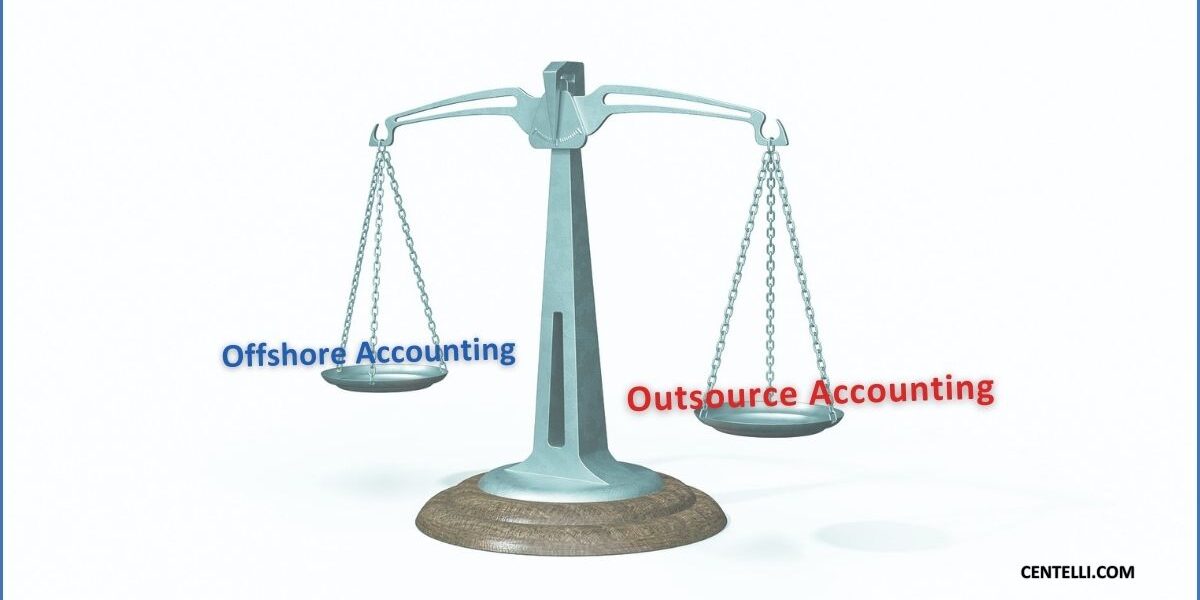
Accounting isn’t a core function for most businesses. Yet, a substantial chunk of their resources and time gets expended on in-house operations. “Offshoring” and “Outsourcing” are two savvy ways to conserving precious resources that could be allocated to core activities. Interestingly, accounting outsourcing vs offshoring is a also passionately debated topic. In this blog post, we’ll take stock of both approaches and find out how they stack up. And we hope you’ll gain important insights to help you decide which strategy is better for your business and why. Offshoring and Outsourcing: Two Different Routes to Accounting No doubt, businesses need to rationalize their processes and cut down the unnecessaries. You can reduce the costs and burdens of accounting through offshoring and outsourcing. But before we get into the offshoring vs outsourcing debate, let’s look at some key differences you need to be mindful of while choosing your course. What is Offshore Accounting? Notably, a company may do offshore manufacturing, software development, customer service, or finance and accounting. Please note that we’re referring to “captive offshoring” here. [Captive] offshore accounting entails creating your [own] division in a foreign land. The labor costs are considerably less in emerging nations, but they are talent and skill-rich nonetheless. Therefore, it can be economically more sensible to relocate your accounting department to such a location with a captive unit. What is Outsourced Accounting? When you contract an external firm or individual to handle your end-to-end accounting function or part of it, you enter the outsourcing realm. You can tie up with a service provider from anywhere. It may be located near you – same city, same country. Or far away in some other country. However, when you outsource accounting from overseas, it’s called offshore outsourcing. We’ll explore this concept at length in forthcoming sections of this article. Furthermore, “nearshoring” is yet another concept. A business may prefer setting up its captive operation or appointing an outsourcing partner in a nearby country closer to home. So, in both cases, you’re relocating your accounting process nearby. Top 5 Benefits of Offshore Accounting As aforementioned, captive offshoring can be a viable means for businesses to rein in their accounting operations expenses. Let’s dive into various key advantages you can expect from offshore accounting: Top 5 Benefits of Accounting Outsourcing Want expert accountants and bookkeepers without spending heavily? If yes, go for accounting outsourcing to reap these benefits: Offshoring vs Outsourcing – The Better Accounting Operations Model? Which model is the best fit for your business will depend on your specific needs and requirements. However, there’re a few questions you need to ask yourself! Do you have enough funds to raise your captive offshore unit? Is cost reduction your primary motive, but control dilution frets you? Offshore accounting can be a good option for you in that case. Cost savings, budget constraints, or simply saving yourself from the hassle of running an in-house process! If any of these reasons resonate with you, outsourcing accounting is more suitable for you. Remember, it’s important to carefully evaluate your needs and requirements before choosing any of the discussed accounting strategies. You should explore multiple offshore destinations or research different accounting outsourcing service firms as required. Optimizing Accounting Operations via Offshore Outsourcing Let’s talk first about some challenges of the above-mentioned models! While captive offshoring gives you more control over the accounting process, it can be a little expensive and complex. Despite labor cost advantage, upfront investment and ongoing operating costs can be dampeners. Moreover, your internal resources may get trapped in mundane, low-value accounting and bookkeeping tasks, which can sidetrack more valuable activities. In contrast, outsourcing saves you the investment and overheads of running your [own] accounting division, but the process is no longer under your tight control. Thus, you need to trust your service partner because you won’t be able to keep a tab on every minute activity at their end. Outsourcing vs offshoring talk is here to stay. However, you can look at another option as well, which is a blend of these two models. The “Offshore-Outsource” approach provides businesses with a potent solution to optimize accounting operations much more effectively. Markedly, countries like China, the Philippines, Vietnam, Mexico, and India are the foremost global offshore destinations. They attract businesses from across the world looking to outsource their accounting tasks. If you’re searching for expert accounting outsourcing services partner, think Centelli. Explore Our full-suite finance and accounting services! We can help your business optimize operating efficiencies via our offshore delivery centers in India serving our clients worldwide. Leave us a message to book a free consultation. The Collective Benefits of Offshoring-Outsourcing Strategy Below are some points to help you understand how a hybrid strategy of outsourcing your accounting operations offshore can be more beneficial: You may also like : The Top Benefits of Finance and Accounting Outsourcing to India Closing Note Accounting offshoring vs outsourcing – the debate is natural because every business decision has a long-term impact. However, it’s essential to understand that both captive offshore operations and outsourced processes have unique benefits and limitations. On the other hand, the hybrid approach of offshore outsourcing offers the best of both worlds and helps tackle limitations posed by the two models individually. Overall, outsourced offshore accounting can be a good option for businesses looking to streamline their accounting processes and enhance productivity cost-effectively.
The Top Benefits of Finance and Accounting Outsourcing to India

Finance and accounting outsourcing (FAO) services are a significant part of India’s outsourcing industry. The multinational firms began contracting out back-office tasks to India in the 1990s. Over time, India has become a premier global outsourcing destination. The service spectrum ranges from data entry, customer support, IT, HR, legal, financial services, and more. Companies from across the world are drawing on local expertise, bolstering operations back home. In this article, we’ll overview the advantages of finance & accounting outsourcing. Also, discussed in detail are the top benefits and key considerations of outsourcing to India. Why Outsource Finance and Accounting? In the era of globalisation, economies and businesses are becoming increasingly inter-connected. Digitalization has also made world-wide collaborations so much easier! Globalization and digitalization have given a lot of push to the FAO phenomenon as well. But there’s this myth that only big business can or should outsource offshore. On the contrary, it can be an excellent strategy also for small and medium sized firms. How? Building and maintaining an in-house finance and accounting department requires considerable infrastructure, personnel, and budget. While large businesses can afford this, it can be an expensive proposition for smaller businesses. By outsourcing, you can skip both upfront investment and operating costs. Furthermore, you can save even more with overseas outsourcing because you gain a labor cost advantage! India, an Ideal Finance and Accounting Outsourcing Destination India has a strong track record of delivering high-quality FAO services to global clients. It’s known to be the most preferred FAO destination, thanks to a combination of factors. The country has abundance of English speaking, skilled workforce. It also offers low labor costs. Efficiency and productivity are two other major leverages you cannot ignore. Let’s take a closer look at these factors: 1. Large Pool of Finance Professionals People in India are quite inclined towards business studies, commerce, finance, and accountancy fields. Numerous students enroll for vocational, undergrad and post-grad courses in these streams every year. Different courses offer different skills and different levels of expertise and specialization. Here’re some statistics (Source: The Institute of Chartered Accountants of India or ICAI) to give you just an idea of the number of charted accountants (CA) alone. By the end of August 2023, there were 3,95, 949 active members while the number of active students enrolled for CA courses had reached 8,34,578. Markedly, ICAI is a government-administered statutory body responsible for regulating the Chartered Accountancy profession in India. It’s also the world’s second biggest professional body of CAs. Finance and accounting professionals in India who work with global clients are well-versed in international accounting standards. The FAO services catering to international clients hire staff skilled in GAAP and IFRS . However, the range of services offered may vary. Some providers offer end-to-end finance and accounting services, including bookkeeping, accounting, accounts payable/receivable, payroll processing, tax preparation, and financial analysis. Many also provide highly specialized services such as advisory and audit. Interestingly, there’s also a growing interest for Certified Public Accountant (CPA) accreditation. US CPA is globally recognized and one of the most sought-after finance and accounting certifications conferred by the American Institute of Certified Public Accounts (AICPA). 2. English Language Skills Significant populace of India’s can understand and speak English. They surely have working knowledge of the language at least. That’s because the professional education delivery is in English. So, the top company officials, departmental heads, and managers are fluent. Even though an entry-level employee may not have strong English skills, they’ve satisfactory working knowledge. This makes easy for businesses to communicate and collaborate with their outsourced finance and accounting teams in India. Importantly, there’s a large Indian diaspora abroad. An increasing number of people travel overseas for work or leisure. The FAO services in India are adaptable to global work culture. That helps minimize friction and build a seamless communication and workflow. Some cultural adjustments may be needed, nevertheless. 3. Cost-Savings and Time Zone Advantage Notably, labor costs are a major expense for most businesses. You can save up to 60-70% of the total operating costs by outsourcing to India. In contrast to developed nations like US, UK, Australia, etc., the cost of labor in India is significantly low. Their currencies are also higher-valued than India’s. You straight up benefit on these two counts. So, it’s rather affordable to outsource finance and accounting operations to the country. So, you can not only save massively but are free to use those monetary resources on other critical processes and projects. Furthermore, the different time zones can also be a great advantage when you’ve an appropriate process and schedule worked out with your FAO service provider. For instance, London is about 4.30 hours behind New Delhi while Sydney is 4.30 hours ahead. Businesses in UK and Australia can find a convenient overlap with their outsourced teams in India. This also allows for real-time communication and exchange. Then New York is 9 hours behind India, which means US businesses will get delivery effectively on the same day. Notably, many FAO firms provide 24/7 services. FAO Services and India’s Business & Technological Environment Offshoring your finance and accounting isn’t an easy decision. But if you’re concerned about the infrastructure and business environment in India, there’s nothing much to worry. India is among the most preferred offshore and outsourcing destinations. Its fame can be majorly attributed to its favorable regulatory and business milieu. Outsourcing has now matured into a vibrant industry with thriving BPO hubs. They are spread across Bengaluru, Hyderabad, Chennai, Pune, Delhi-NCR, and Chandigarh-Mohali-Panchkula (the tri-city), etc. These hubs boast of avant-garde internet, communication, technological, and digital infrastructure. A growing number of businesses from abroad are now leveraging FAO services. There’s an ample supply of tech-savvy finance and accounting professionals and specialists working with FAO companies. They’re well-versed in leading financial/accounting software and platforms. It’s worth mentioning that reputable FAO service providers are also gung-ho about cyber and data security. They ensure a robust IT infrastructure and adherence to safety protocols.
Accounting Talent Shortage: How Outsourcing Can Help US Businesses Counter the Crisis

The US Accounting talent shortage is turning into a looming crisis. Many businesses, CPA and accounting firms are experiencing staffing challenges. And it’s becoming harder to recruit and retain qualified accounting staff. So, you risk being understaffed or having to make do with the under-skilled! Interestingly, juxtaposed to the deficit, the demand for accountants and auditors continues to soar. In this blog post, we’ll delve into the factors fueling the accounting talent gap and its impact on businesses and accounting firms. We’ll also talk about how outsourcing can help US businesses address this challange and keep their accounting talent pipeline robust and well-nurtured. Understanding the US Accounting Talent Gap and Its Reasons Let’s examine why’s there a shortage of accountants in the first place. Here’re the top five factors contributing to the widening talent gap: The Impact of Accounting Talent Shortage on Businesses In-efficient accounting processes can lead to poor financial monitoring, planning and management. [Here’s an example of how the chips could come off: how accountant shortfalls are reflecting in financial statements!]. Now, let’s delve into some challenges a business might face due to an accounting talent crunch. These might include: The Impact of Accountant Shortage on Accounting and CPA Firms CPA and accounting firms may experience slightly different challenges than a business organization. But the underlying theme of process inefficiencies and risks thereof remains the same. Some potential difficulties these firms could face due to accounting talent shortage: The Challenges of Hiring Accountants in Short Supply The scarcity of skilled accountants and bookkeepers is resulting in longer recruitment cycles. The vacant positions are putting extra pressure on the existing workforce and workflows as a result. Furthermore, there’s a growing trend of remote and hybrid work culture, too! Markedly, the phenomenon began as an exigency measure in ‘Covid’ times but has stayed on in the US and worldwide. But many organizations aren’t equipped or inclined to pursue a hybrid workplace. In some cases, it’s not at all workable. This also adds to in-house accounting staffing problems. The current situation presents a formidable challenge particularly for early-stage, small, and mid-sized companies. Many CPA firms and accounting services are also struggling to service their clients adequately. How Can Outsourcing Help Ease Accounting Talent Shortage? Accounting plays a critical role in monitoring and upkeeping a business’s financial health. Precision and timeliness are the foundations of a seamless and output-driven accounting process. But we all know that daily accounting is time-consuming as well as labor-intensive. Occasions like tax season, fundraising, or scaling up also mean overwhelming workloads. And you can’t afford any lapses as a business. Imagine dealing with the scarcity of manpower in these critical times! Businesses and accounting firms can, however, ease such bottlenecks through outsourced accounting services. They come with many benefits, such as: Outsourcing to a global BPO destination can help in massive savings. Offshore outsourcing hubs, such as India, the Philippines, among others, are quite popular. The robust dollar and lower labor rates in these countries make cost-efficiency a valuable proposition. How to Successfully Outsource Your Accounting Team Choosing a third-party accounting services is a crucial milestone of outsourcing journey. Things to consider: However, the selection process may vary depending on the service offerings and your business needs. Common steps include: Being mindful of these factors increases your chances of onboarding the right accounting talent and having a fruitful accounting outsourcing experience. Partnering with an expert accounting outsourcing firm not only helps close the accounting talent shortage gap but also realize a stable process. Which also means that the business owners, their managers and internal teams can better focus on other functions. Are you a US-based business or CPA firm struggling to find and retain qualified accounting talent? Build your offsite team with Centelli, a growing full-cycle outsourced accounting firm Atlanta, GA. We bring a pool of GAAP accountants, ensuring service delivery tailored to your needs and budget. We cater to businesses of all sizes and across industries. Save 35-60% on your accounting processes! Meet us in person at our Atlanta office or book your free consultation with us today. Accounting Talent Shortages Aren’t Going Away Anytime Soon The exodus of accountants and dwindling number of accounting students indeed is alarming. However, it looks like the shortage of accounting talent isn’t going to disappear anytime soon. There’s a need for US accounting bodies and think tanks to reimagine ‘how can we make accounting cool’? In such a scenario, outsourcing presents a viable solution to counter the accounting talent shortage crisis. Markedly, US enterprises have been outsourcing finance and accounting to global offshore destinations for years. Now small and mid-sized businesses are also taking to this idea.
Small Business Bookkeeping Guide (Simple and Practical Tips)

Whether you’re a seasoned small business owner or a new entrepreneur, you may find this ‘Simple and Practical Guide to Small Business Bookkeeping’ immensely useful. Read on to embark on your journey to achieving flawless and truly effective bookkeeping, contributing to your business’s success. The Fundamentals of Small Business Bookkeeping Simply put, bookkeeping is the systematic record-keeping of a business’s financial activities and transactions.It covers everyday transactions and money flows (via cash and checks), including customer invoices, purchase receipts, supplier bills, and more. Additionally, it may include entries for bank reconciliations, tax filings, and credit and loan details. Importance of Good Bookkeeping in Small Business Maintaining precise financial records is crucial for small businesses, just as it is for large enterprises. Here’s why: Proper bookkeeping ensures accurate financial records, aids in timely tax filing, supports strategic planning, and enhances credibility with stakeholders. It also helps you to identify cost-saving opportunities, prepare an optimal budget, and build the most effective strategies for scaling up your business. The Power of Bookkeeping Software: Tools for Efficiency Importantly, the paper-based method of bookkeeping is now nearly obsolete! The emergence of bookkeeping and accounting software, platforms, and digital technologies is phasing out traditional practices. Modern bookkeeping is now faster and more accurate, resulting in significant time and labor savings. Bookkeeping software ensures: Breakdown of Basic Bookkeeping Process Every business usually follows these essential bookkeeping steps in their accounting cycle: Transactions can be classified as purchases, sales, payments, and receipts. The general ledger is the primary accounting record, consisting of journals for initial transactions and financial statements for income, expenses, and the balance. Also, there are sub-ledgers for individual accounts, such as accounts receivable or payable. 2. Recording transactions in journals Double-entry bookkeeping provides a better estimation of a business’s financial status. Importantly, it maintains a sequence for journal entries. Additionally, the bookkeeper should not skip any detail, whether it be the date, accounts involved, amount, or description. Similarly, the total of credits should be equal to the total of debits in an accounting cycle. 3. Posting transactions in ledgers Once journal entries have been recorded, the next step is to post them to their respective ledger accounts. The process involves recording each debit and credit in the related account, resulting in updated totals. By doing this, preparing trial balances and financial statements becomes easier. 4. Preparing trial balance Balancing your books involves ensuring that total debits and total credits in the general ledger match. This is done through trial balances, notably. If imbalances exist, errors are identified and corrected to ensure accurate financial reporting. 5. Closing the books Closing the books at the end of an accounting period is a crucial step to maintaining precise and current financial records. It thus paves the way for producing various financial statements. 6. Preparing financial statements Preparation of the profit and loss statement, balance sheet, and cash flow statements provides a comprehensive overview of financial activities and business performance over a specific period. Keeping books for a small business demands diligence, and the importance of the bookkeeping process to stay on the right track cannot be undermined! Choosing the Right Bookkeeping Method: Cash vs. Accrual Are you unsure whether to use cash or accrual basis when bookkeeping for your small business? Let’s compare the two! The cash basis of accounting records revenues upon cash receipt and expenses upon payment. In contrast, accrual basis bookkeeping records transactions as they occur, regardless of when the cash flow happens. As a result, the latter provides a more comprehensive overview of financial activity. To simplify things, many small businesses start with cash-based bookkeeping. However, large or more complex businesses use accrual bookkeeping for tracking ongoing obligations and revenues. Note that when choosing the right bookkeeping method for your business, it’s crucial to weigh the pros and cons of each approach to determine which is best for your business needs. Organized Books: Stress-Free Tax Season for Small Businesses Here’s a quick rundown of how accurate bookkeeping and up-to-date books of accounts help a small business improve its tax compliance, avoid penalties, and reduce its tax liability: Leveraging Bookkeeping Expert for Small Business or Startup Start-up founders and small business owners may find day to day bookkeeping tasks burdensome, especially when they are caught up in other critical business operations. Hiring a bookkeeping expert can alleviate their workload and ensure their accounting books are accurate and up to date. Moreover, a skilled bookkeeper can also help your business save money, increase revenue, and track financial obligations for informed decision-making. Small business owners are now increasingly hiring professional accounting and bookkeeping services. By entrusting your processes to outsourced bookkeepers and accountants, you can confidently shift your focus to other critical areas of your business! Finding a Reliable Service Provider for Small Business Accounting Needs While seeking expert small business bookkeeper, business owners cannot afford to be complacent. These seven tips can help you pick the right service: Outsourcing Bookkeeping: A Smart Business Decision Proper bookkeeping is non-negotiable for a small business’s financial health. Accurate recordkeeping, however, is only possible with timely tracking of every important transaction, proactive supervision, and continuous monitoring. In-house bookkeeping may not be feasible for many business owners. Fortunately, you have an option: outsource your bookkeeping to an expert service provider. This allows you to reap the benefits of well-maintained financial records and an efficient bookkeeping process. Ready to streamline your small business bookkeeping?Contact Centelli today for cost-effective bookkeeping solutions, and let our experts take care of everything for you!
Is ‘Offshore Accounting Services’ a Good Idea for My CPA Firm?
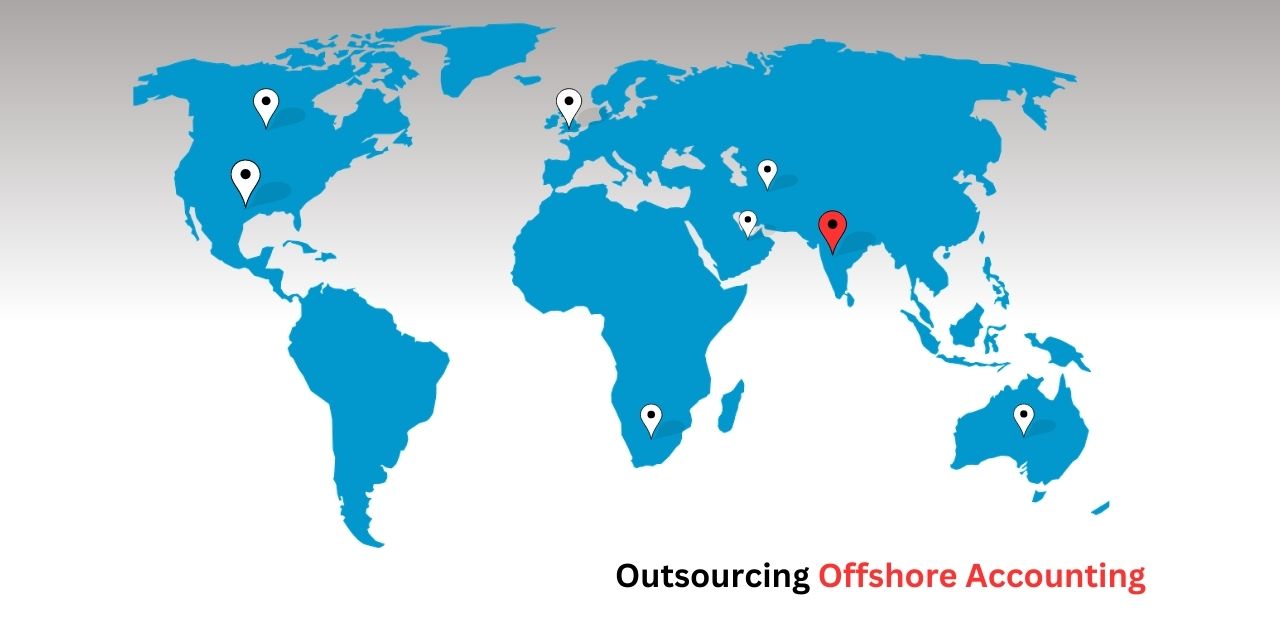
Are you unsure about hiring an offshore accounting services provider for your CPA firm? Setting up an overseas accounting department is a significant strategic move for CPAs. The decision becomes even more significant when you decide to outsource it. You may even wonder: Is delegating my client’s accounting to an offshore accounting partner truly a good move? Or should I stick with an in-house team or consider a local accounting service near me? We get you! Let’s explore the viability of offshoring your CPA accounting operations through outsourcing. We’ll uncover critical insights to help you navigate this path successfully. Offshore Accounting: What It Means For Your CPA Firm Essentially, accounting offshore involves relocating the process to a foreign country. A CPA firm may build its captive division or join forces with a client accounting services (CAS) provider, who oversees the process on behalf of its clients. In the latter scenario, you’ll not need to get involved in day-to-day operations. Your service provider’s team members handle the time-consuming routine accounting tasks. They also ensure timely delivery and reporting. So, you achieve streamlined workflows without getting tied up and overwhelmed. Despite this undeniable advantage, some firms are reluctant to hire foreign-based third-party accountants. They usually have apprehensions about the quality of operation and service delivery. But, it is not an issue when you hire a proficient accounting solutions provider. Key Benefits of Offshoring Accounting via Outsourcing Cost-savings, enhanced productivity and scalability are among the most appealing features of the outsourcing-offshoring model. Here are some key benefits of outsourcing offshore accounting services, in detail: 1. Cost Efficiency First, outsourcing to an offshore destination means you can skip building in-house infrastructure. Plus, you can also save a significant amount of money on operational overheads. India, Mexico, and the Philippines are some globally-known business process outsourcing (BPO) hubs. Plus, you can save both time and money on hiring and training an internal accounting team. The offshore service provider maintains a dedicated team and required assets. You don’t have to spend your resources on recruitment and retention. So, whether you’re working with limited resources or aiming to redirect efforts from internal accounting processes to other critical aspects of your CPA practice – outsourcing to an offshore site can be an ideal option. 2. Productivity and Scalability In addition to time and cost efficiencies, outsourcing-offshoring model can also help increase productivity. You can utilize in-house capacity to accommodate more clients by transferring workloads to offshore accountants. So, your CPA firm can now not only expand its client base but also scale up. As the outsourced team handles routine tasks, your in-house team can transition to more specialized and value-added services. With more clients and higher-value services, you can generate better revenues as well. Therefore, offshore accounting outsourcing can serve as a springboard for effectively growing your CPA practice. 3. Global Talent Access Outsourcing offshore enables access to a more diversified accounting workforce beyond geographical boundaries. Is your CPA firm situated in the UK, US, Canada, Australia, and elsewhere where English is a corporate language? Prominent global BPO hubs have an ample workforce fluent in the language. And they offer comparable skills and specialized knowledge at a fraction of the cost you would pay back home. Potential Challenges of Outsourcing Offshore Accounting While there are numerous benefits to outsourcing offshore accounting for CPAs, you should also take note of some challenges, such as: 1. Quality Control Upholding the quality standards of client accounting services is crucial for a CPA firm. You can address this concern by clearly communicating your expectations to the offshore team. Typically, quality control is part of the best practices of a good accounting outsourcing services provider. 2. Data Security While dealing with sensitive financial information, data breaches and loss can be primary concerns. Make sure your accounting services partner follows strict security measures for data security and safety. 3. Time Zone Difference Working with an offshore team in different time zones can seem challenging. However, in today’s digital age, which enables seamless collaboration, time zone differences can also be advantageous as they enable round-the-clock operations. Why Hiring Offshore Accounting Services Is a Good Idea for CPAs Despite some challenges, partnering with an offshore F&A service provider from top outsourcing hubs like the Philippines, India, and Vietnam can be overall rewarding as you can access expertise without spending exorbitant amounts. So, if you want to capitalize on the collective benefits of accounting outsourcing and offshoring for your CPA firm, don’t overlook this: Offshore accountants familiar with the accounting standards and tax regulations of the countries you operate in can perform tasks beyond recordkeeping, such as preparing financial statements and handling tax preparation. They also ensure compliance with local regulations. Want an offshore accounting service partner who delivers effectively and consistently? Think Centelli! We’re a UK-based FAO Services firm with global delivery centers in India, providing bespoke solutions to business of all sizes. Explore our accounting services portfolio and book your free consultation now. How to Evaluate an Offshore Accounting Service Provider Consider the following steps to determine whether your offshore partner aligns with your CPA firm’s goals: Keep these points in mind when evaluating your future service provider to help you decide whether to hire them. Closing Note An offshore accounting unit can help save a significant amount of money. The outsourcing-offshoring model, however, can be even more cost-effective for CPA firms seeking to streamline their client accounting processes. It also enables them to drive productivity and scale quickly while maintaining their high service quality. Therefore, a competent and reputable offshore accounting services partner can be a valuable asset for CPA practices! You May Also Like: The Need of Outsourced Bookkeeping Companies for CPA Firms